International design competition platform Volume Zero has announced the results of the Tiny House 2025 Architecture Competition.
The Tiny House Competition invited visionary ideas aimed at redefining the idea of “home”, not just as a shelter, but as a versatile personal space that balances comfort, sustainability, and innovation.
The Tiny House Architecture Competition challenged participants to rethink the conventions of modern living and explore how architecture can respond to the evolving idea of “home.” Participants were invited to design a fully functional tiny home for two individuals within a maximum built-up area of just 300 sq. ft., while addressing the growing need for flexibility, sustainability, and intentional living in today’s world.
Participants from more than 37 countries contributed valuable concept ideas to the contest, which was evaluated by a panel of international experts.
Volume Zero Competition thanks all the competitors for participating in this competition and for contributing to this competition's research.
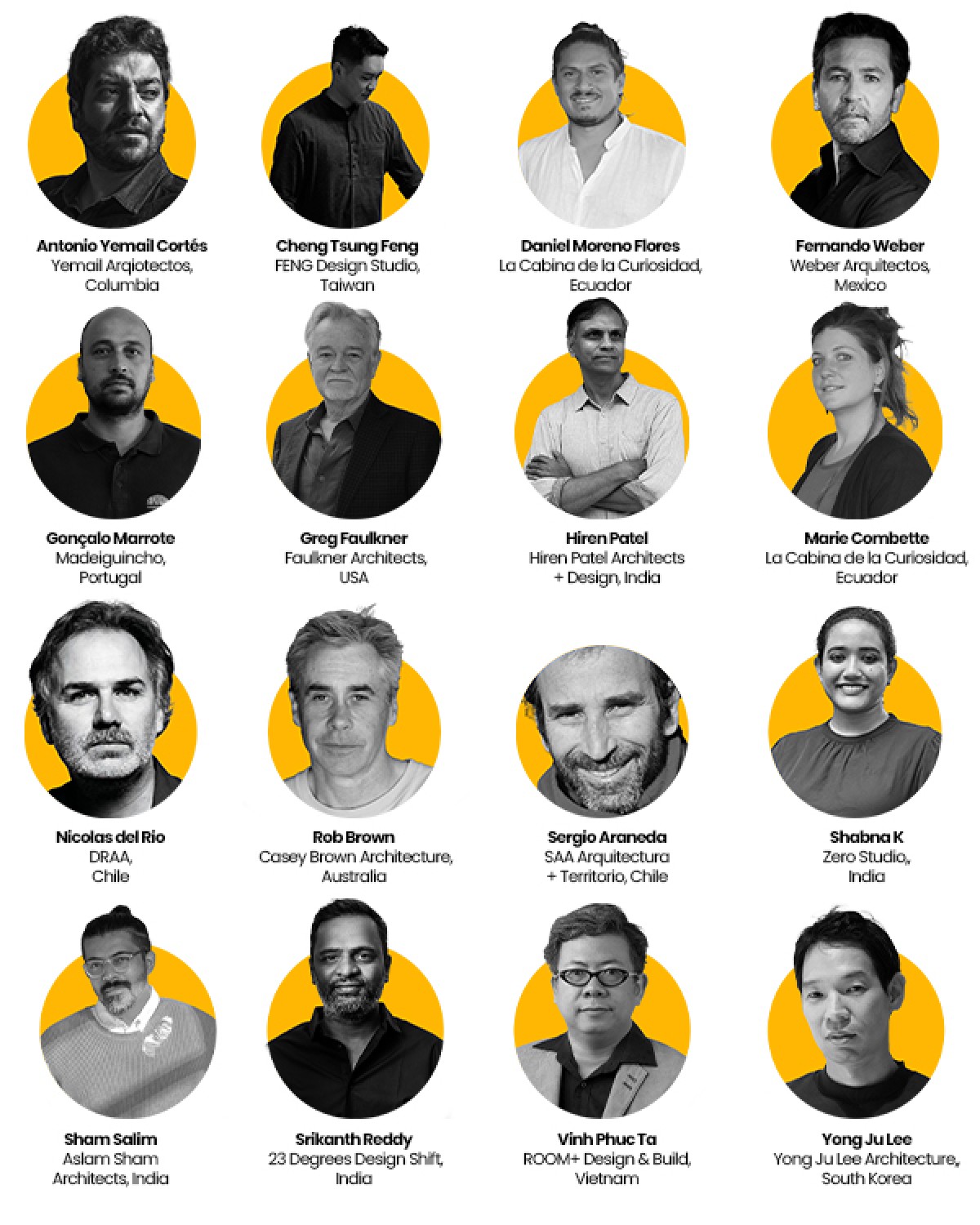
The esteemed jury for judging this competition consisted of
Antonio Yemail Cortés (Yemail Arquitectura),
Cheng Tsung Feng (Cheng Tsung Feng Design Studio),
Fernando Weber (Weber Arquitectos),
Gonçalo Marrote (Madeiguincho),
Greg Faulkner (Faulkner Architects),
Hiren Patel (Hiren Patel Architects + Design),
Marie Combette & Daniel Moreno Flores (La Cabina de la Curiosidad),
Nicolas del Rio (DRAA),
Rob Brown FAIA (Casey Brown Architecture),
Sergio Araneda (SAA Arquitectura + Territorio),
Shabna K (Zero Studio),
Sham Salim (Aslam Sham Architects),
Srikanth Reddy (23 Degrees Design Shift),
Vinh Phuc Ta (ROOM+ Design & Build),
Yong Ju Lee (Yong Ju Lee Architecture).
Jury Panel of Tiny House 2025 Architecture Competition
Jury Panel of Tiny House 2025 Architecture Competition
The top three winners and Best Student were awarded total prize money of $4,500 while ten entries received Honorable Mentions. Here are the winning entries.
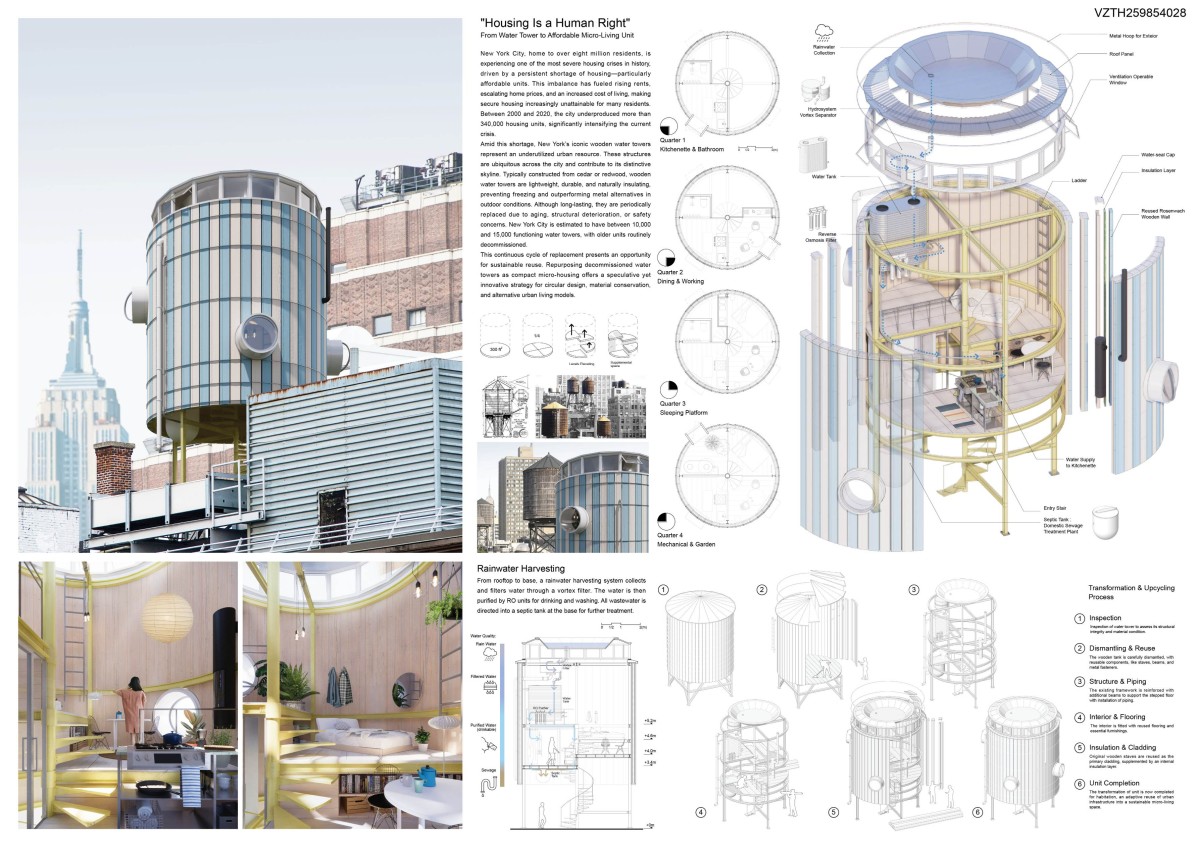
First Place: Housing is a Human Right by Han K (Taiwan)
“Housing is a Human Right”
From Water Tower to Affordable Micro-Living Unit
New York City, home to over eight million residents, is experiencing one of the most severe hosing crises in history, driven by a persistent shortage of housing-particularly affordable units. This imbalance has fueled rising rents, escalating home prices, and an increased cost of living, making secure housing increasingly unattainable for many residents. Between 2000 and 2020, the city underproduced more than 340,000 housing units, significantly intensifying the current crisis.
Amid this shortage, New York’s iconic wooden water towers represents an underutilized urban resource. These structures are ubiquitous across the city and contribute to its distinctive skyline. Typically constructed from cedar or redwood, wooden water towers are lightweight, durable, and naturally insulating, preventing freezing and outperforming metal alternatives in outdoor conditions. Although long-lasting, they are periodically replaced due to aging, structural deterioration, or safety concern. New York City is estimated to have between 10,000 and 15,000 functioning water towers, with older units routinely decommissioned.
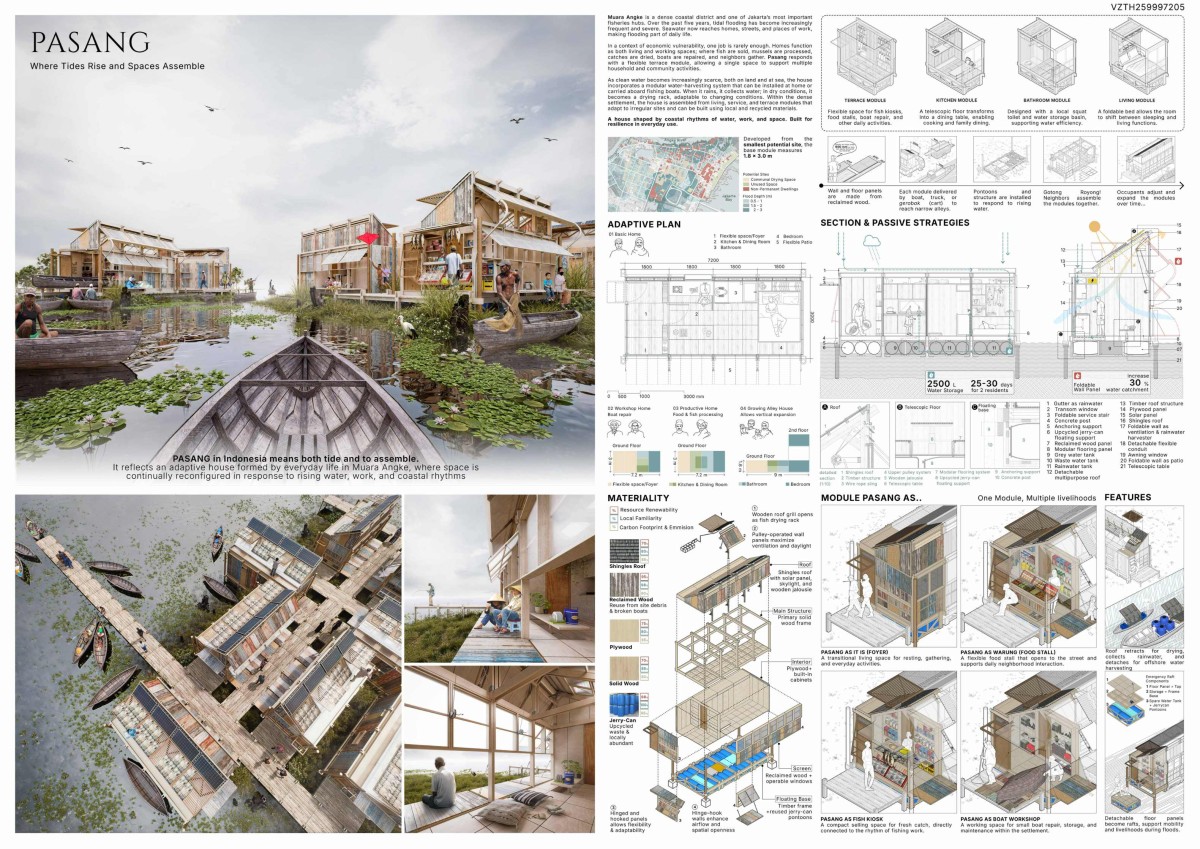
Second Place: Pasang by Malvin Bastian Sendi & Selina Sunardi (Indonesia)
PASANG – Where Tides Rise and Spaces Assemble
Muara Angke is a dense coastal district and one of Jakarta’s most important fisheries hubs. Over the past five years, tidal flooding has become increasingly frequent and severe. Seawater now reaches homes, streets, and places of work, making flooding part of daily life.
In a context of economic vulnerability, one job is rarely enough. Homes function as both living and working spaces; where fish are sold, mussels are processed, catches are dried, boats are repaired, and neighbors gather. Pasang responds with a flexible terrace module, allowing a single space to support multiple household and community activities.
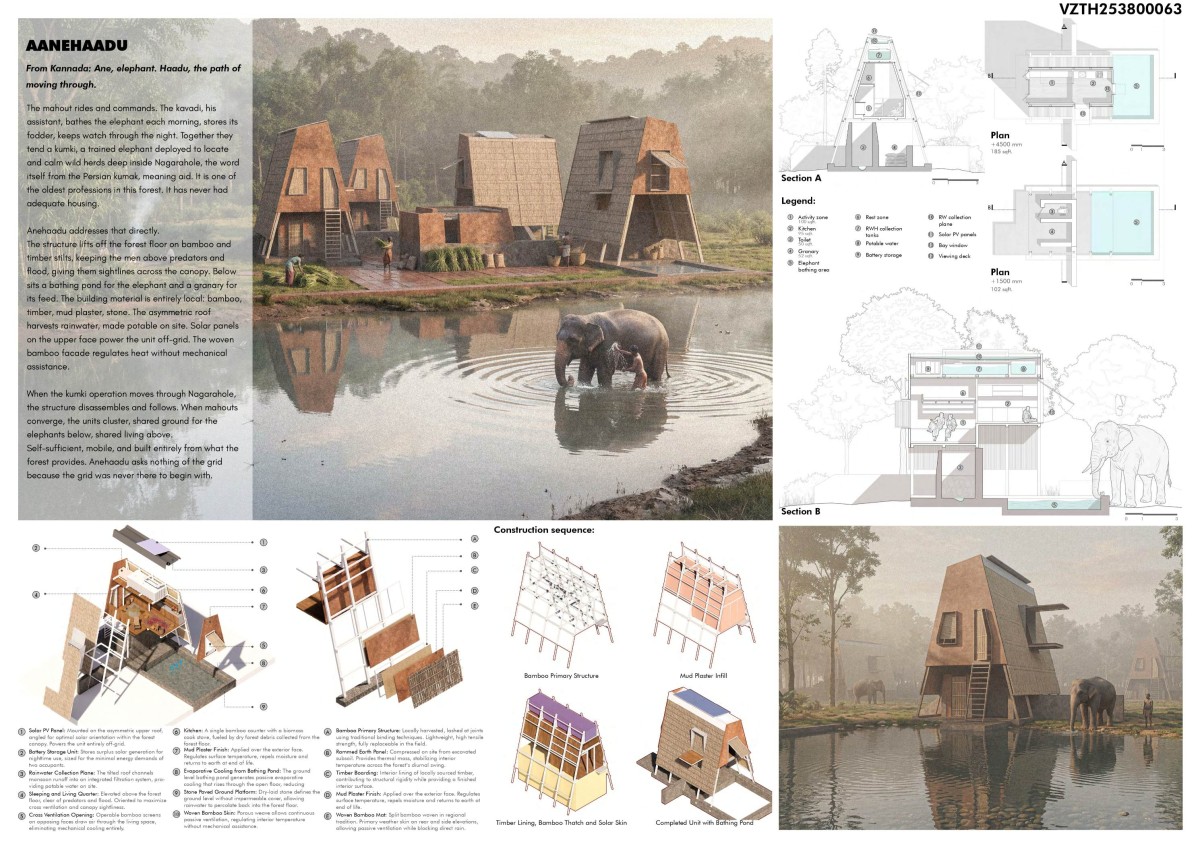
Third Place: Aanehaadu by Akash & Bhushan M (India)
AANEHAADU
From Kannada: Ane, elephant. Haadu, the path of moving
through.
The mahout rides and commands. The kavadi, his assistant,
bathes the elephant each morning, stores its fodder, keeps watch through the
night. Together they tend a kumki, a trained elephant deployed to locate and
calm wild herds deep inside Nagarahole, the word itself from the Persian kumak,
meaning aid. It is one of the oldest profession in this forest. It has never
had adequate housing.
Anehaadu addresses that directly. The structure lifts off
the forest floor on bamboo and timber stilts, keeping the men above predators
and flood, giving them sightlines across the canopy. Below sits a bathing pond
for the elephant and a granary for its feed. The building material is entirely
local: bamboo, timber, mud plaster, stone. The asymmetric roof harvests
rainwater, made potable on site. Solar panels on the upper face power the unit
off-grid. The woven bamboo façade regulates heat without mechanical assistance.
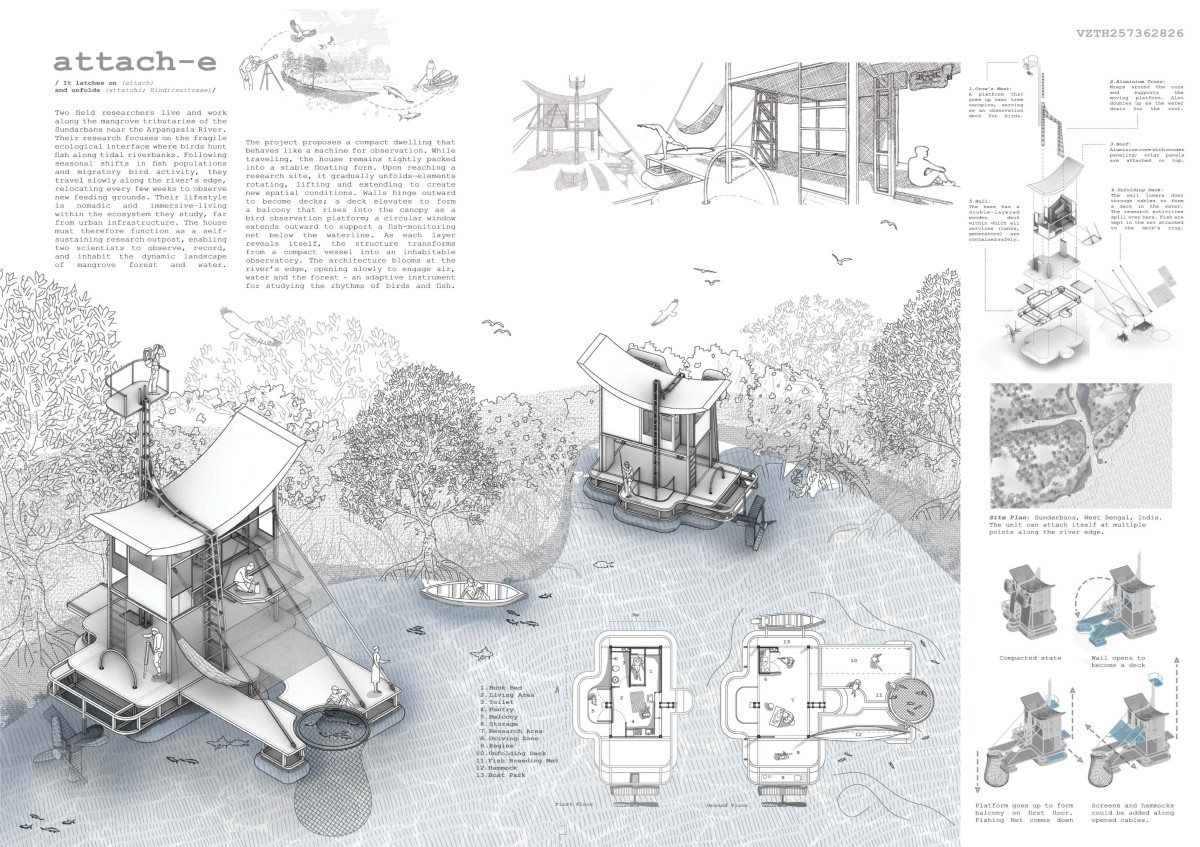
Student Award: Attach - e by Siddharth Laddha, Samyukta Tati & Sadhavi (India)
Attach – e
/It latches on (attach) and unfolds ( attaichi; Hindi: suitcase)/
Two field researches live and work along the mangrove tributaries of the Sundarbans near the Arpangasia River. Their research focuses on the fragile ecological interface where birds hunt fish along tidal riverbanks. Following seasonal shifts in fish populations and migratory bird activity, they travel slowly along the river’s edge, relocating every few weeks to obsever new feeding grounds. Their lifestyles is nomadic and immersive-living within the ecosystem they study, far from urban infrastructure. The house must therefore function as self-sustaining research outpost, enabling two scientists to observe, record, and inhabit the dynamic landscape of mangrove forest and water.
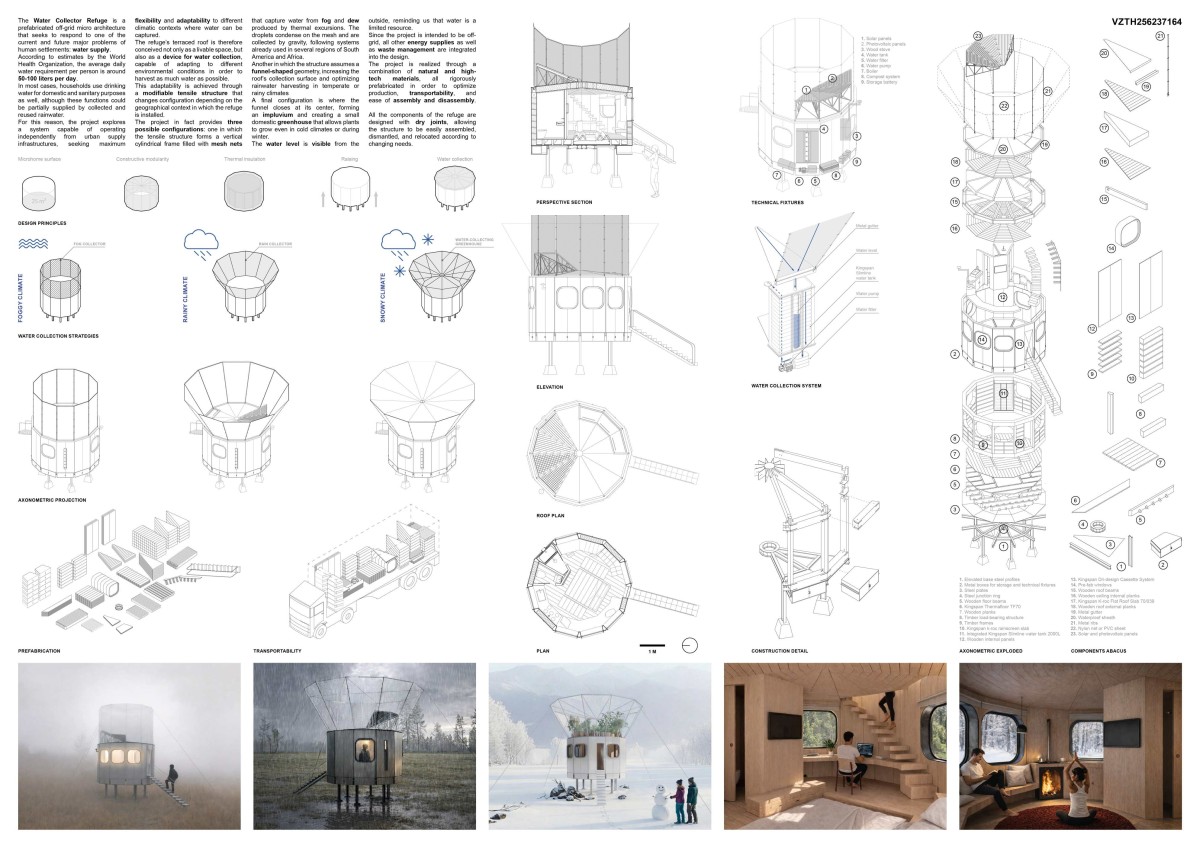
Honourable Mention 1: Water Collector Refuge by Fanfaruin & Filippo Vajra (Mexico)
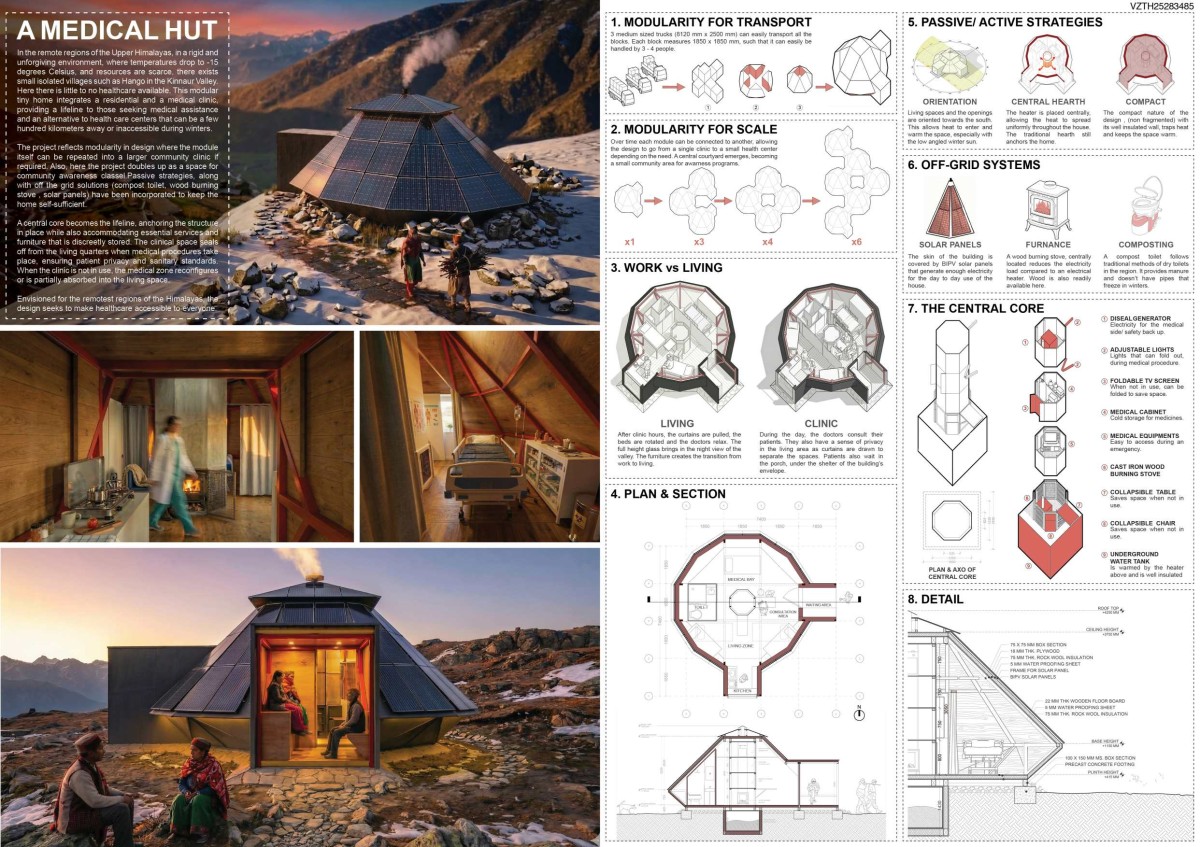
Honourable Mention 2: A Medical Hut by Tejas Manoj Thariyan & Priyanshi Shah (India)
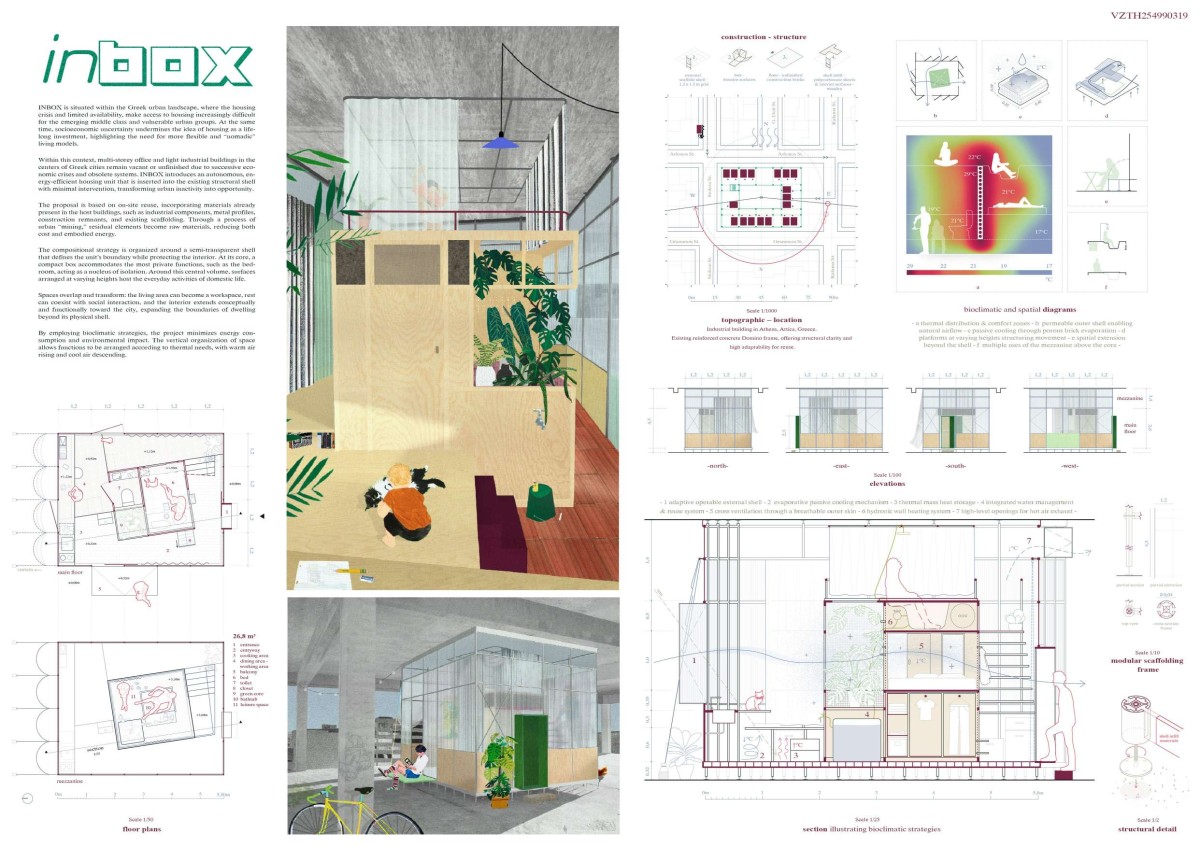
Honourable Mention 3: inbox by Maria Patmanidou, Katerina Koulouri & Sofia Kalakou (Greece)
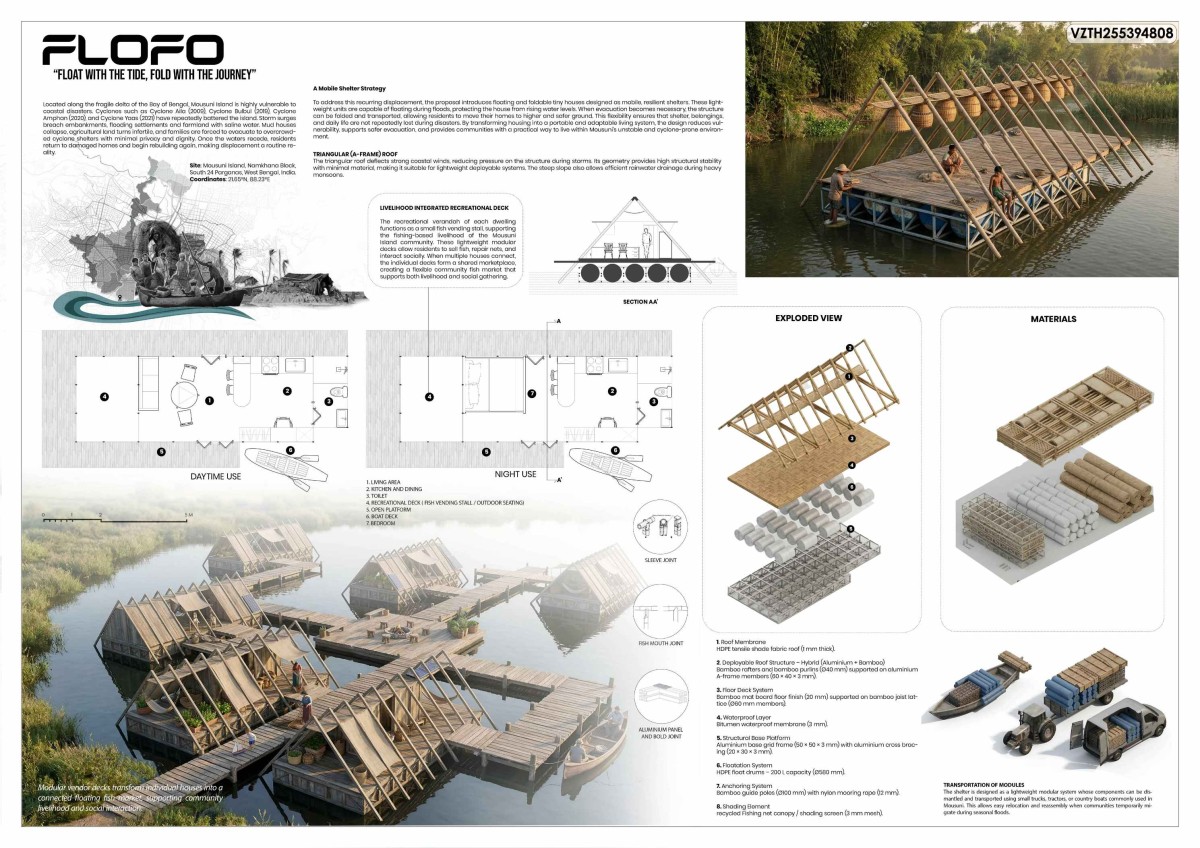
Honourable Mention 4: FLOFO by Preethika Shalini M & Jayanth Kumar (India)
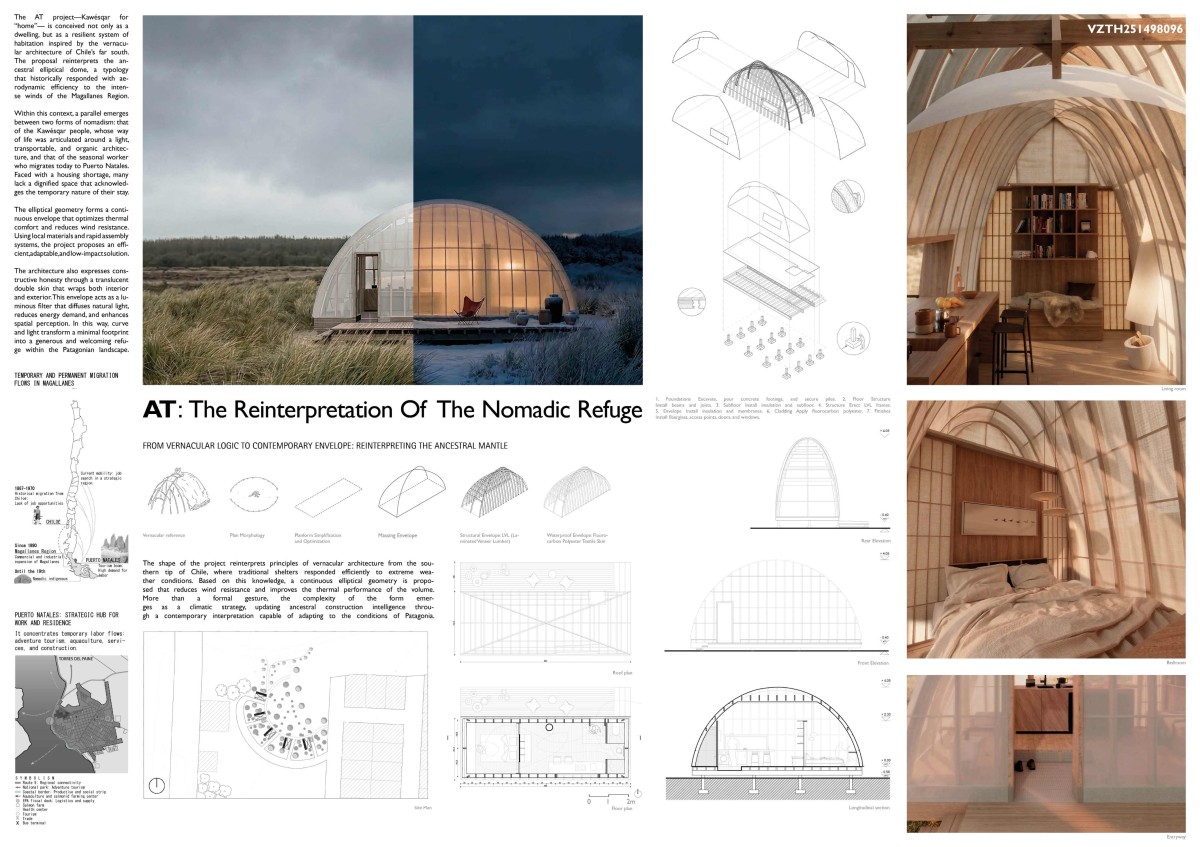
Honourable Mention 5: AT by Camila Belen Aylinne Fernandez Vega & Elena Amanda Quintana Araya (Chile)
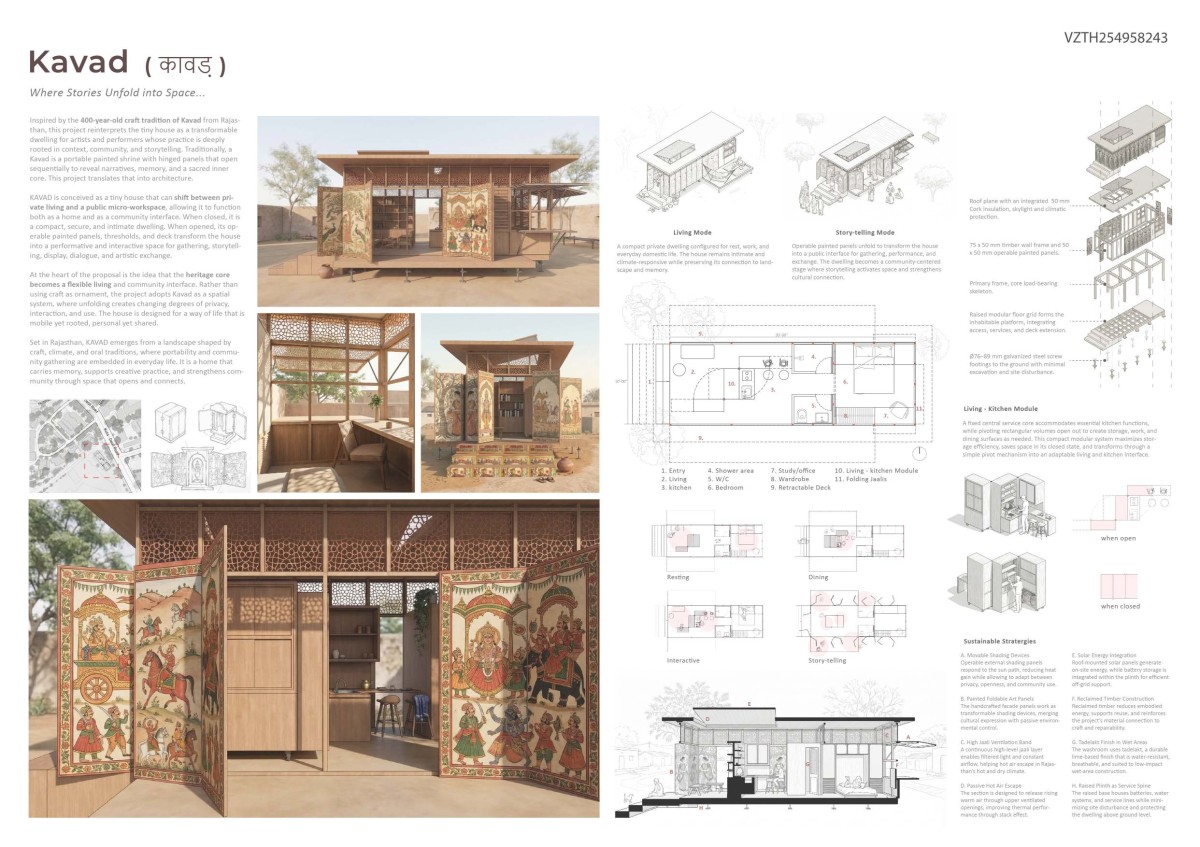
Honourable Mention 6: Kavad by Summy Kumar & Arathi Anand (India)
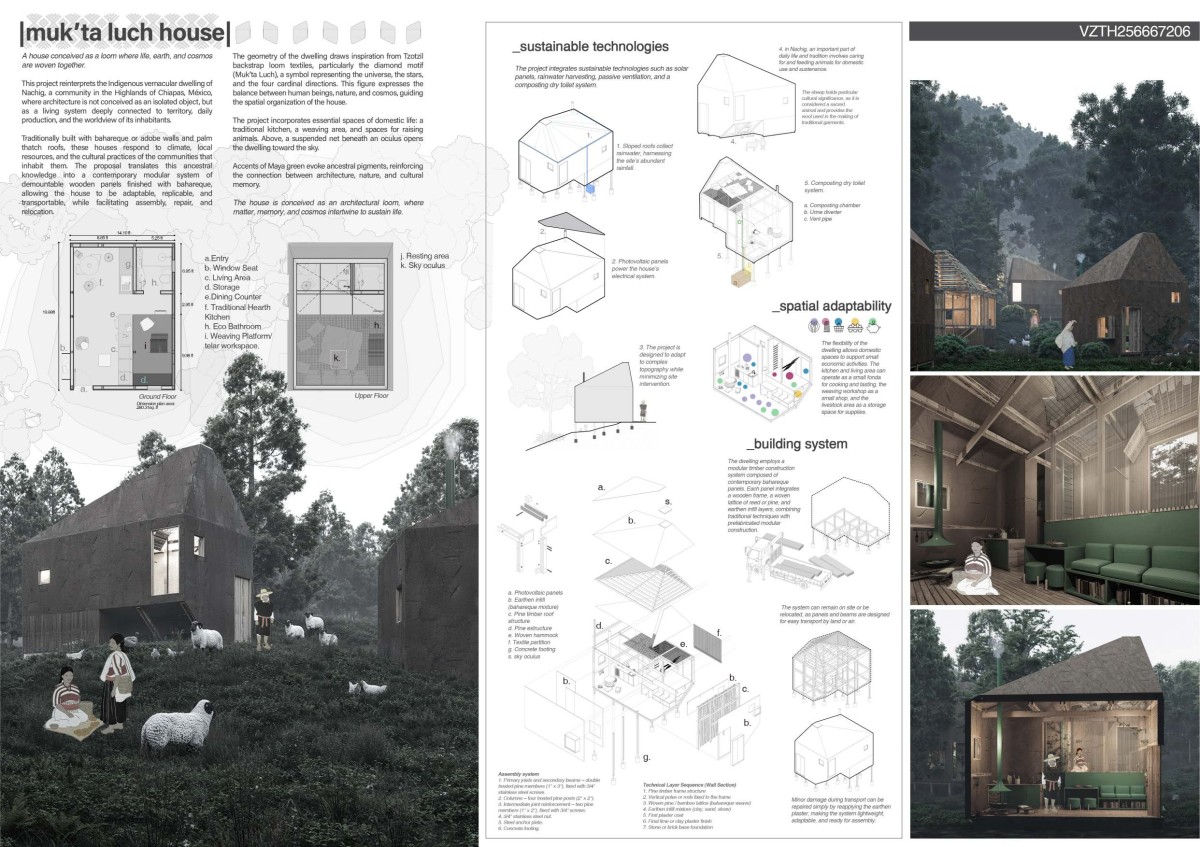
Honourable Mention 7: muk’ta luch house by Haptica Lab, Daniela Marmolejo Limon & Fatima Garcia Alvarez (Mexico)
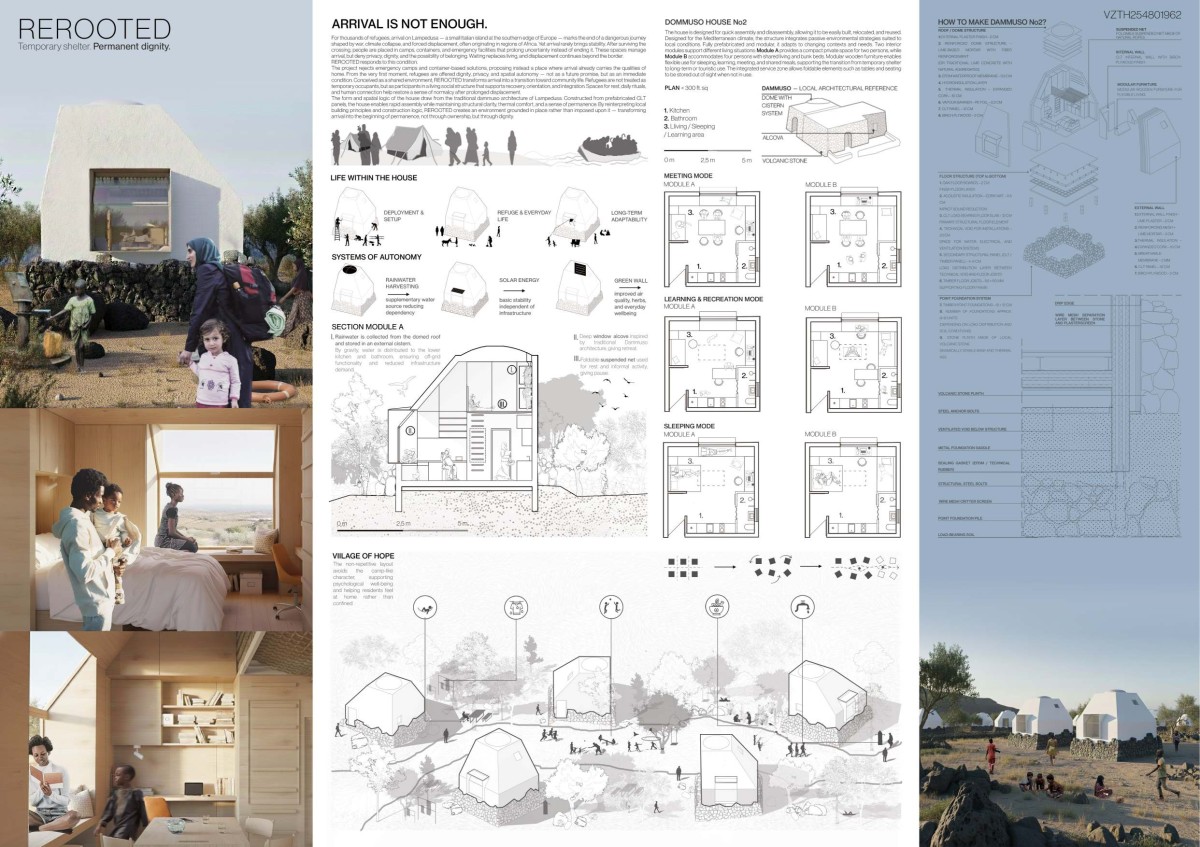
Honourable Mention 8: REROOTED by Julia Stepska (Poland)
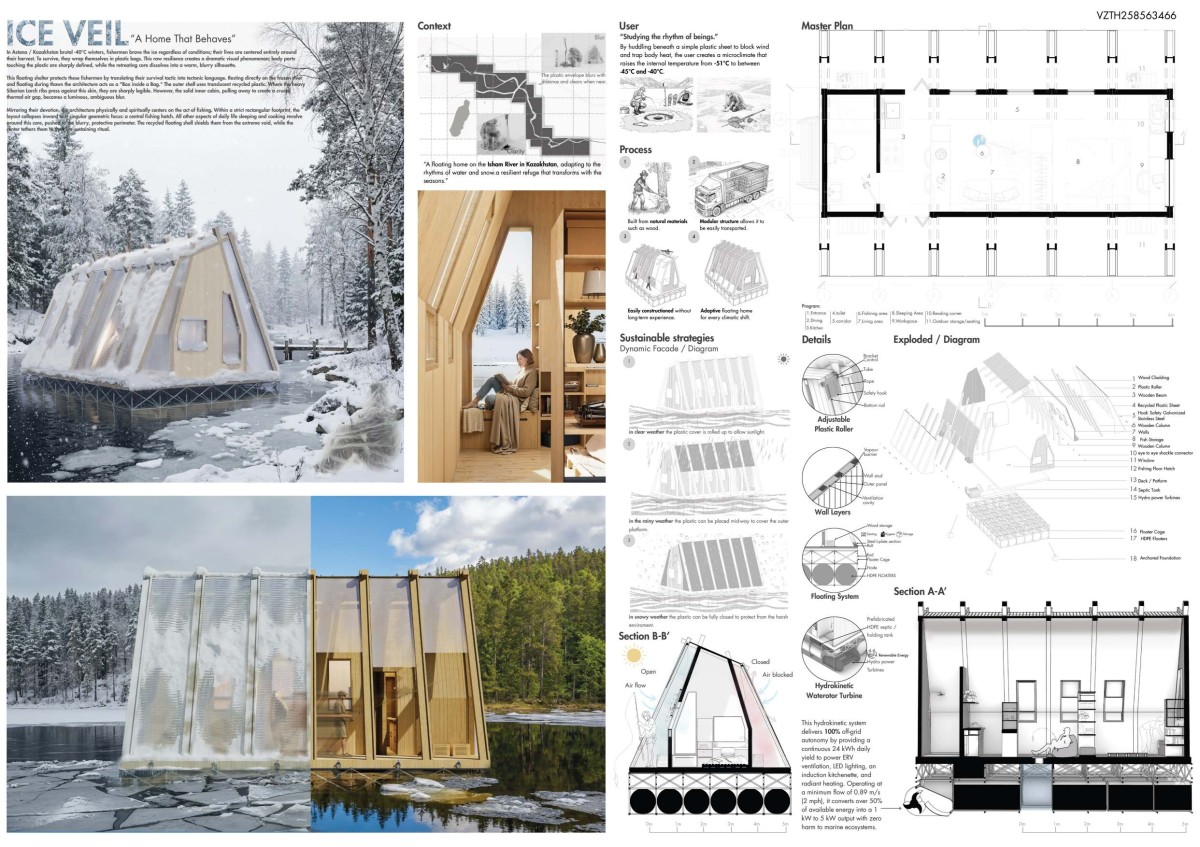
Honourable Mention 9: ICE VEIL by Mohamed Ahmed Abdallah, Kareem Mohamed & Jana Tamer (Egypt)
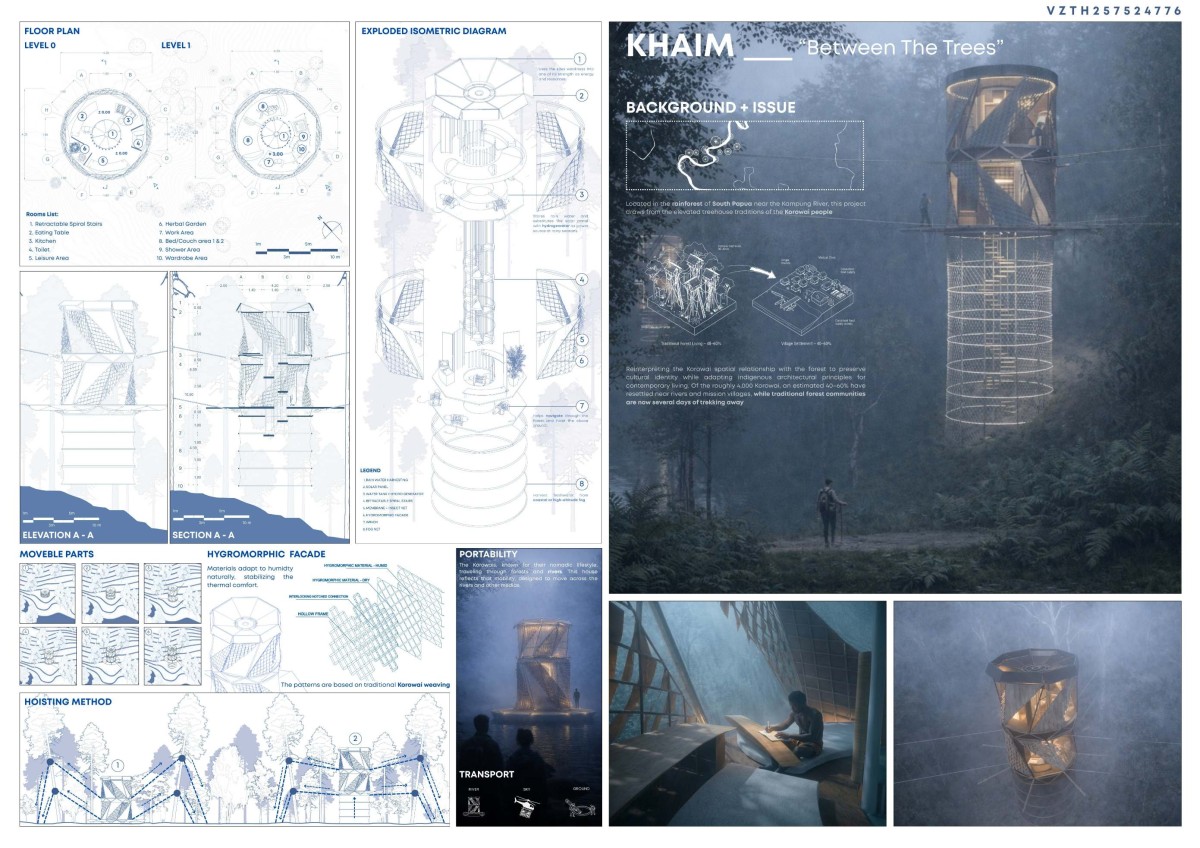
Honourable Mention 10: KHAIM by Satria Putra Wibowo, Arya Armand & Alif Mahesa (Indonesia)