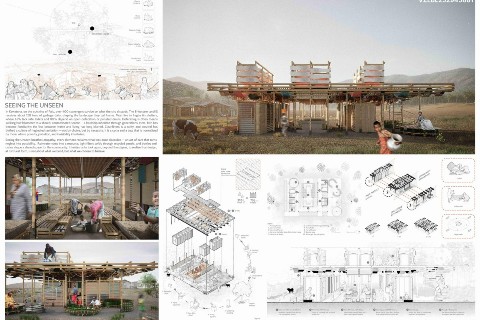
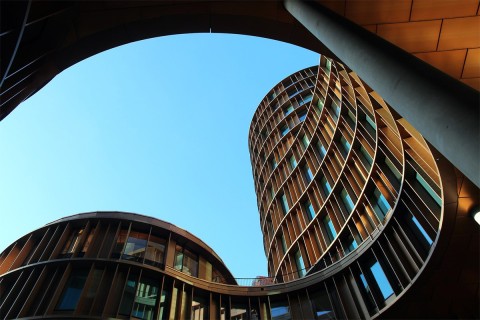
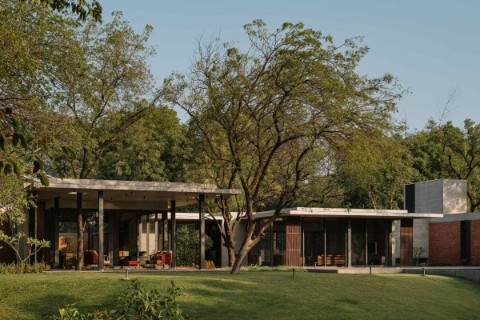
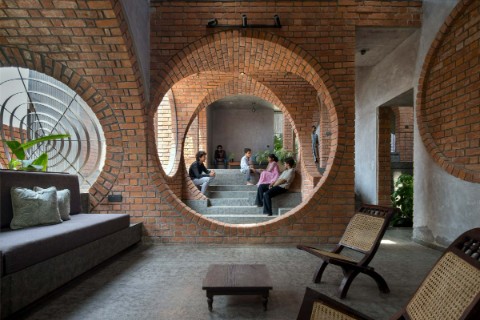
India’s diverse geography and culture make architectural conversations especially relevant. The challenges of planning for rapidly growing cities coexist with the responsibility of preserving age-old traditions and heritage structures. World Architecture Day encourages professionals here to rethink how to balance progress with preservation.
Sustainable Design Awareness in India
The theme of sustainable design awareness has particular urgency in the Indian context. Our climate extremes such as heat waves in the north, monsoons in the south, and rising sea-levels along coastal regions demand architecture that is both resilient and environmentally responsible.
Indian architects are increasingly drawing inspiration from traditional practices. For instance:
● Jaali screens and courtyards in Mughal and Rajasthani architecture, which naturally cool interiors, are influencing contemporary passive cooling strategies.
● Stepwells of Gujarat and Rajasthan serve as lessons in water conservation, inspiring new designs for community water management.
● Bamboo and mud architecture from regions like Assam and Kutch showcase renewable, low-impact materials that are now finding a place in modern eco-conscious projects.
This blending of tradition with technology underscores India’s contribution to sustainable architecture globally.
Modern Architecture Trends in India
While global modern architecture trends such as smart buildings, modular construction, and biophilic design are shaping practices everywhere, India is giving these trends its own identity.
● Smart cities initiatives are integrating technology into urban infrastructure, from surveillance to mobility planning.
● Affordable housing projects led by government missions like PMAY (Pradhan Mantri Awas Yojana) are pushing innovation in prefabricated and modular design.
● Green-rated buildings under GRIHA and IGBC are placing India firmly on the map of sustainable global practices.
● Biophilic design has seen a rise in corporate campuses like Infosys and Wipro, where landscapes and natural ventilation improve employee wellbeing.
India’s modern architecture is thus not only about adopting global innovations but also contextualizing them for local climates, communities, and cultural aspirations.
Tackling Urban Planning Challenges
India is urbanizing at a scale and speed unmatched in most parts of the world. Cities like Bengaluru, Pune, and Gurugram have seen exponential growth, but with it come major urban planning challenges:
● Overcrowding and informal settlements in metros like Mumbai and Delhi.
● Traffic congestion and inadequate public transport systems.
● Pollution, heat islands, and declining green cover.
● Pressure on infrastructure like water supply and waste management.
On World Architecture Day, these concerns take center stage. Indian cities need urban planning models that are inclusive, sustainable, and culturally sensitive. Lessons can be drawn from past successes, such as the planned sectors of Chandigarh, while also experimenting with community-driven solutions like Kerala’s people-centric planning approach.
Architecture for Humanity: The Indian Dimension
One of the most powerful aspects of World Architecture Day is its emphasis on architecture for humanity. In India, this resonates strongly given the stark inequalities in access to housing, healthcare, and public spaces.
Architects here are contributing to social change through projects like:
● Disaster-resilient housing in flood-prone Kerala and cyclone-hit Odisha.
● Affordable rural housing models developed by Laurie Baker and his successors, which continue to inspire low-cost sustainable construction.
● Educational campuses like Anupama Kundoo’s Wall House and Hunnarshala projects in Bhuj, which emphasize community participation and skill development.
Such initiatives reaffirm that architecture in India is not just about skylines but about dignity, accessibility, and empowerment.
Architecture as a Cultural Expression
India’s architectural legacy is inseparable from its culture. Every region tells its story through design, be it the Dravidian temples of Tamil Nadu, the wooden houses of Himachal Pradesh, or the colonial bungalows of Kolkata.
World Architecture Day reminds us to cherish this cultural dimension. It is not only about preserving heritage monuments but also about ensuring that modern construction does not erase local identity. New projects in cities like Jaipur and Varanasi are now being asked to integrate traditional motifs and materials, ensuring continuity of cultural memory in contemporary spaces.
Festivals and rituals also play a role. Temporary architecture during Durga Puja pandals in Kolkata or Ganesh Chaturthi mandaps in Maharashtra reflects how design becomes an expression of community creativity and collective joy. These ephemeral structures are as much a part of India’s architectural narrative as permanent monuments.
Looking Toward India’s Future
As India grows into a global economic power, the future of its architecture lies in creating cities and buildings that embody resilience, inclusivity, and identity. World Architecture Day is an invitation for Indian architects, planners, and students to think critically about their role in shaping not just structures, but communities.
India’s contribution to global architectural innovation will likely emerge from its ability to integrate traditional wisdom with modern technology. From bamboo skyscrapers to smart, walkable townships, the possibilities are vast if rooted in context.
At
Volume Zero, we believe that India’s rich architectural legacy and dynamic present provide a fertile ground for innovation. World Architecture Day is not just a date on the calendar but a reminder that architecture in India must carry forward the wisdom of our traditions while boldly embracing future possibilities. Through design competitions, research, and creative platforms,
Volume Zero continues to encourage young architects to reimagine the built environment with sensitivity, purpose, and cultural pride.