Text provided by Architect
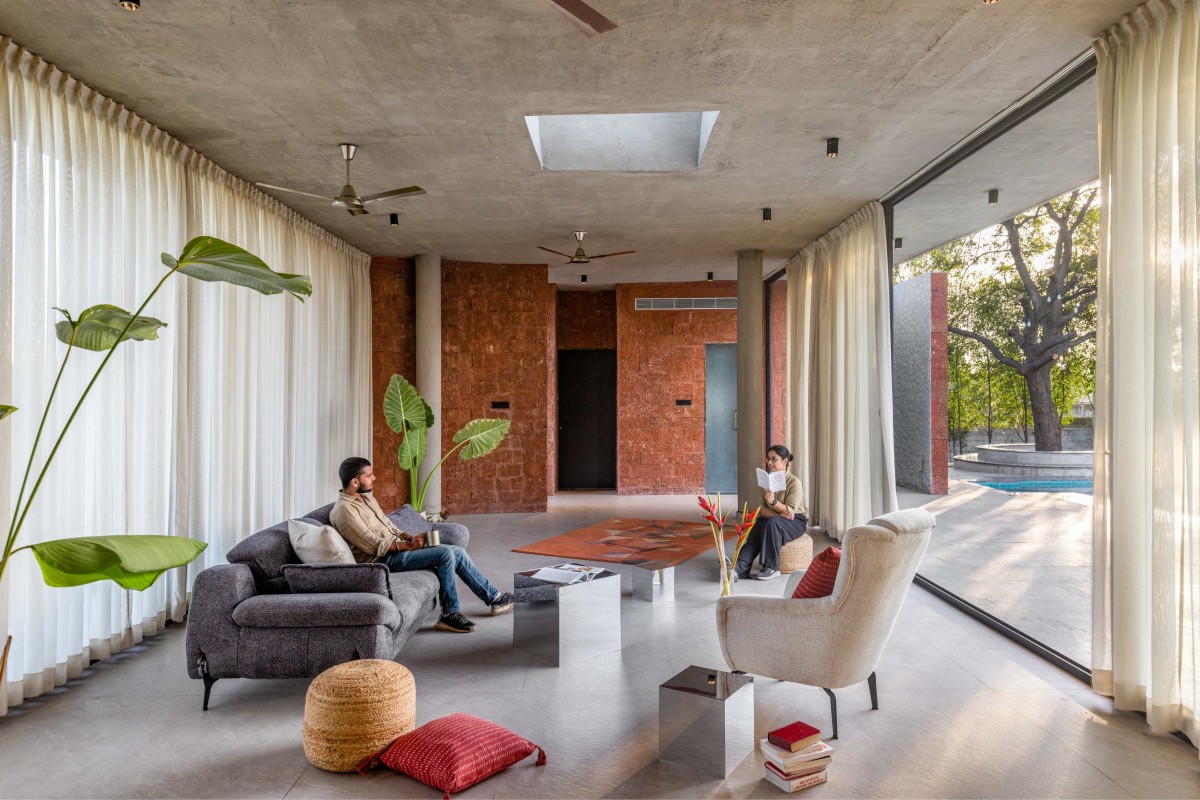
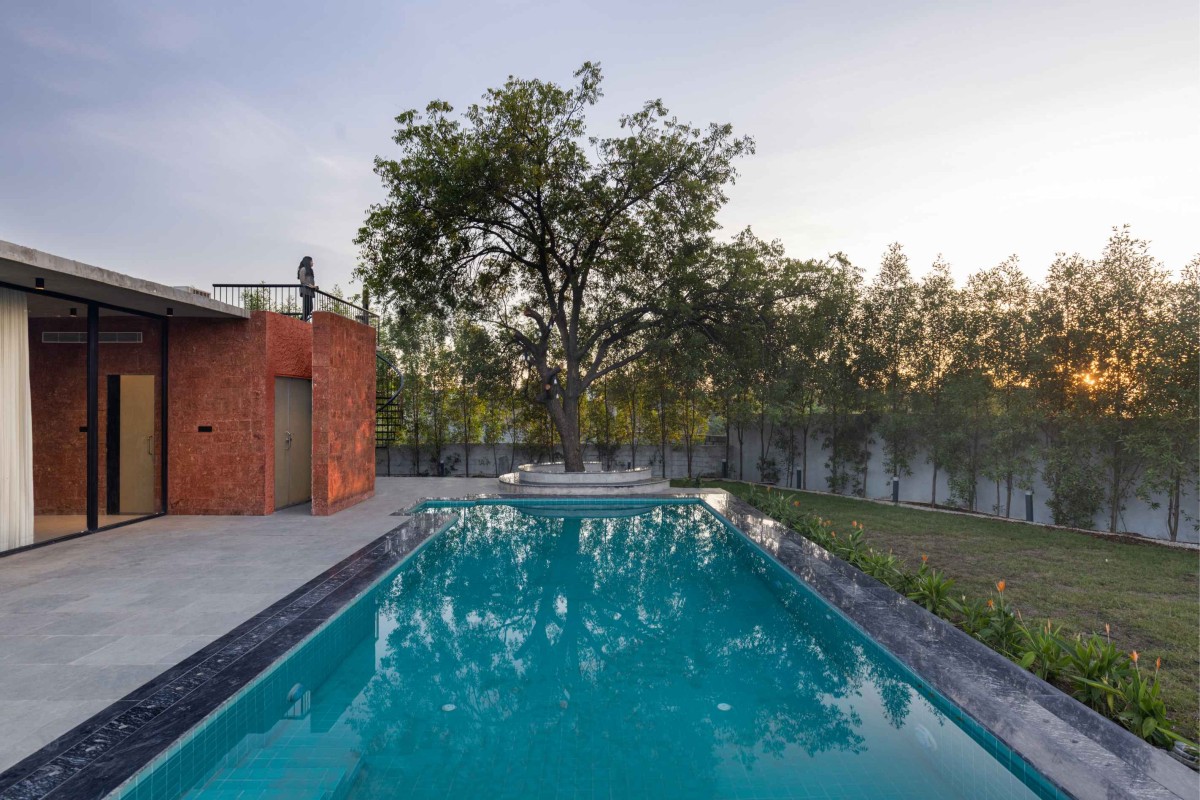
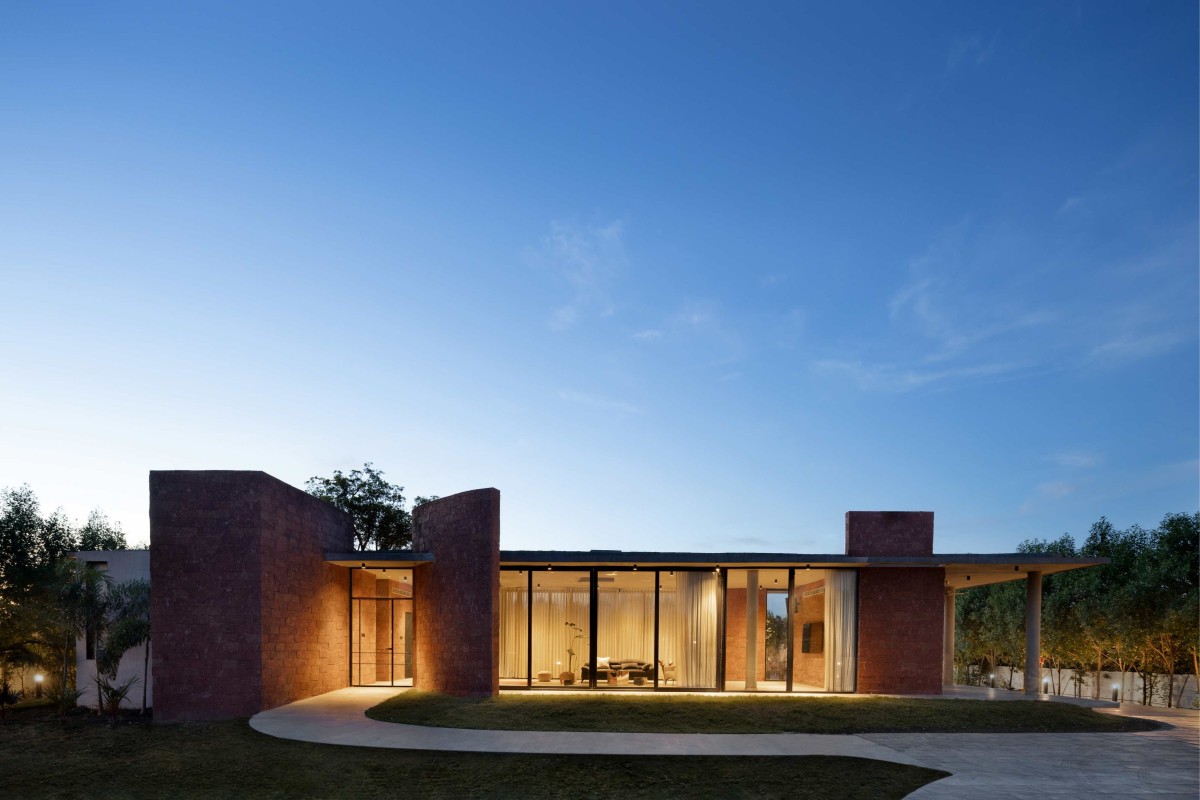
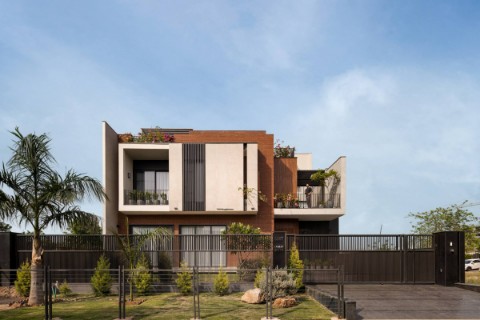
Minimal in form, maximal in function—a cuboid home is architecture distilled to its purest essence. Yet, it is not just about right angles; it is about the interplay of precision and nature, where structure meets fluidity in the simplest forms imaginable. Nestled in the heart of Raipur, this 1100 sq. ft. weekend retreat by Rishabh Jain, principal architect and founder of Maati, is designed as a sanctuary—a second home where family and friends can escape the city’s pace, reconnect with nature, and celebrate togetherness. The design brief called for a minimal yet warm, structured yet fluid space—one that embraced the site’s natural elements while breaking the uniformity of the rectangular forms on either side. The existing neem tree became a focal point, guiding the layout and lending a sense of rootedness to the home’s spatial organisation.
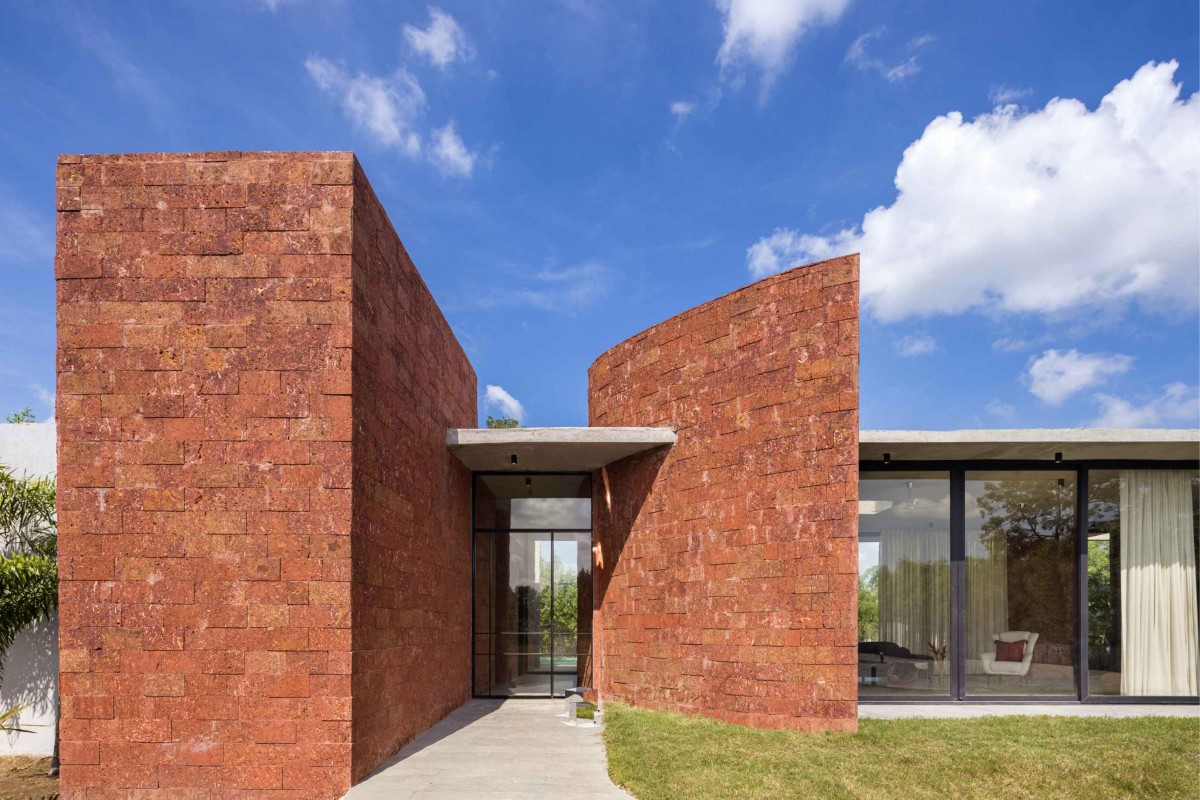
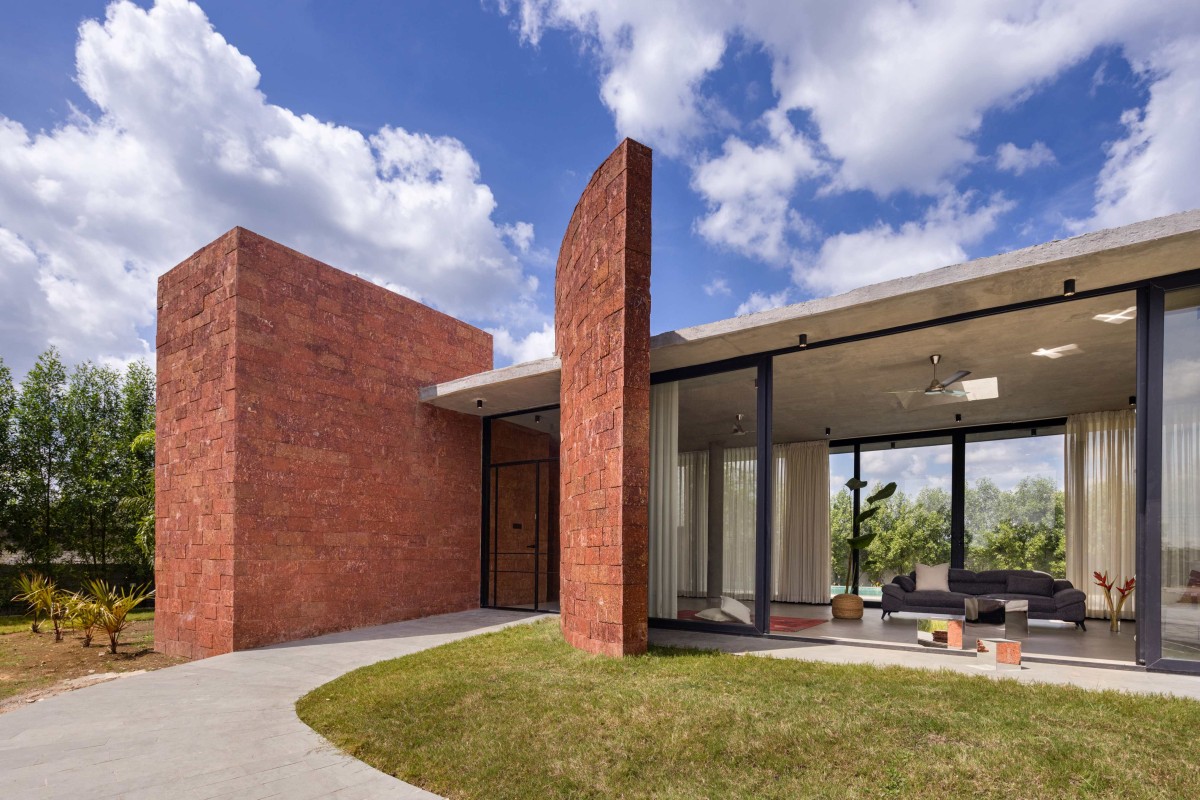
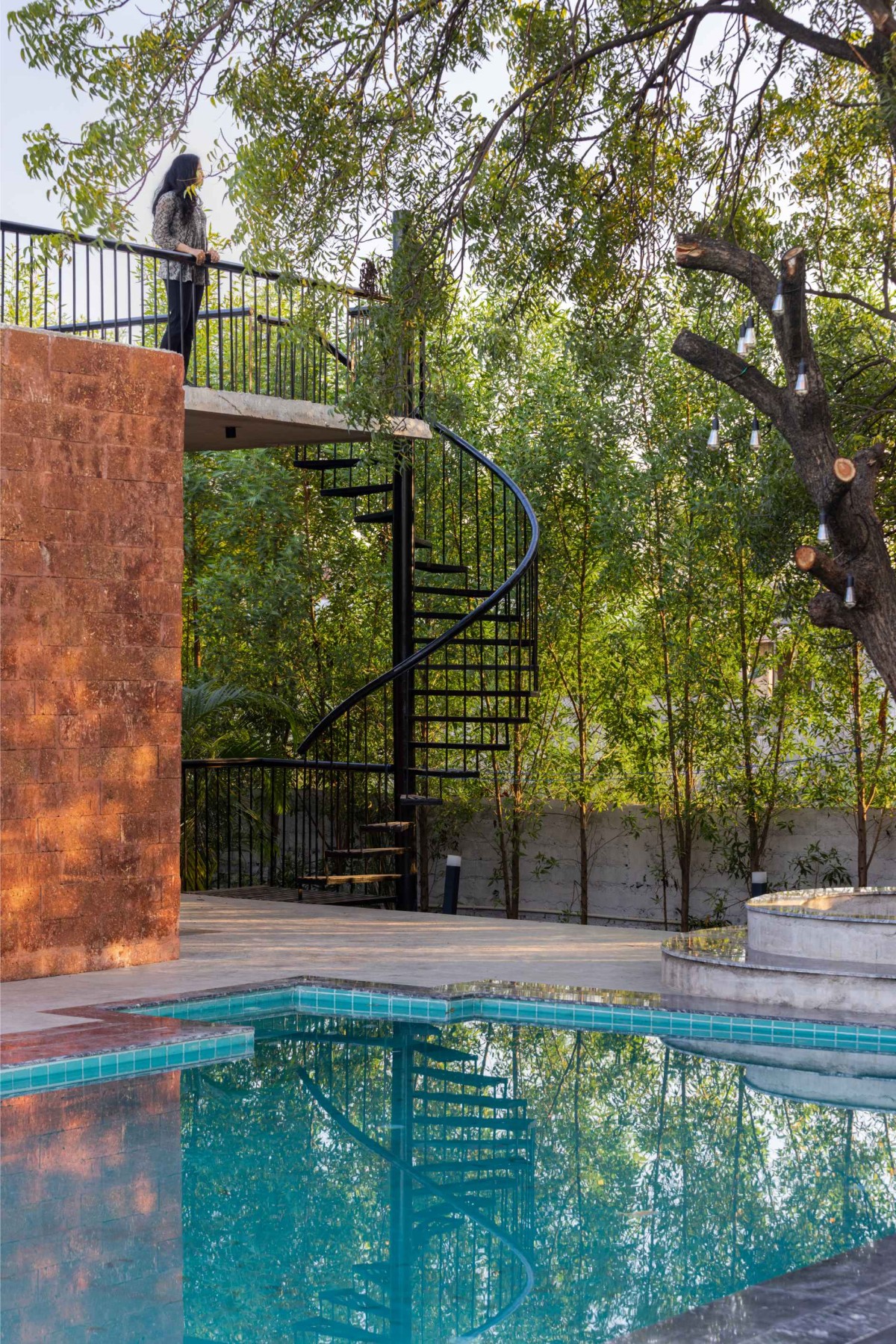
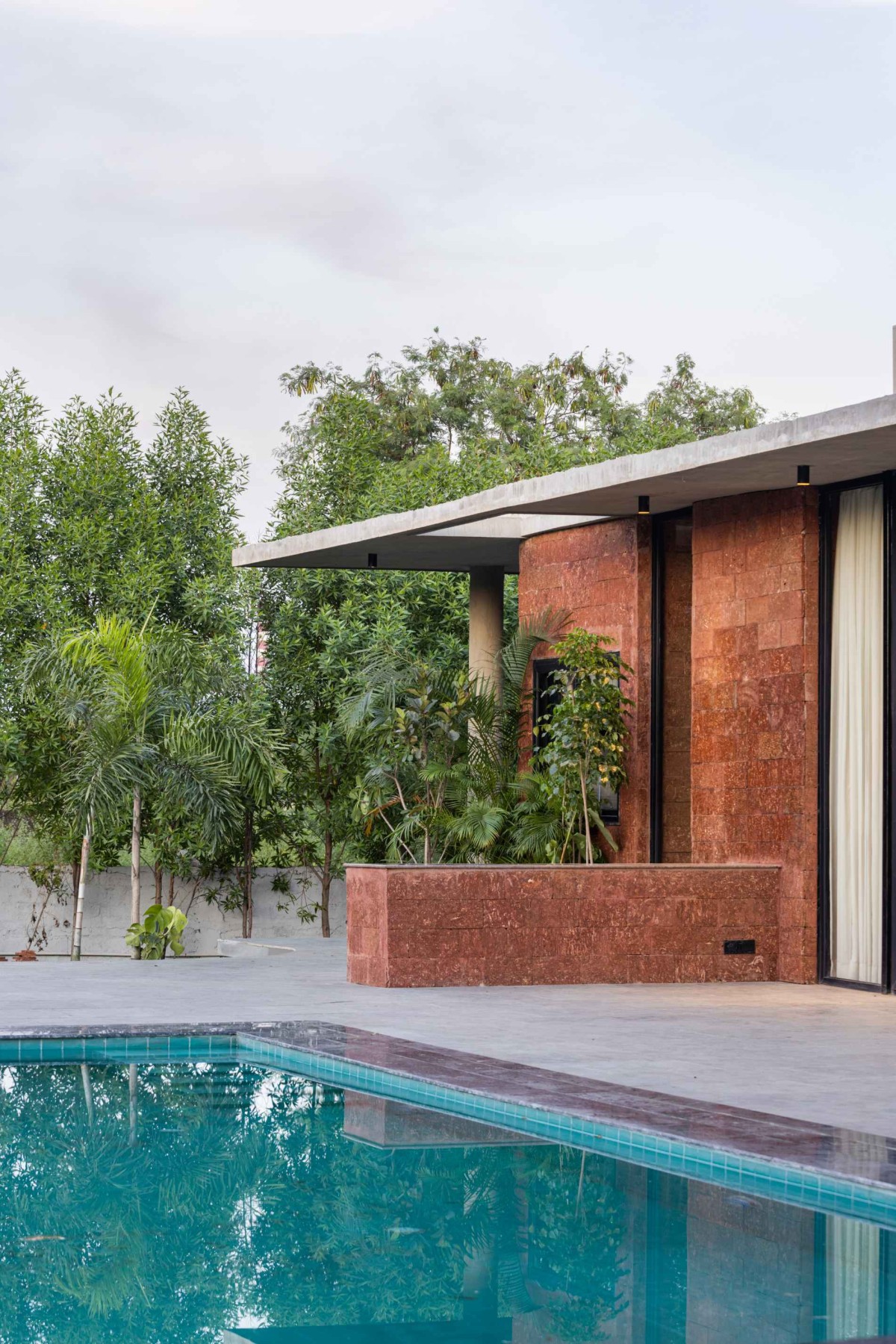
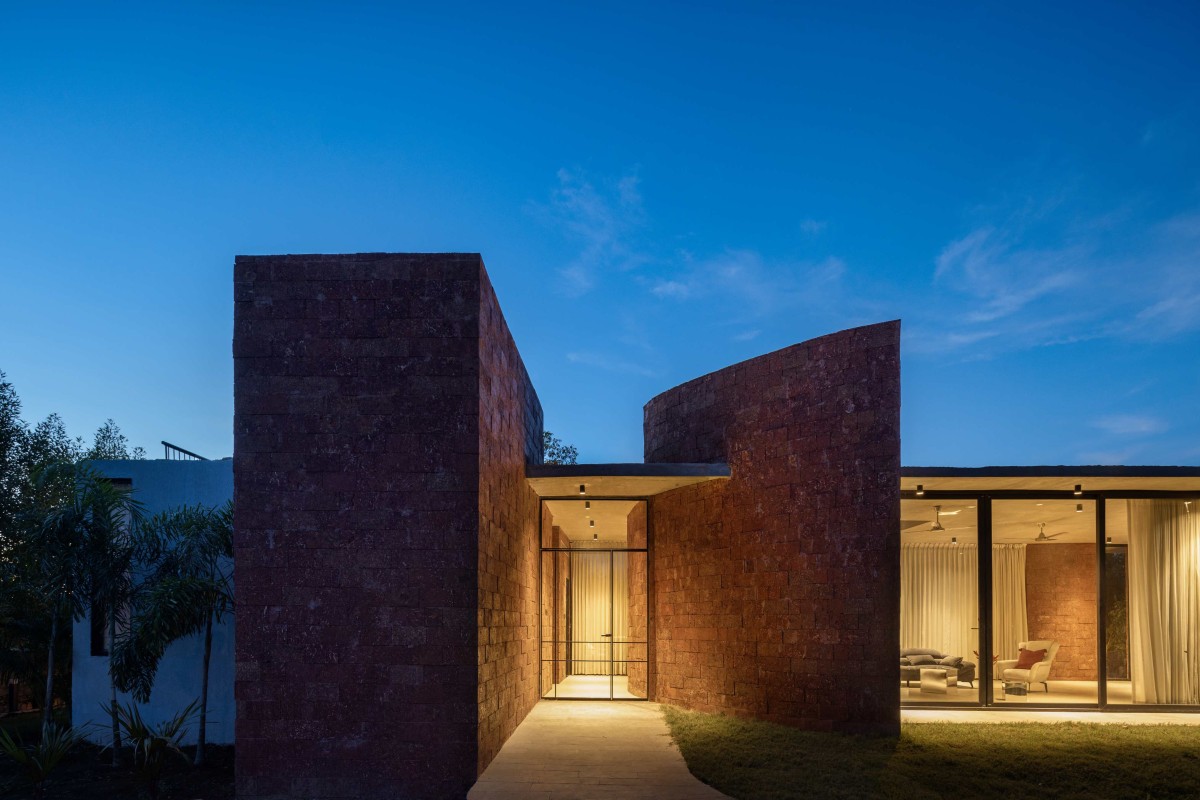
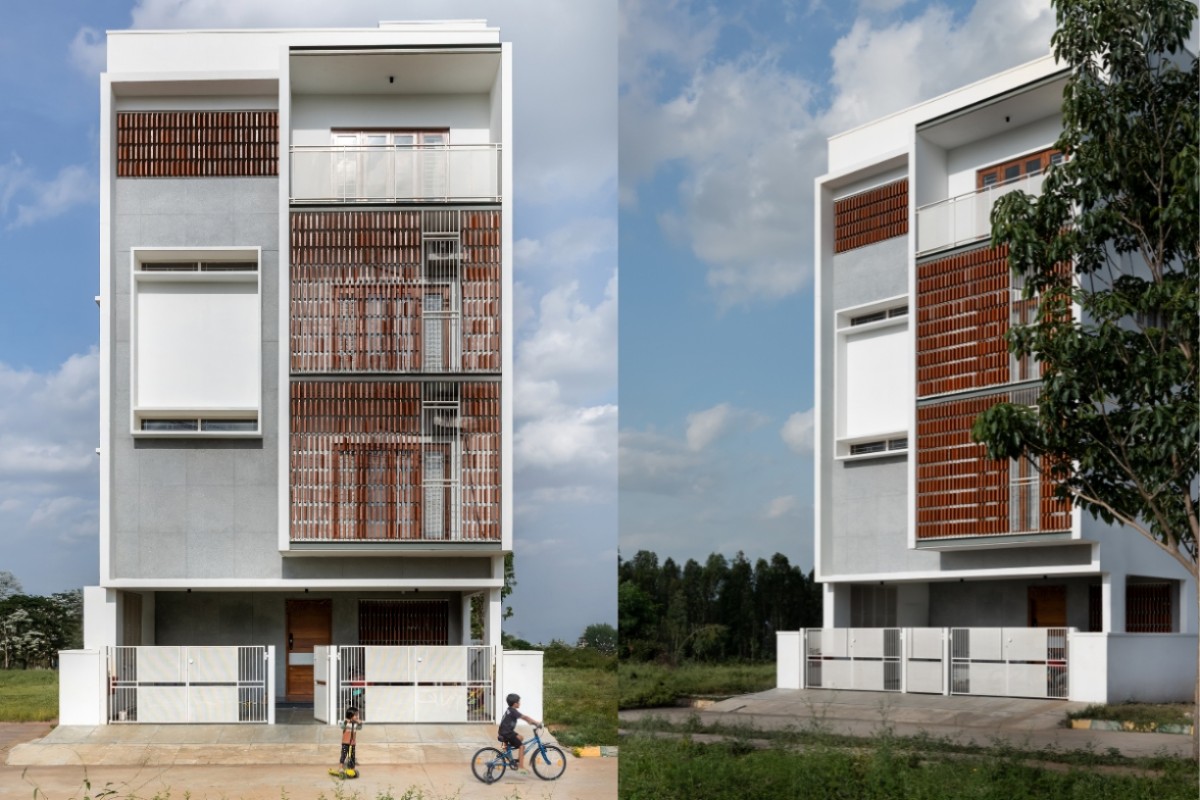
The masonry evokes a strong horizontal rhythm of varying patterns if witnessed carefully, throughout the coursing pattern. A simple cuboid form has been chosen to anchor the single-level structure and reiterate its connection with the Earth. The introduction of a curved wall not only disrupts the rigidity of the cuboid form but also softens the western edge, creating a welcoming entry while mitigating the harsh afternoon sun. Designed as a pavilion-like retreat, the home features a floating roof and expansive windows, blurring the boundaries between indoors and outdoors. The roof, accessible via a spiral staircase from the plinth, transforms into an open-air perch, offering a deeper connection with the landscape and sky.
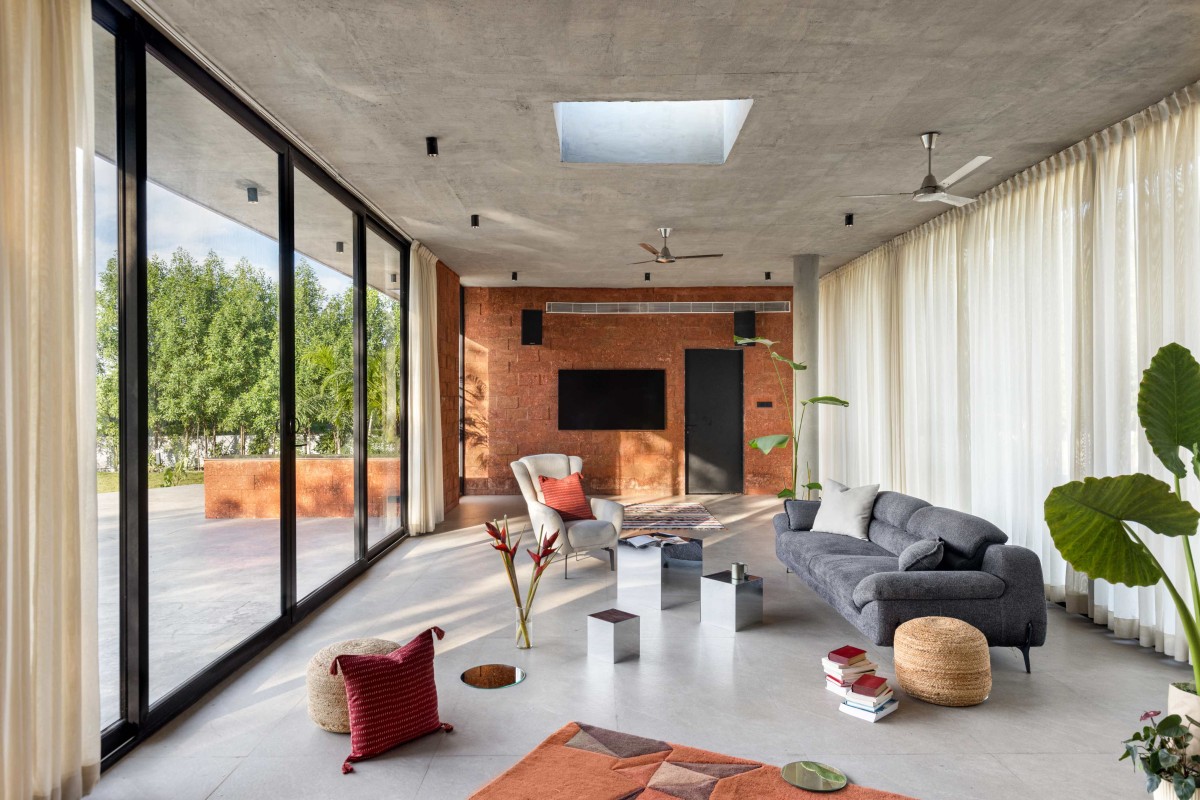
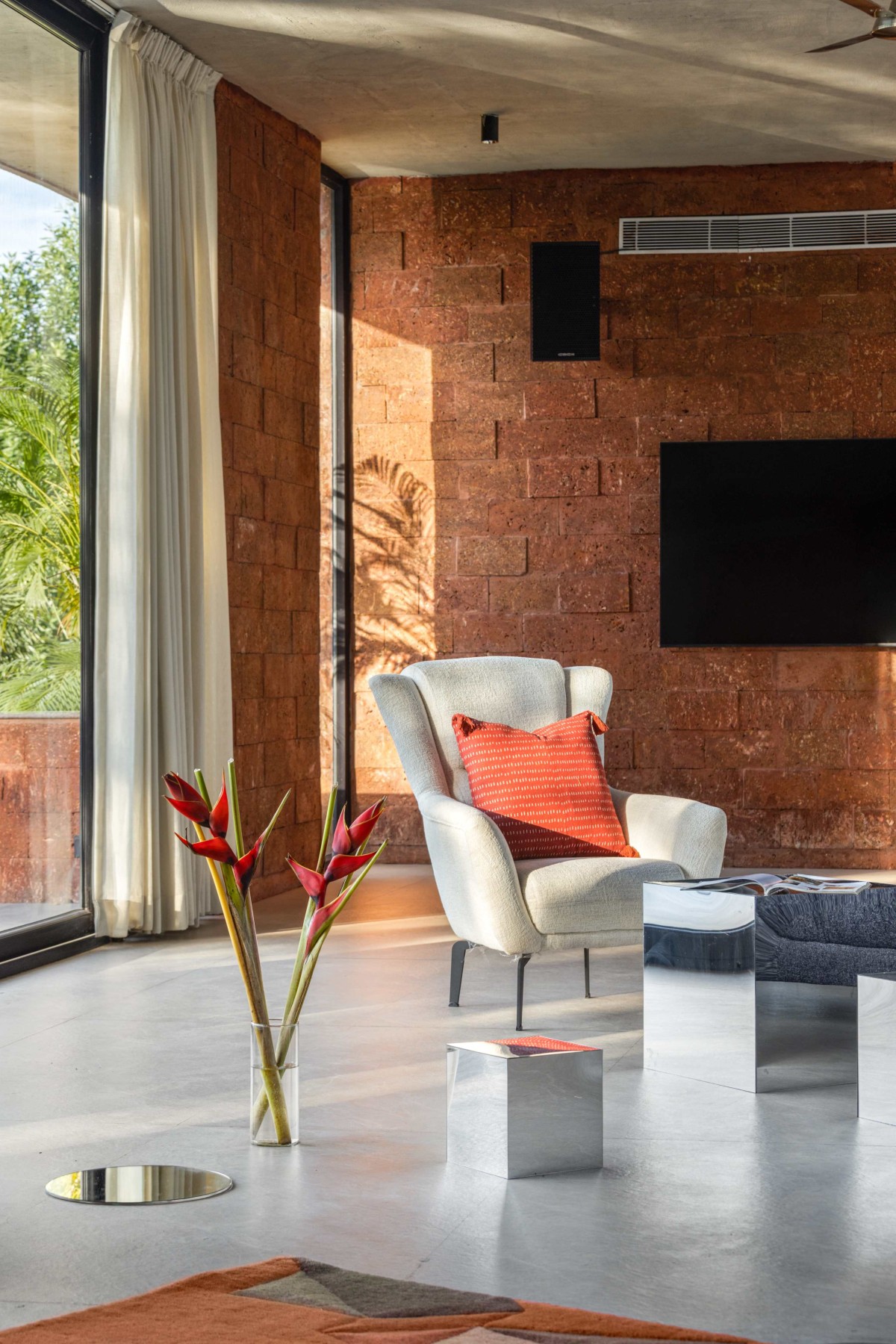
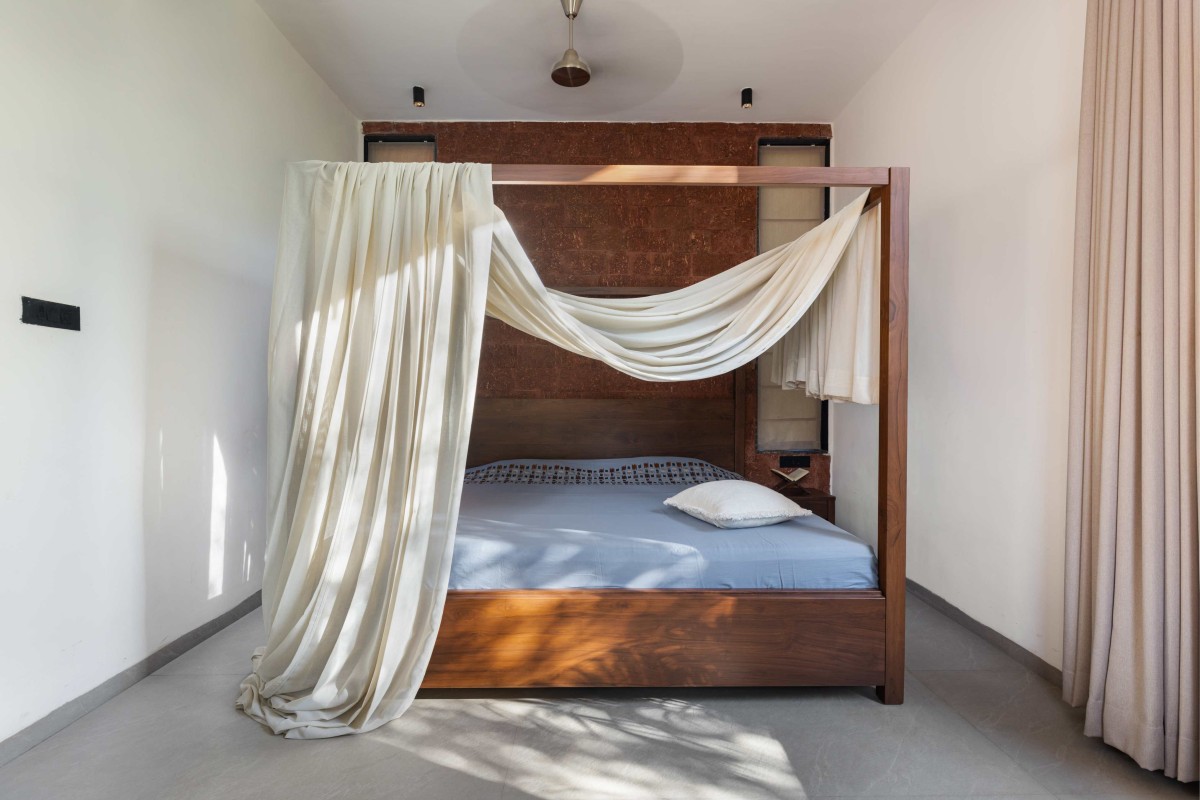
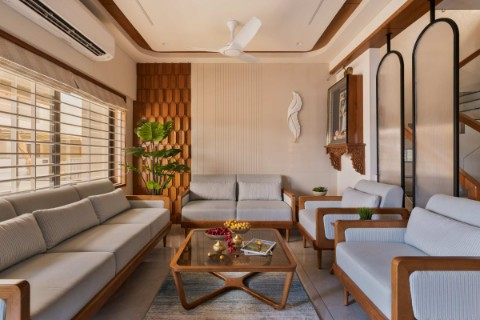
The spatial planning is rooted in an axial organisation along the North-South axis, dividing the home into a sequence of interconnected spaces—bedroom, living, kitchen, and dining—each offering varying degrees of engagement with the outdoors. Solid masses, such as the kitchen and bathroom, are enclosed in laterite block walls, a material chosen both for its thermal properties and the client’s nostalgic connection to Goan homes. In contrast, the void masses, including the bedroom, living area, and verandah, are defined by floor-to-ceiling glazing, allowing natural light to filter in while offering uninterrupted views of the neem tree and surrounding greenery.