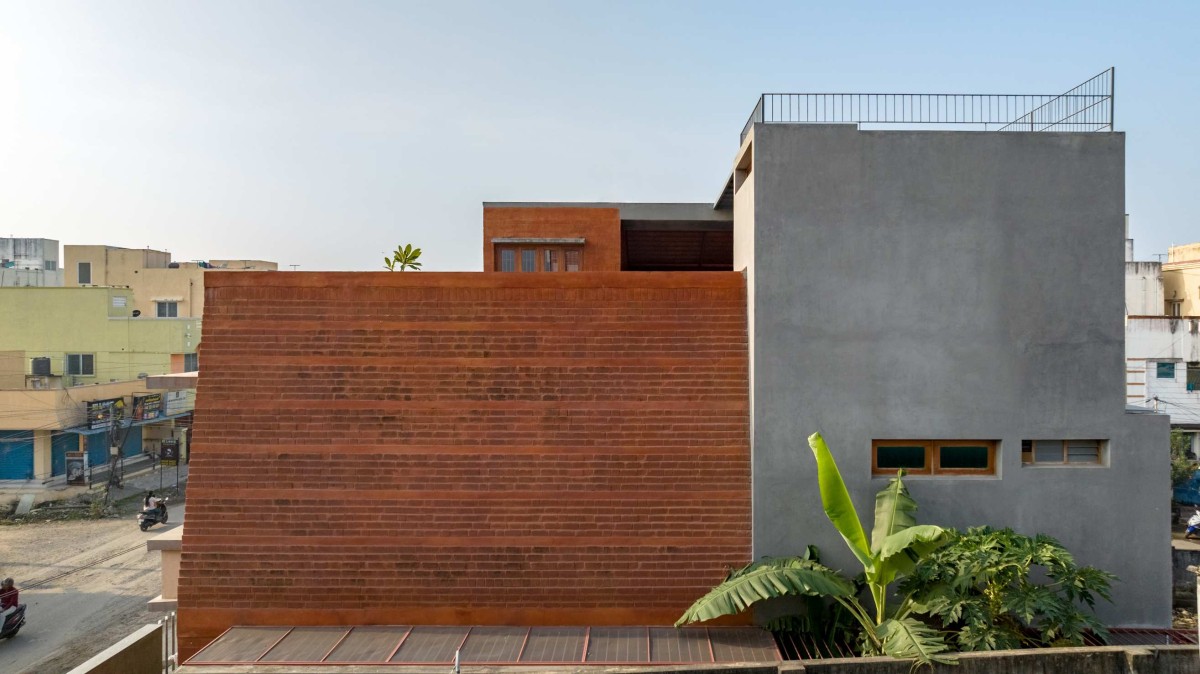
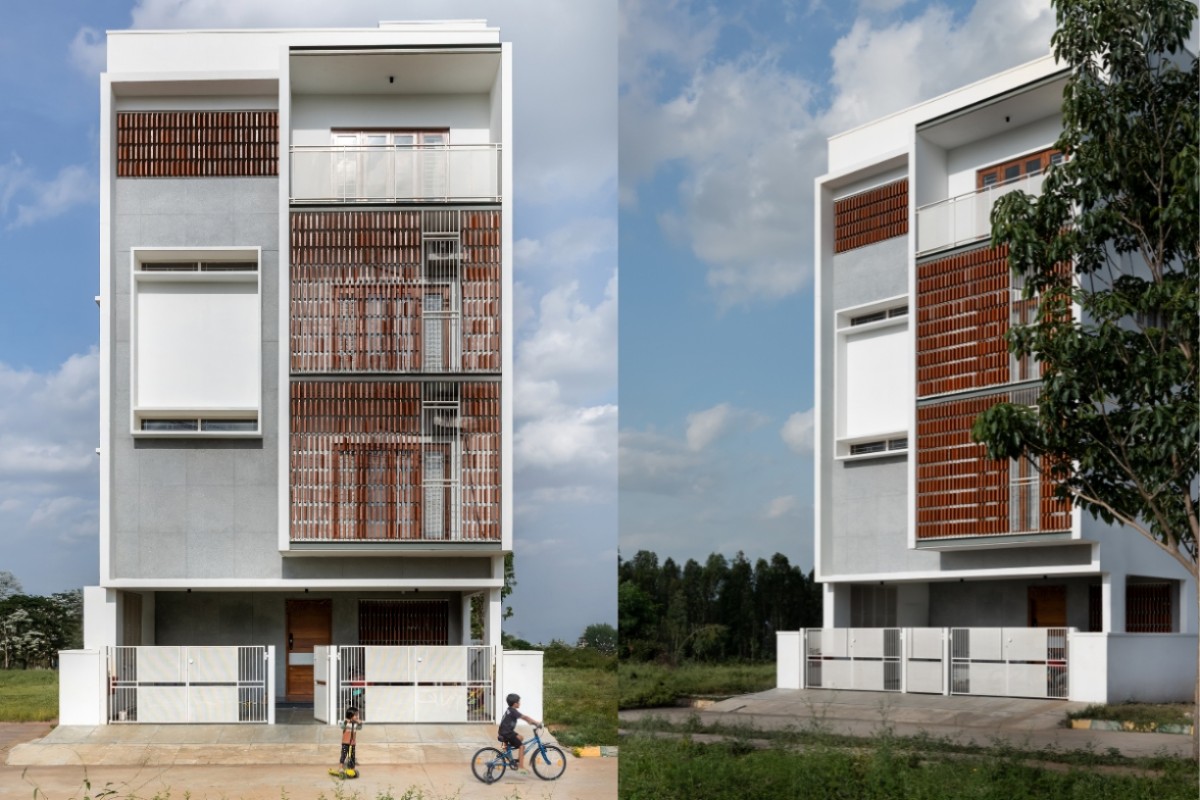
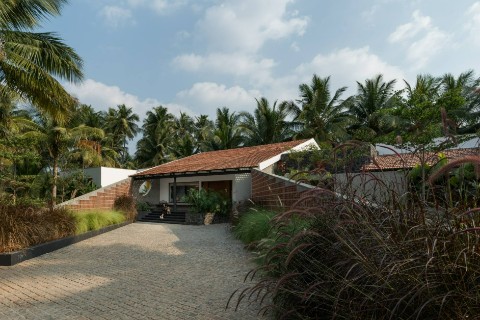
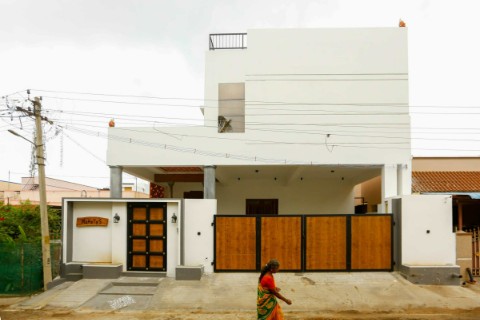
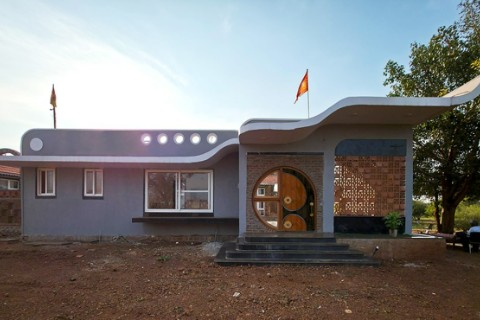
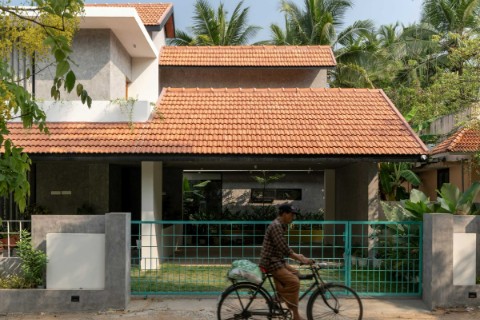
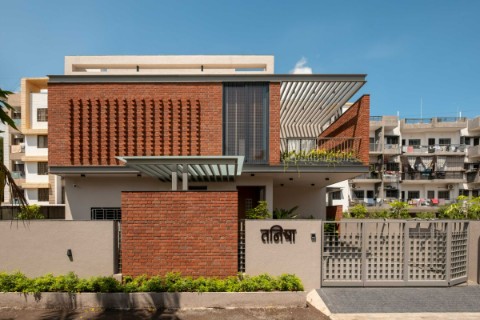
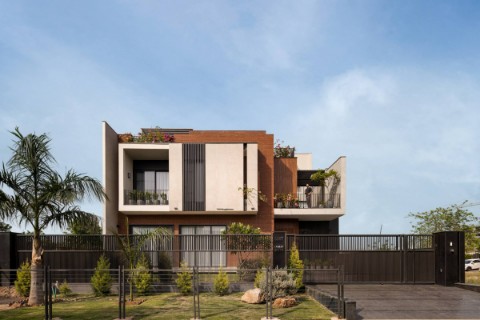
Exterior view of House of Slow Reflections by WeBe Design Lab
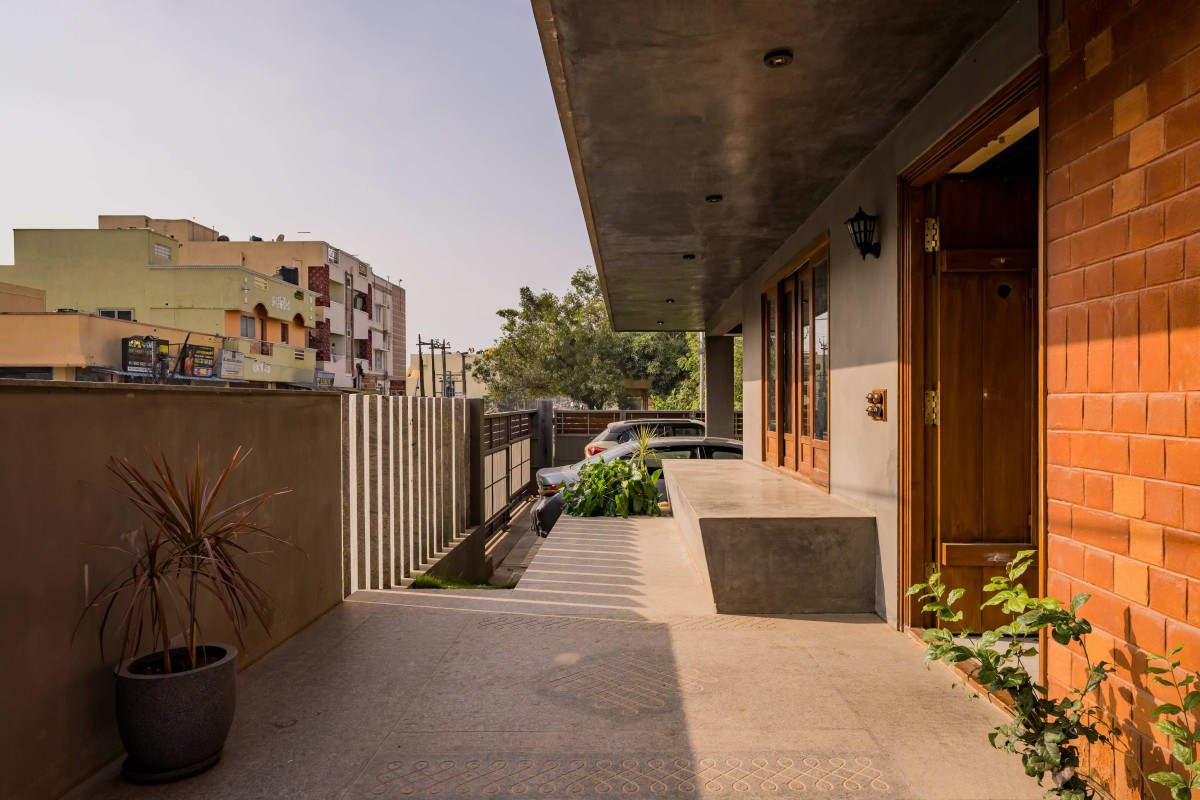
Verandah of House of Slow Reflections by WeBe Design Lab
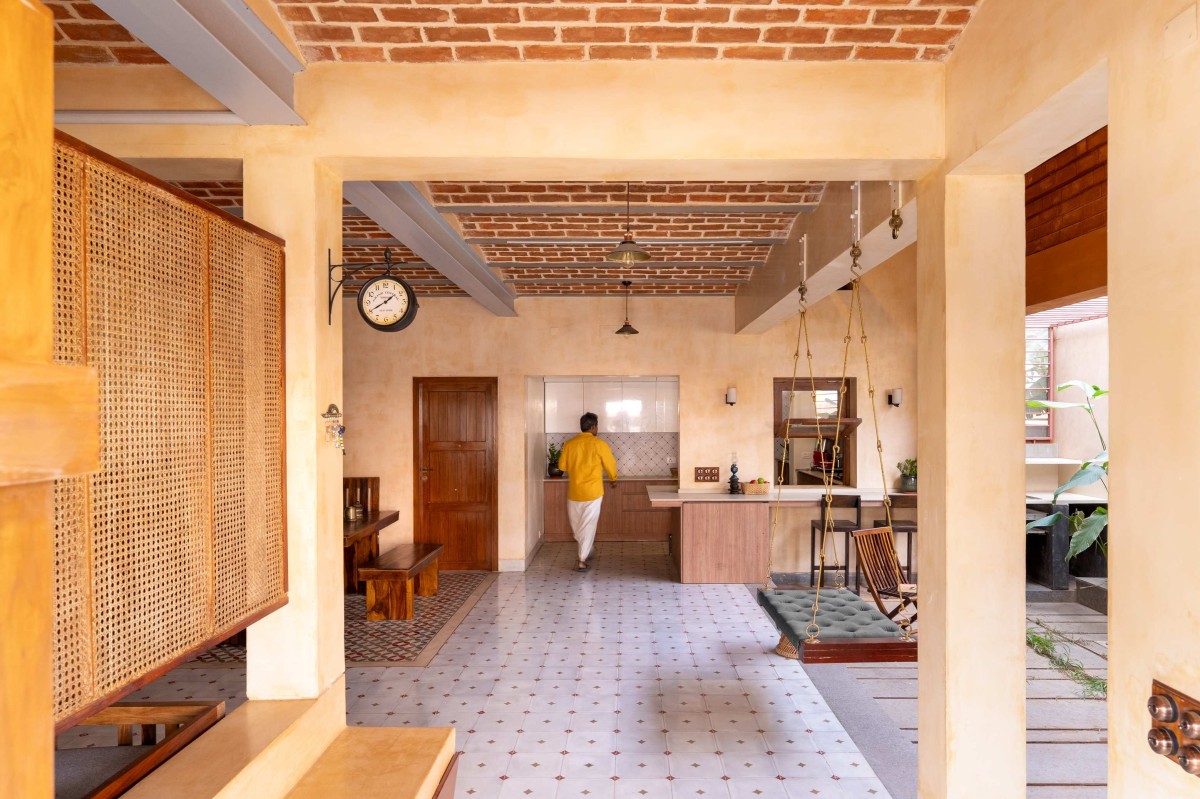
View from foyer of House of Slow Reflections by WeBe Design Lab
The project evolved through a detailed reading of user timelines and activity matrices, translating daily routines into spatial hierarchies that respond to moments of overlap, pause, and transition across weekday and weekend use. Guided by the idea of ‘slowness as intent rather than inertia’, House is designed for a family navigating professional, domestic, spiritual, and social rhythms. Spaces are therefore conceived as adaptable zones rather than fixed rooms, allowing the home to shift seamlessly from focused workdays to collective gatherings, while preserving its underlying essence of continuity, comfort, and calm with an optimized footprint.
Conceived as a porous assemblage rather than a monolithic form, House employs volumetric design as a tool for programmatic integration and climatic performance. Staggered volumes provide mutual shading, accommodate utility buffers, and facilitate the integration of green pockets together, achieving an estimated 40–45% reduction in heat gain. Organised vertically, the house unfolds around a spiritual and communal ground level, where the temple and wind tower function as a combined climatic and circulatory spine. This sectional logic enables a calibrated transition between collective and intimate realms while promoting daylight and natural ventilation. The architectural form shifts between openness and enclosure, intimacy and collectivity.
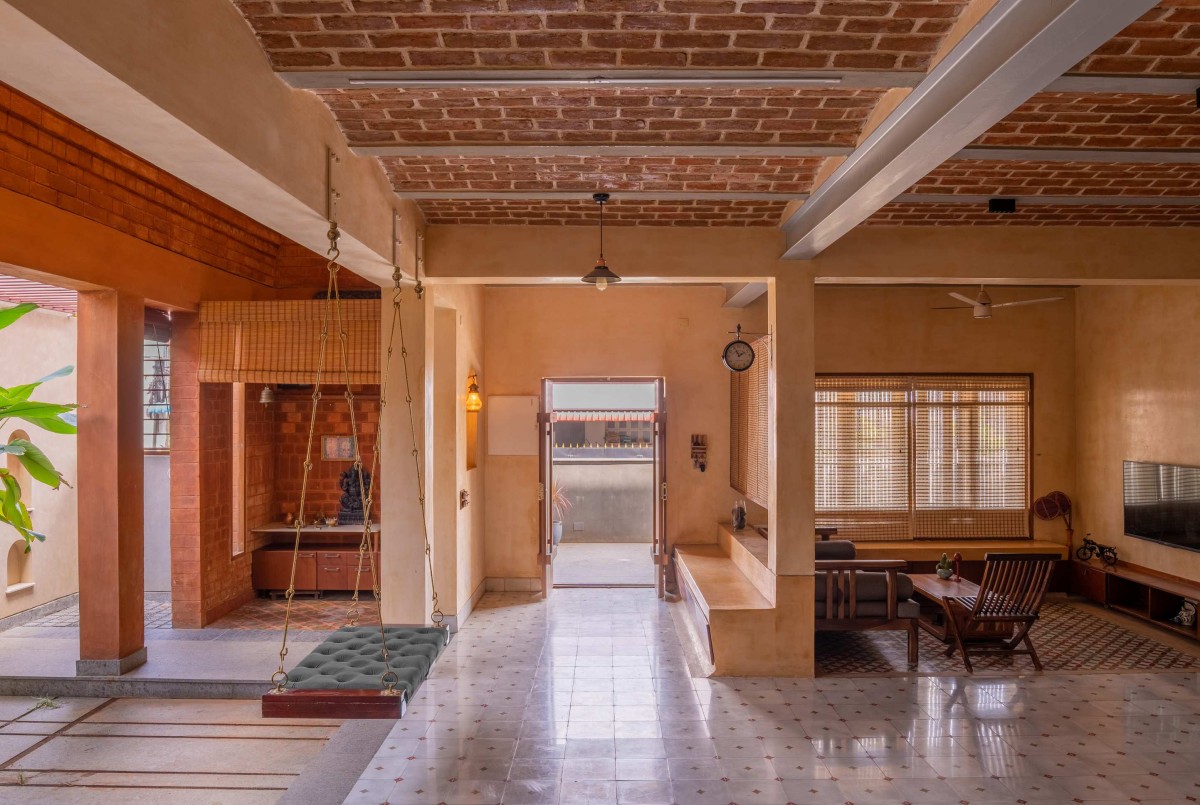
Foyer to Courtyard view of House of Slow Reflections by WeBe Design Lab
Courtyard of House of Slow Reflections by WeBe Design Lab
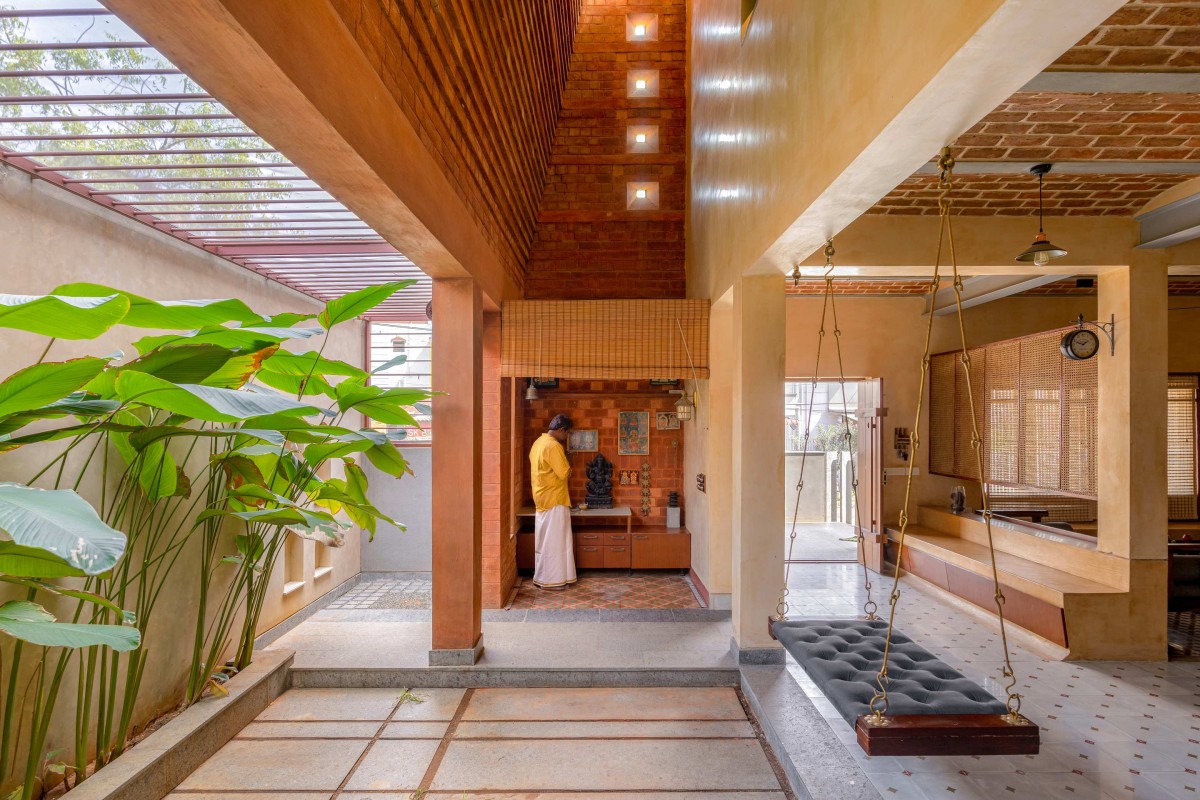
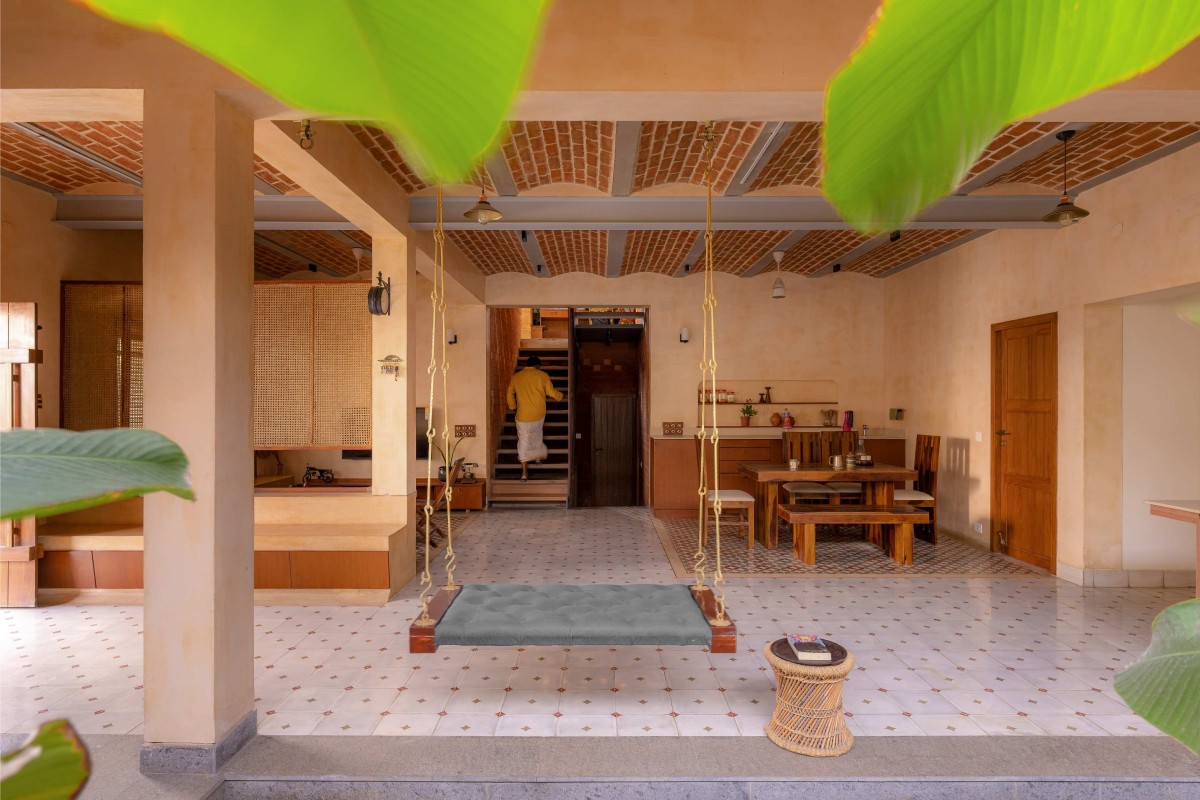
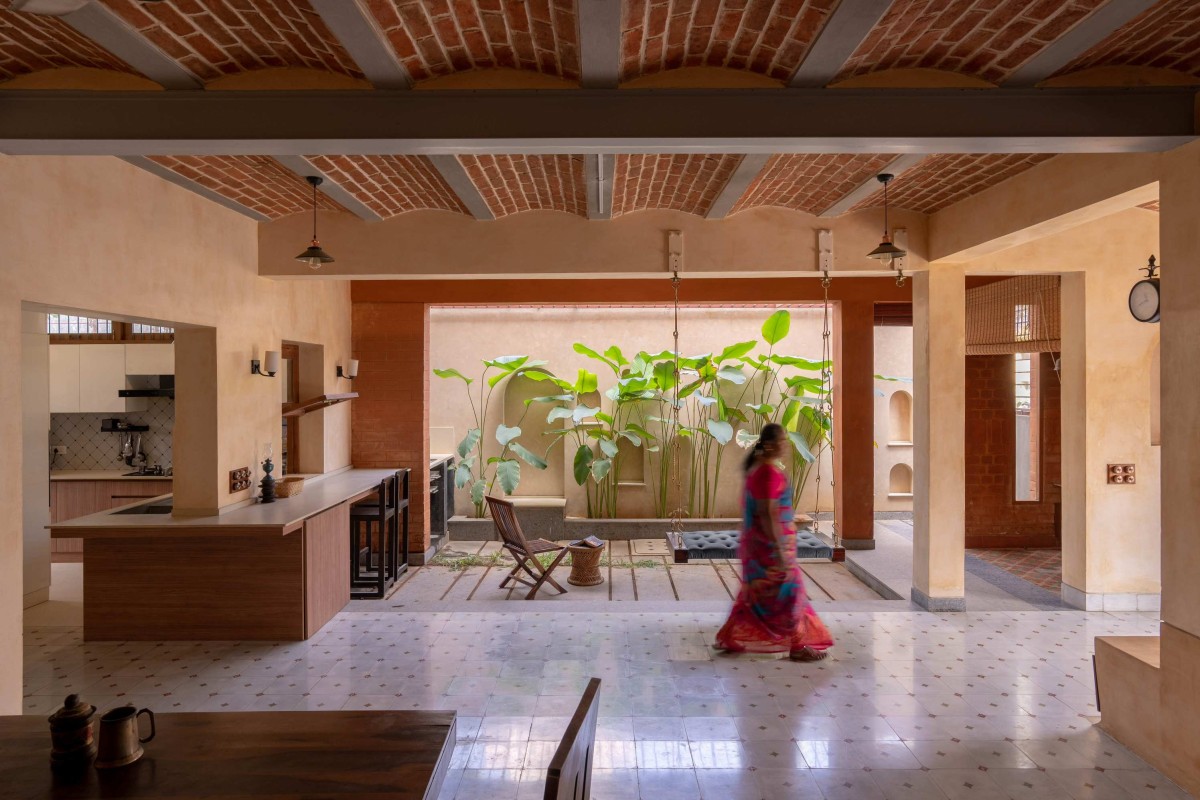
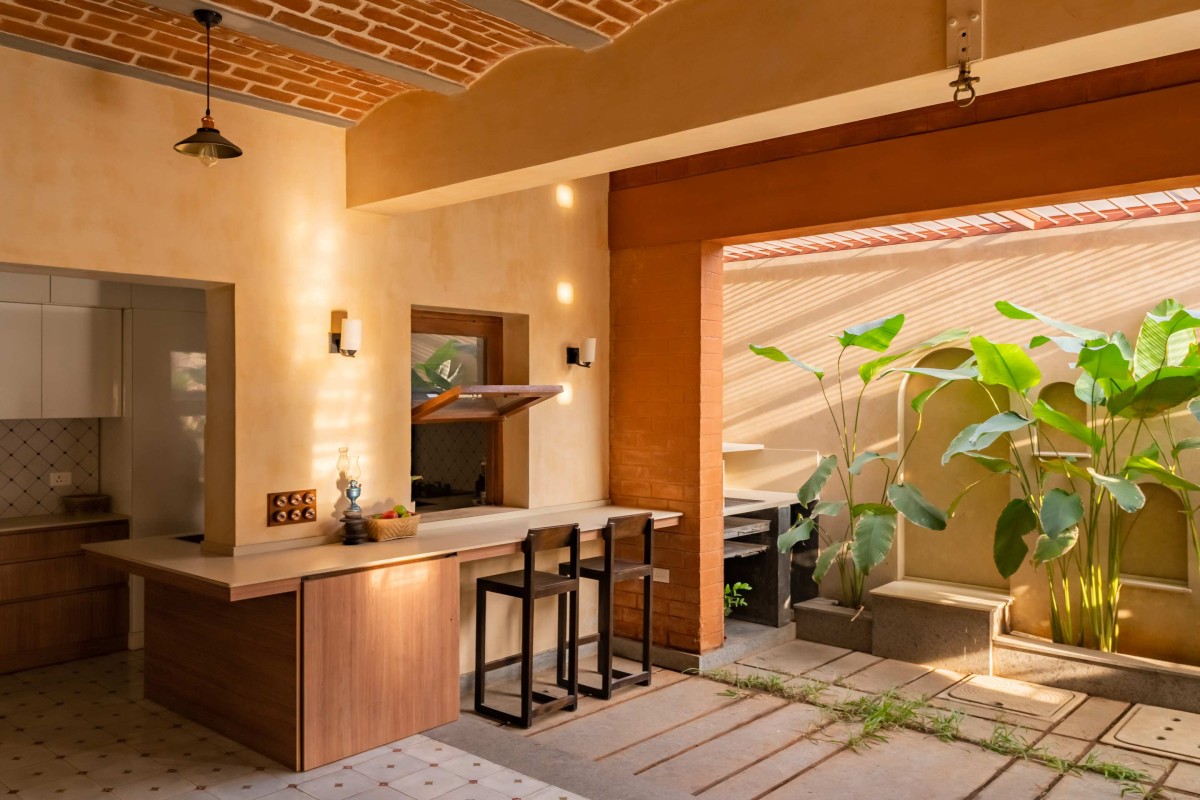
The soul of the home is the double-height courtyard, which acts as both a spiritual anchor and a climatic engine. Aligned to the east, it hosts a vertical light well that draws in golden morning light, marking the passage of time. This space is flanked by the pooja and the kitchen, bridging sacred and social functions.
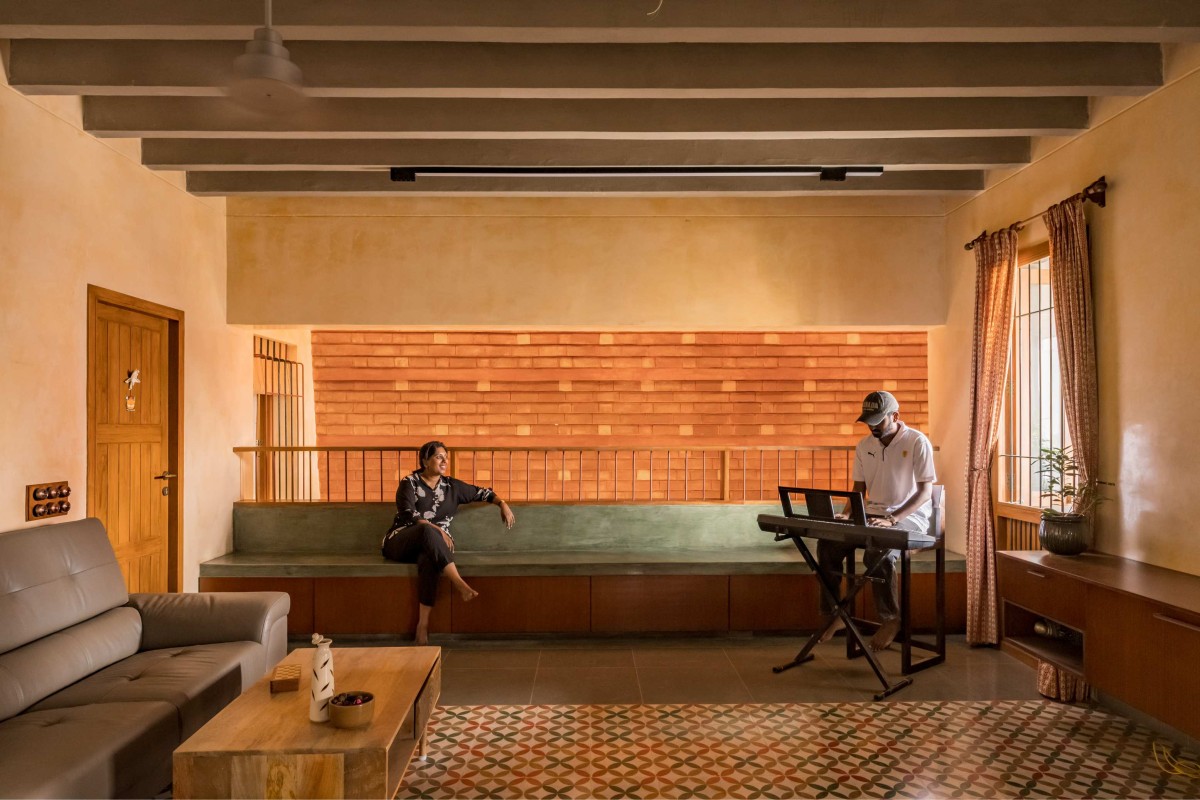
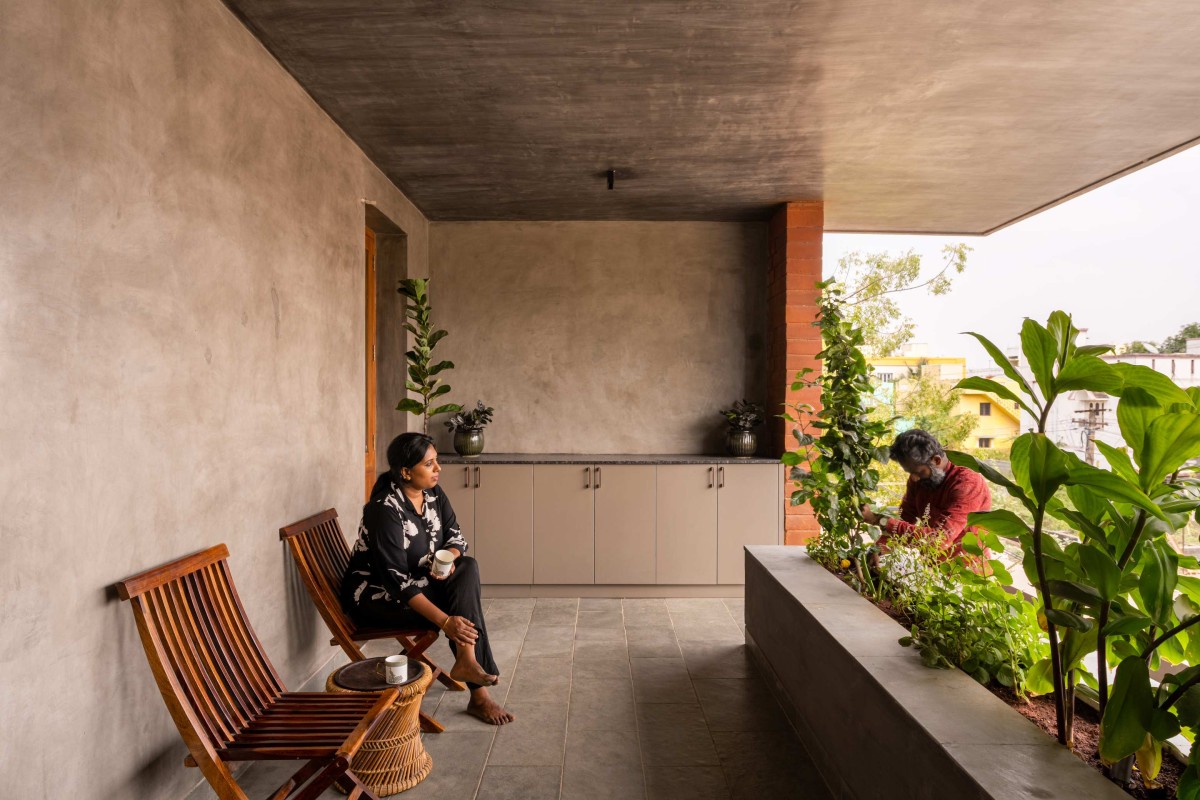
Seating in Lin’Brick House is conceived not as movable furniture but as an architectural device that introduces moments of pause within everyday movement. These built-in pause points slow down circulation, transforming transitional spaces into areas of reflection and interaction. Whether overlooking the courtyard, catching a breeze along a shaded edge, or anchoring communal corners, the seaters reinforce the house’s ethos of slowness, where inhabitation unfolds through rest as much as through movement.
Courtyard of House of Slow Reflections by WeBe Design Lab
Clinically, the courtyard is an active part of the home's natural cooling system, channelling breezes from two major wind catchers: the temple tower and the stairwell. The use of natural materials ensures the floor and boundaries remain cool to the touch even in the scorching Chennai heat. The living and media spaces are intentionally ambiguous, capable of hosting intimate family moments or expanding to accommodate gatherings. Furniture is low, material palettes are muted, and light is diffused, allowing the space to settle rather than perform.
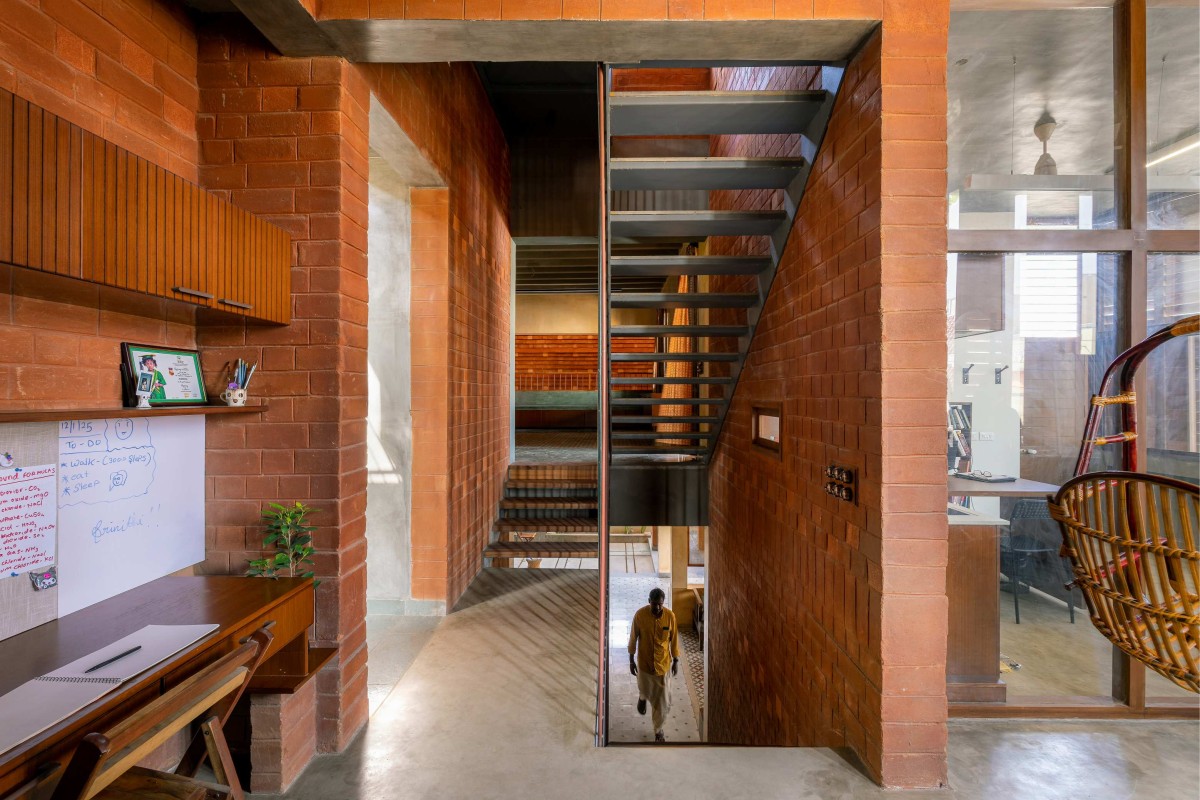
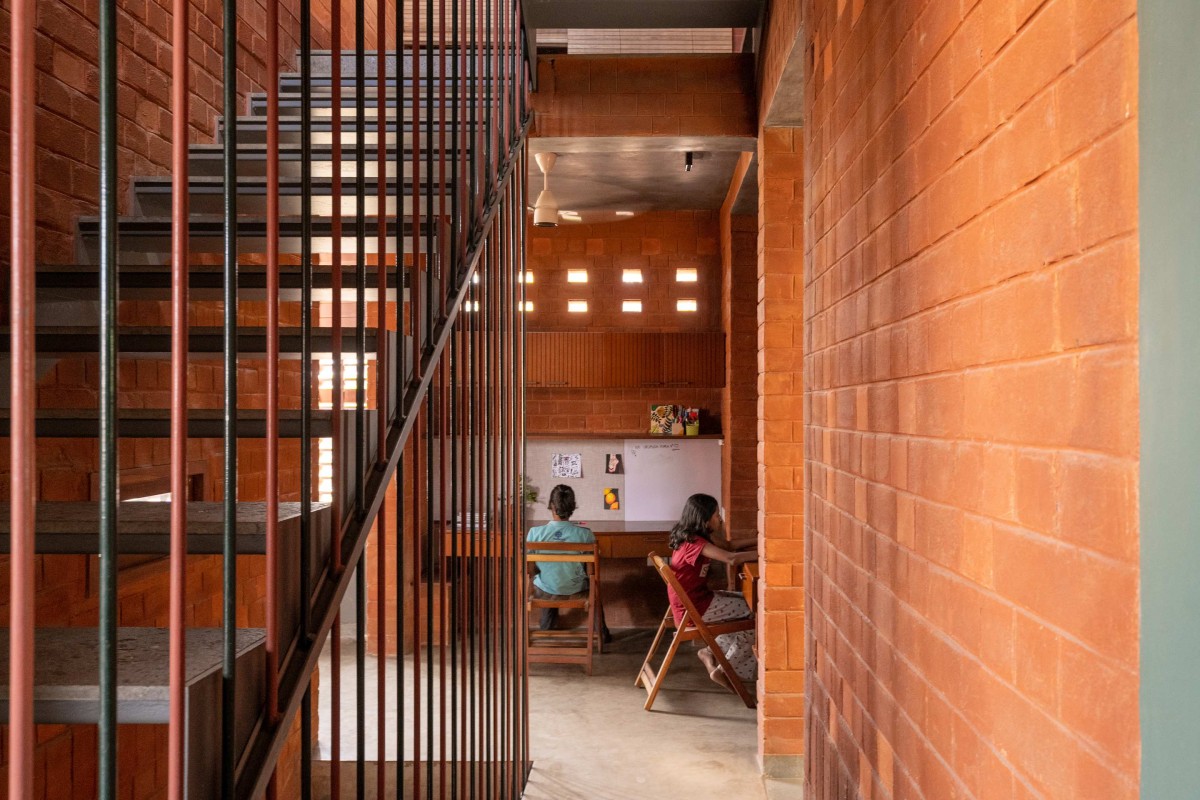
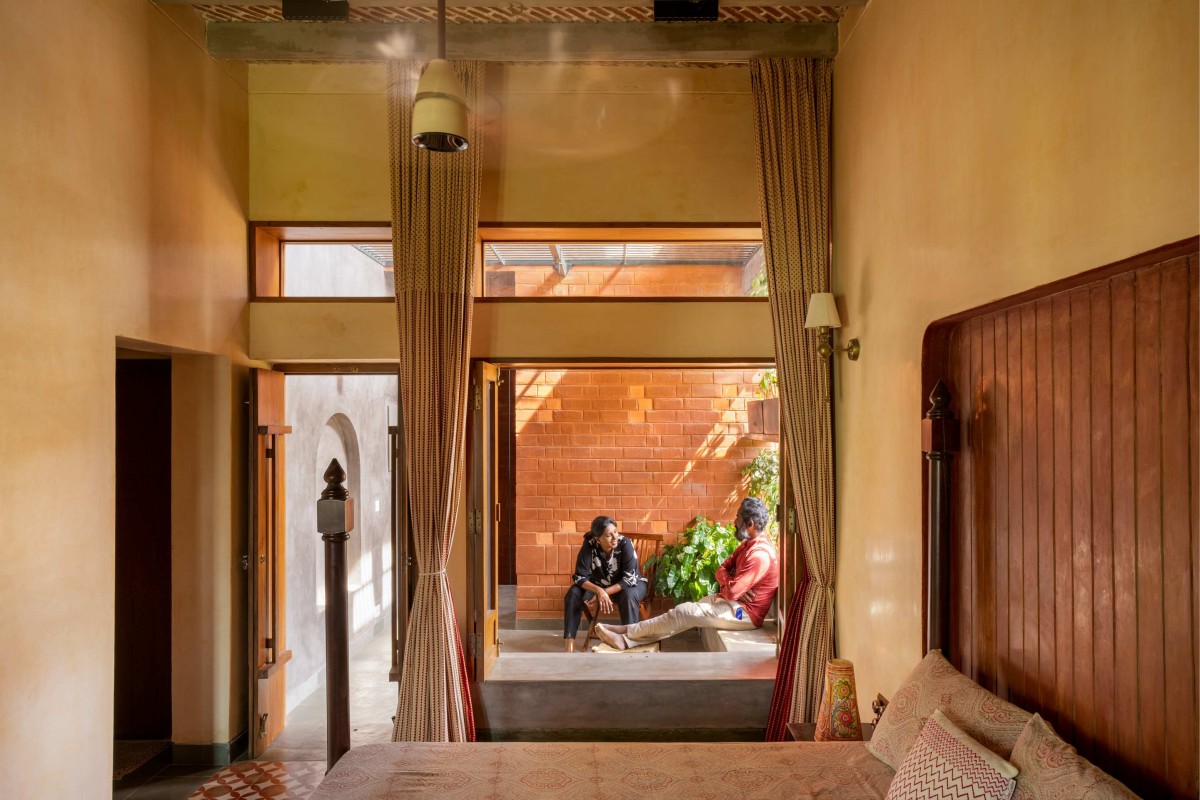
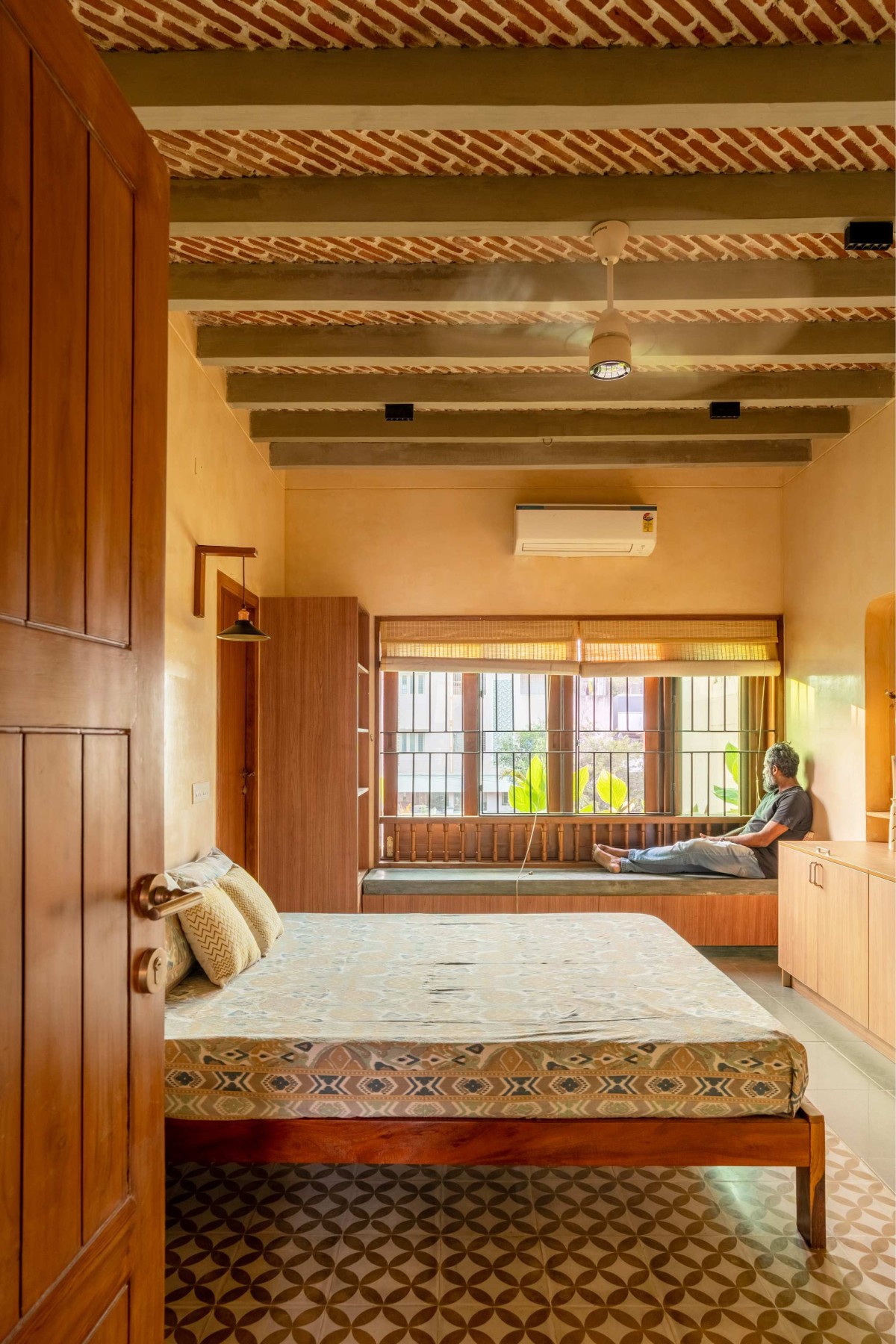
The work-from-home zone and study areas are treated with equal architectural dignity. Elevated yet connected, these spaces support focus while remaining visually and climatically linked to the house. Work becomes a ritual rather than an intrusion. Bedrooms follow the same ethos - private yet permeable, minimal yet warm. Storage, furniture, and surfaces are integrated seamlessly into the architecture, reducing clutter and visual noise.
Dining to Courtyard view of House of Slow Reflections by WeBe Design Lab
Kitchen & Breakfast counter of House of Slow Reflections by WeBe Design Lab
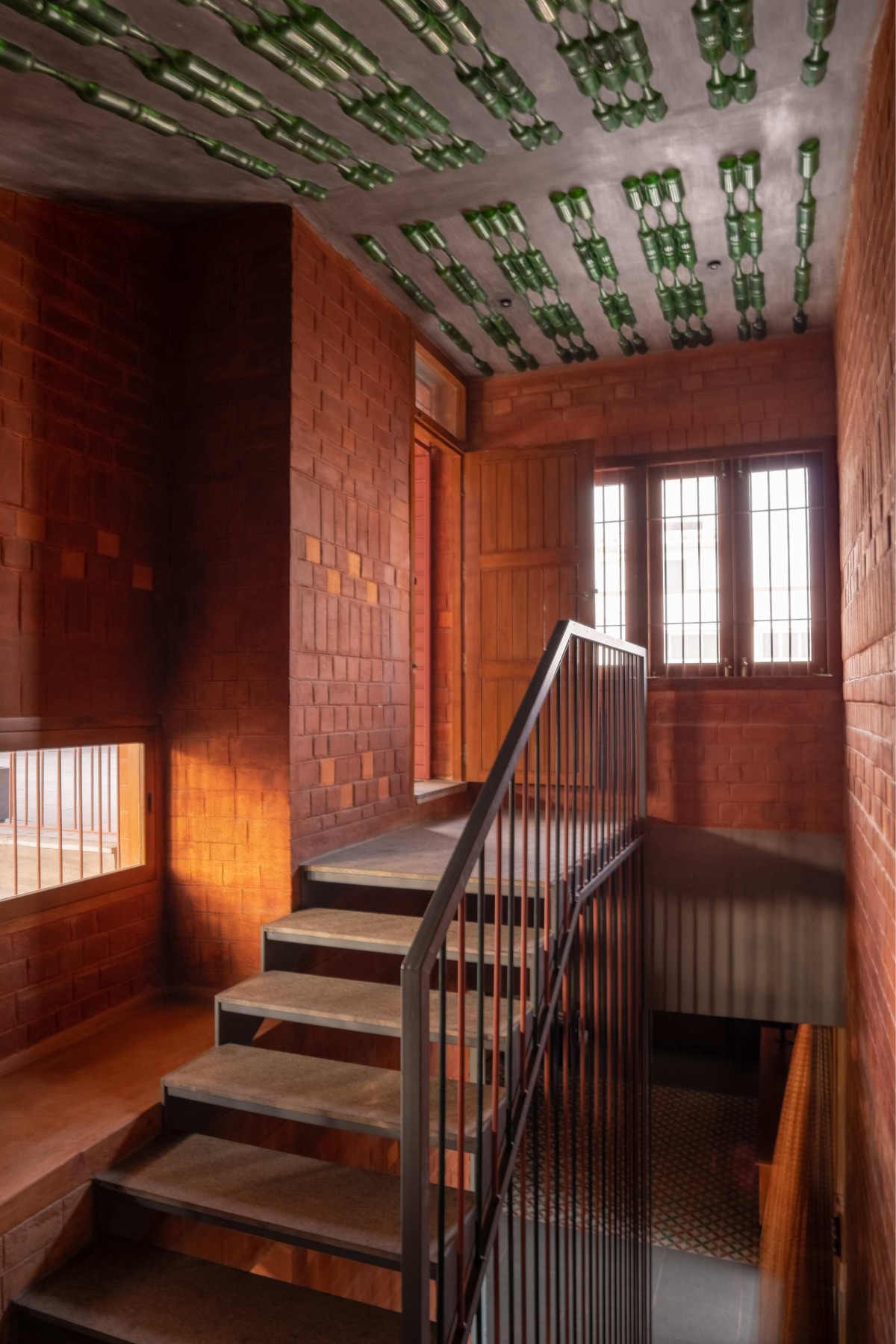
Staircase of House of Slow Reflections by WeBe Design Lab
Circulation spaces in Lin’Brick House are deliberately slowed down. Staircases are widened, landings expanded, and views curated. As one moves vertically, materials shift subtly from brick to stone to lime plaster, creating a tactile narrative of ascent. These transitions are not merely connectors but spaces of encounter with light, wind, and other inhabitants.
Brick is not a finish in Lin’Brick House; it is the architecture itself. Earth-based materials form almost 70% of the construction, processed natural materials account for 22%, while composite materials are limited to 8%, inclusive of cement and reinforcement, used only where structurally necessary. Load-bearing CSEB (Compressed Stabilized Earth Block) walls constructed with mud mortar form the primary structure, reducing material redundancy and embodied energy. Rather than defaulting to reinforced concrete, the ground floor adopts a Brick Jack Arch Roof as a quieter, more deliberate structural choice. By substituting a conventional RCC slab with a self-supporting brick system, cement and steel usage are reduced by approximately 25–30%, slowing both construction impact and material excess.
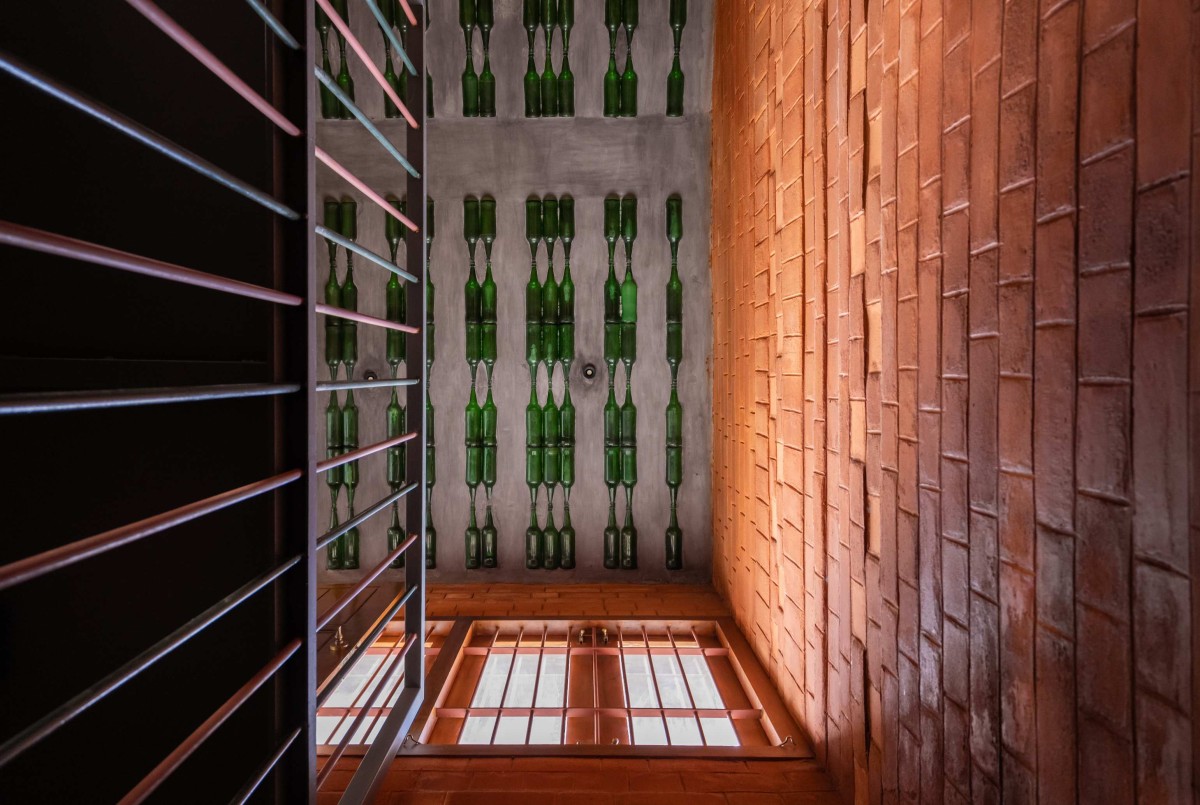
Ceiling view of House of Slow Reflections by WeBe Design Lab
Upper living of House of Slow Reflections by WeBe Design Lab
Study Area of House of Slow Reflections by WeBe Design Lab
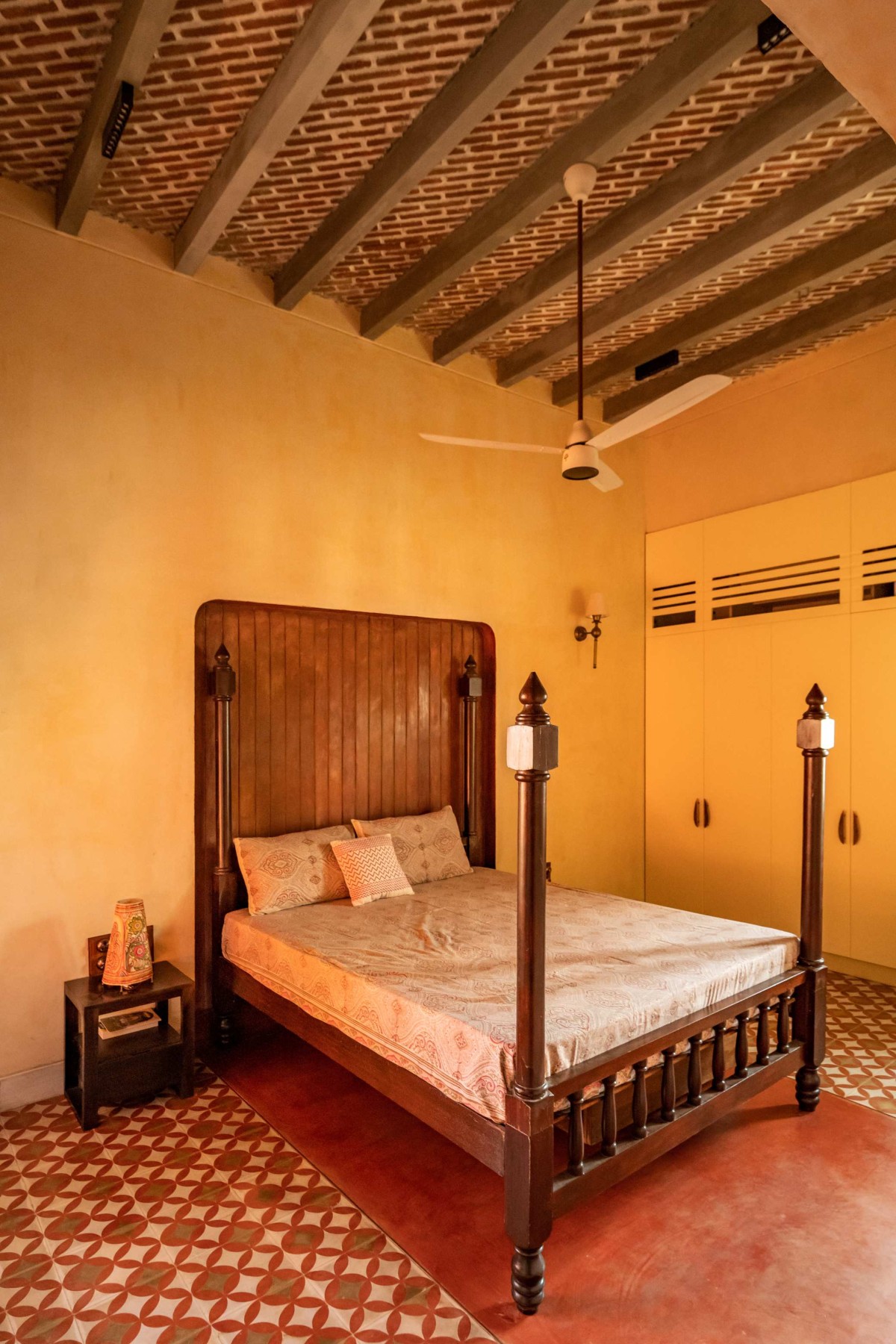
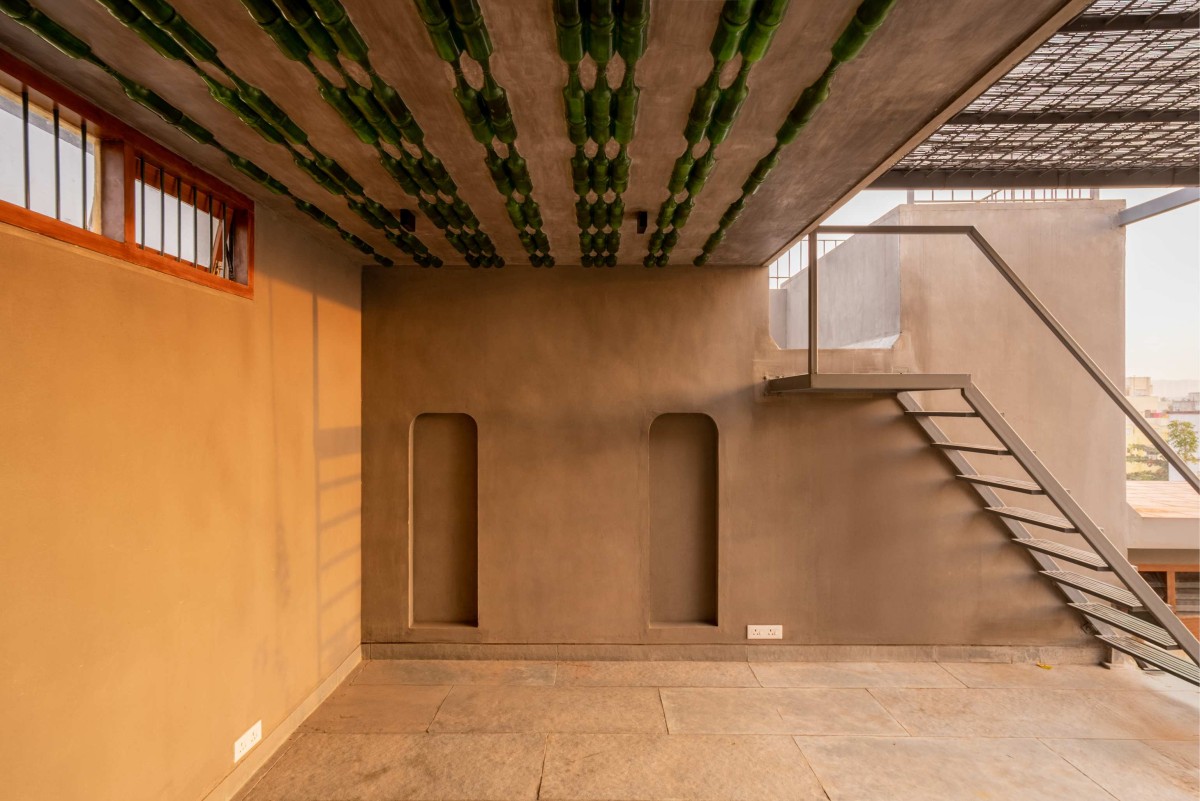
In transitional spaces, filler slabs reinterpret waste as structure. By incorporating discarded glass bottles as infill, the slabs cut down concrete usage by nearly one-fourth, lowering embodied energy while preserving structural integrity. The resulting ceilings transform an efficiency-driven decision into an experiential layer, where circularity becomes visible and tactile.
The material palette of Lin’Brick House is conceived as a living environmental system. Earth-based materials form 68% of the construction, with load-bearing CSEB walls and lime plaster creating a breathable envelope that increases thermal lag. A 300 mm (1 ft) thick Madras Terrace roof, combined with staggered massing and mutual shading, achieves a 40–45% reduction in incident solar radiation, resulting in an indoor temperature drop of approximately 8°C during peak summer conditions. Material restraint further strengthens performance, with processed natural materials at 22%, composites limited to 8%, and chemical finishes to just 0.8%.
This restrained material strategy, combined with climatic planning, contributes to a 40–45% reduction in heat gain, allowing brick to perform as a structure, climate moderator, and a storyteller.
Study Area of House of Slow Reflections by WeBe Design Lab
Bedroom 1 of House of Slow Reflections by WeBe Design Lab
The ecological footprint of LinBrick House is minimized through a series of integrated, circular systems that transform the residence into a self-sustaining ecosystem. Energy autonomy is anchored by an 8KW solar on-grid system, ensuring the home’s carbon impact is significantly offset. The hydrological cycle is managed with vernacular intelligence; rainwater harvested from the central courtyard is channelled into a percolation pit to recharge a traditional well, which serves as both a spiritual link to the earth and a functional storage reservoir. This commitment to circularity extends to waste management, where black water is processed via an on-site biodigester, and organic kitchen waste is systematically composted to nourish a thriving vegetable garden, effectively closing the loop between domestic consumption and ecological production.
Lin’Brick House approaches architecture as a responsive act rather than a declarative one. Instead of imposing a fixed lifestyle, the house absorbs the nuances of daily living, subtle shifts in routine, seasonal changes, and evolving family dynamics and reflects them through space. Light is allowed to arrive gradually, air is guided rather than forced, and materials respond to touch, time, and weather. Spaces listen to how they are used and adjust in scale, openness, and connection, enabling occupants to move more instinctively than deliberately. In this quiet reciprocity between inhabitant and built form, the house becomes less an object to be occupied and more a companion to everyday life, attentive, accommodating, and enduring.
Bedroom 1 of House of Slow Reflections by WeBe Design Lab
Bedroom 2 of House of Slow Reflections by WeBe Design Lab
Sitout of House of Slow Reflections by WeBe Design Lab
Gym Space of House of Slow Reflections by WeBe Design Lab
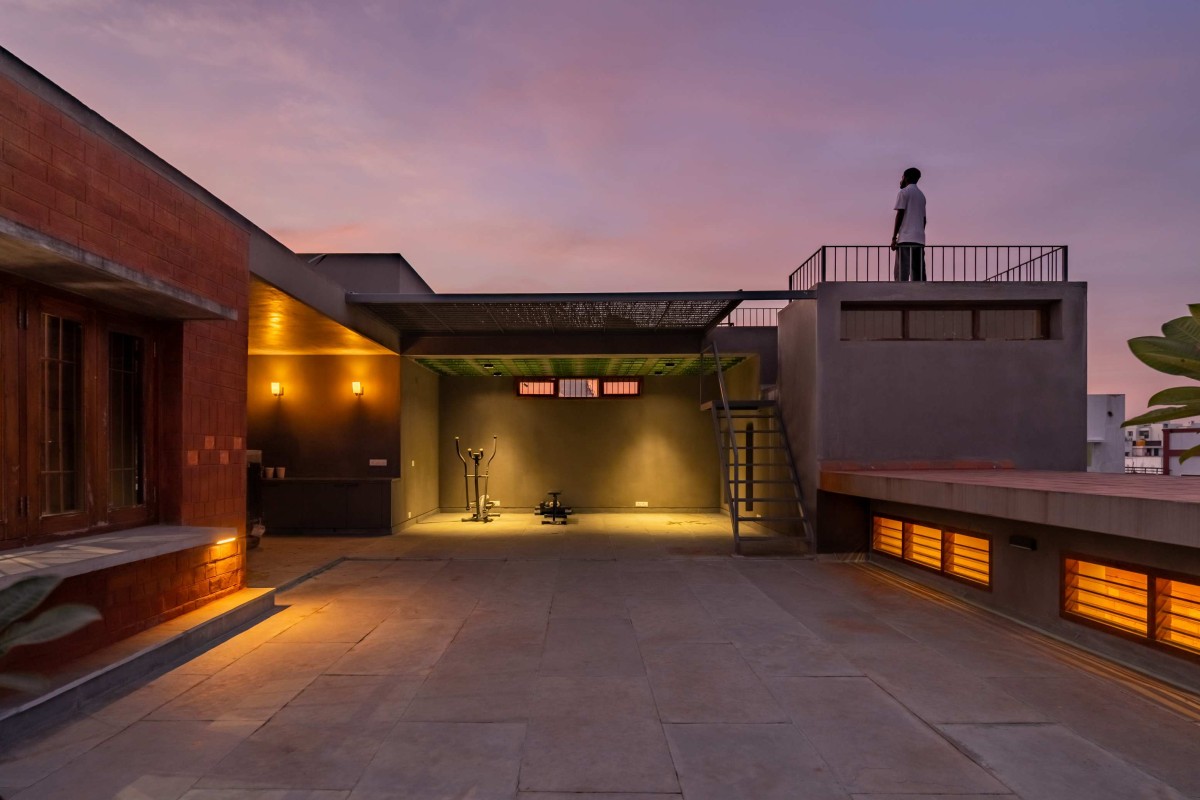
Terrace of House of Slow Reflections by WeBe Design Lab
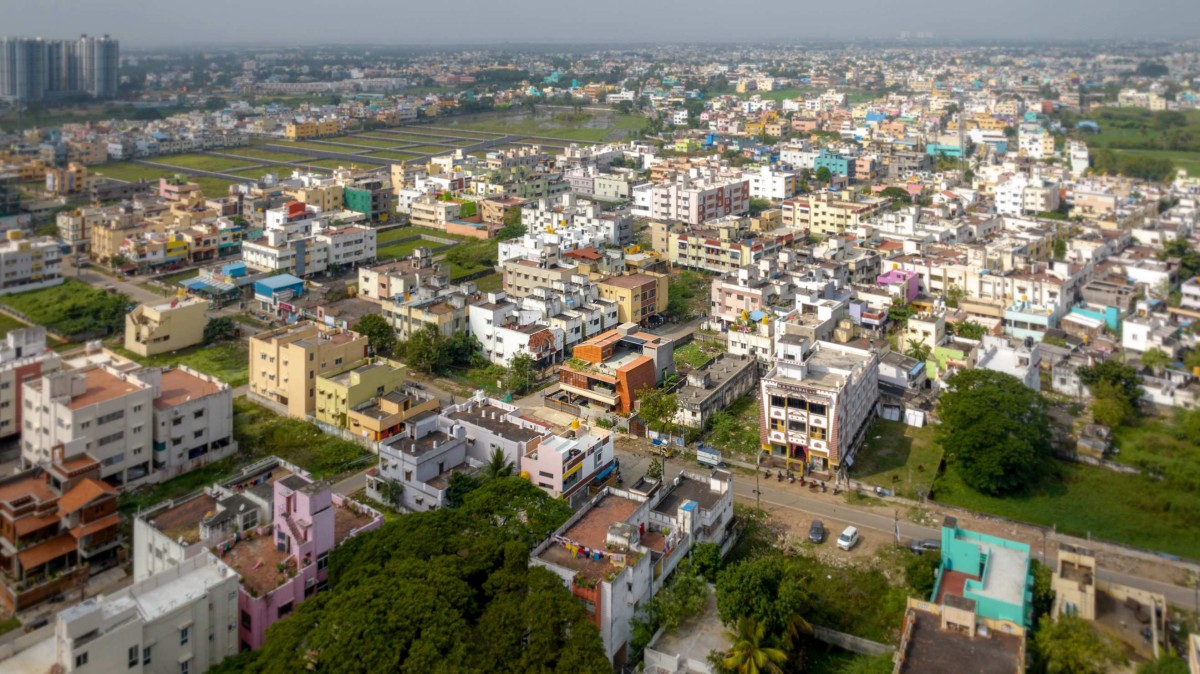
Aerial view of House of Slow Reflections by WeBe Design Lab