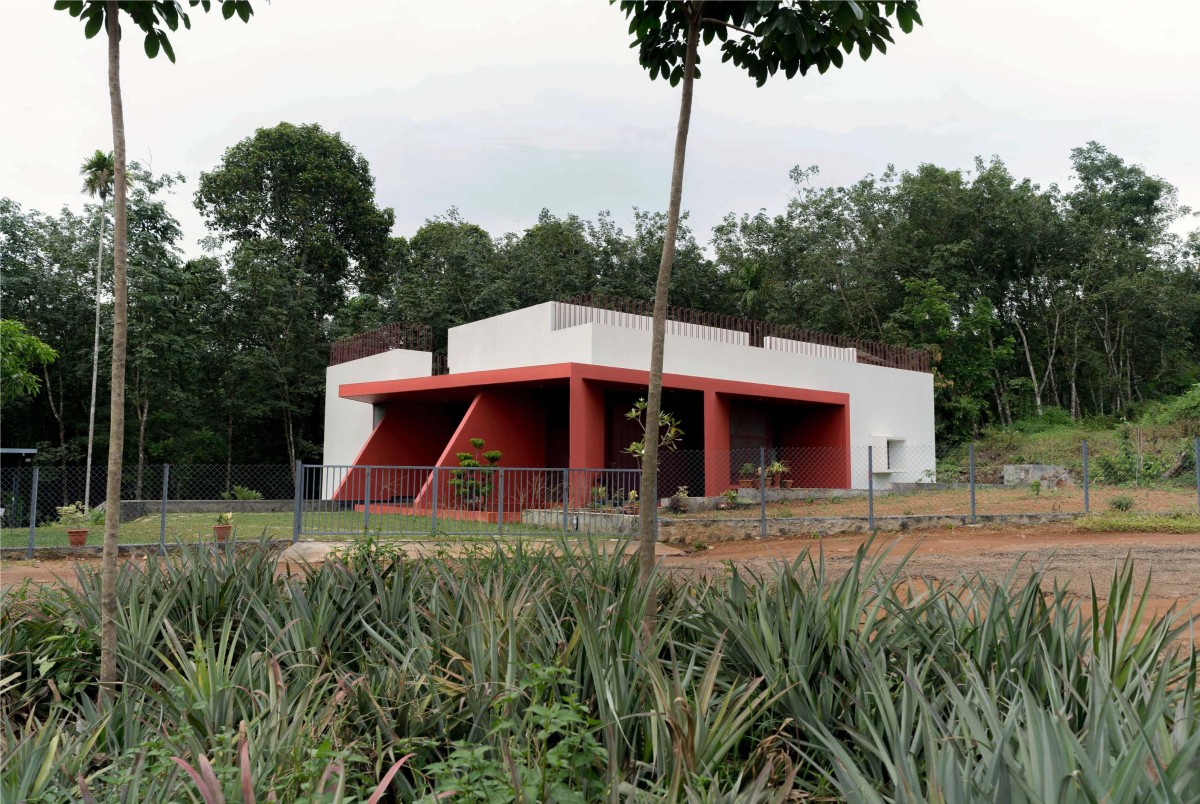
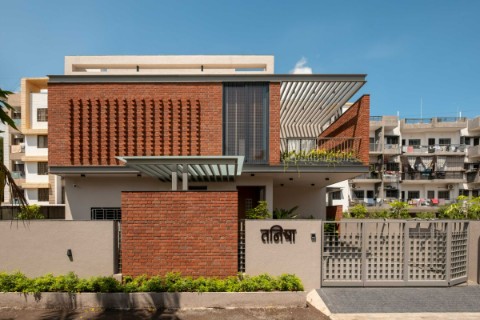
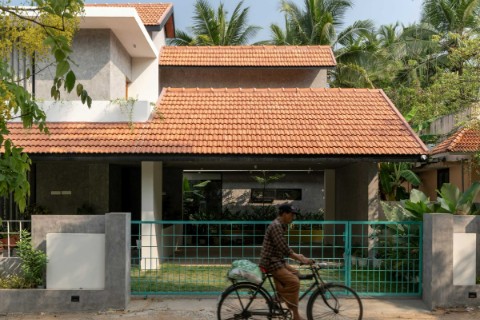
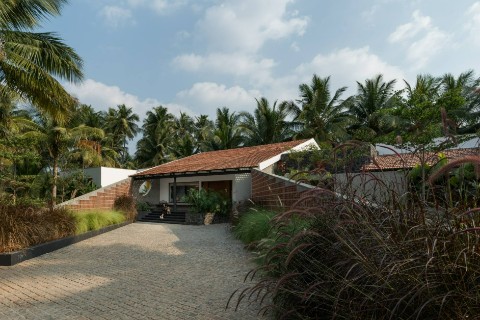
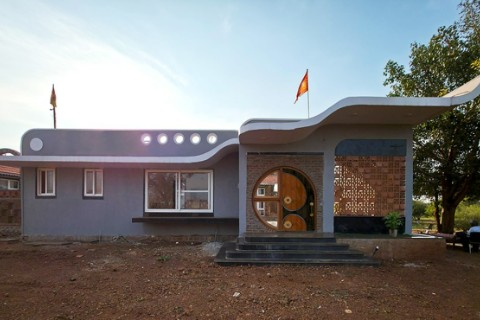
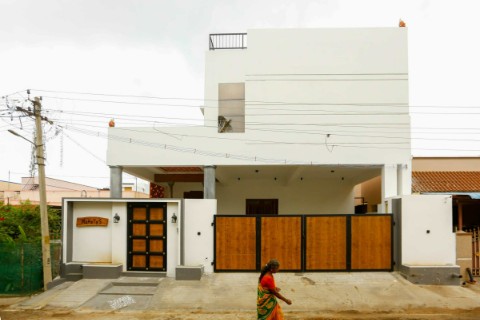
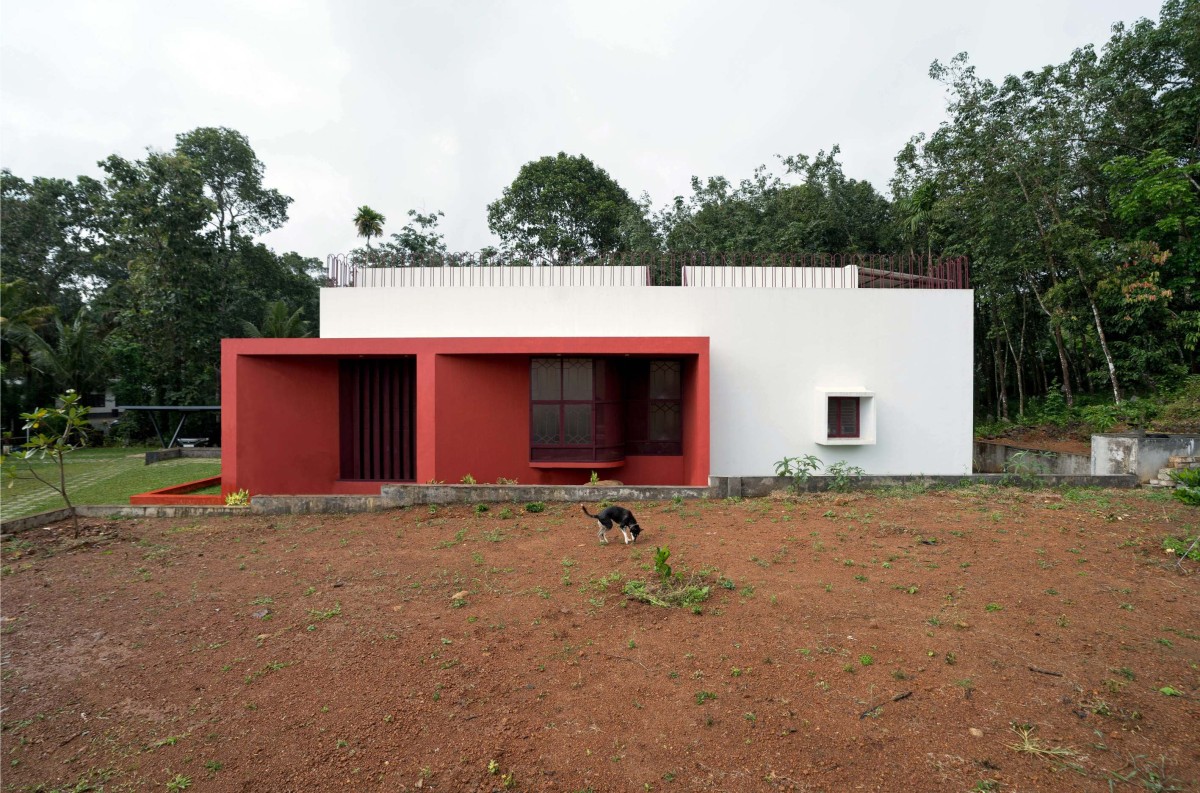
Exterior view of Saba House by Project 51 A (h)
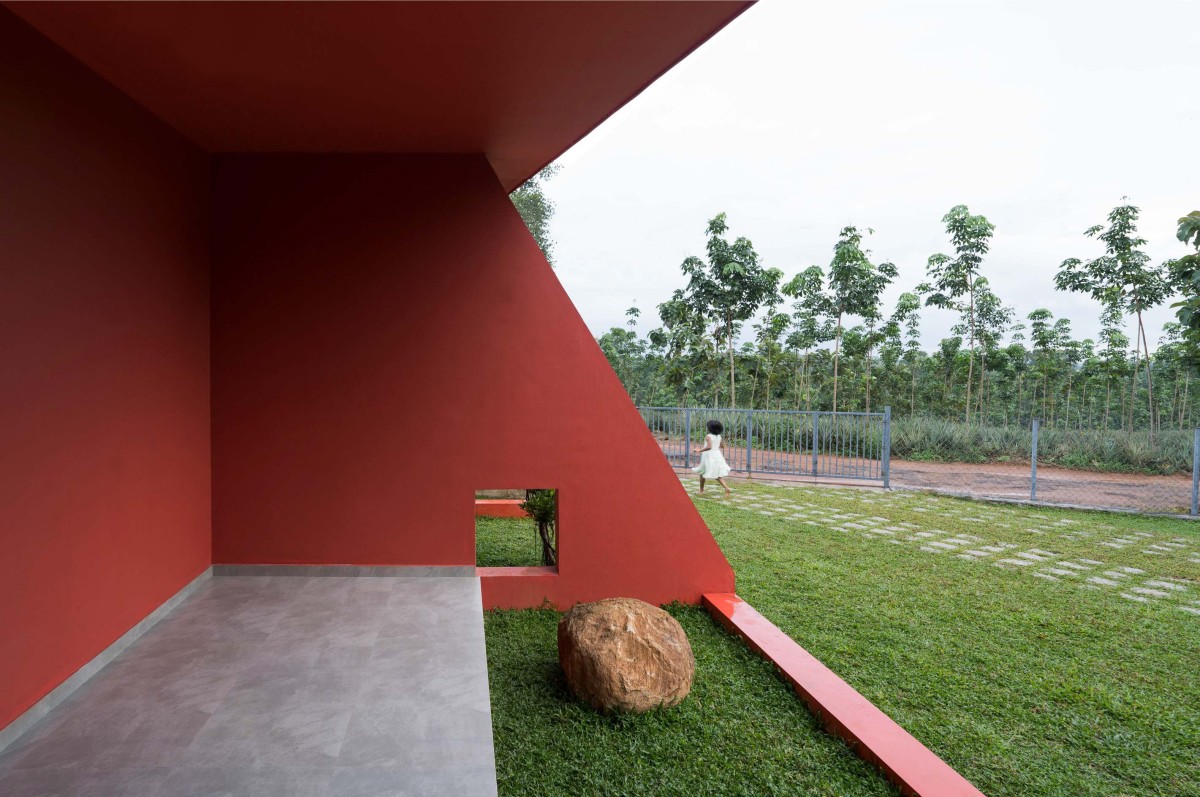
Verandah of Saba House by Project 51 A (h)
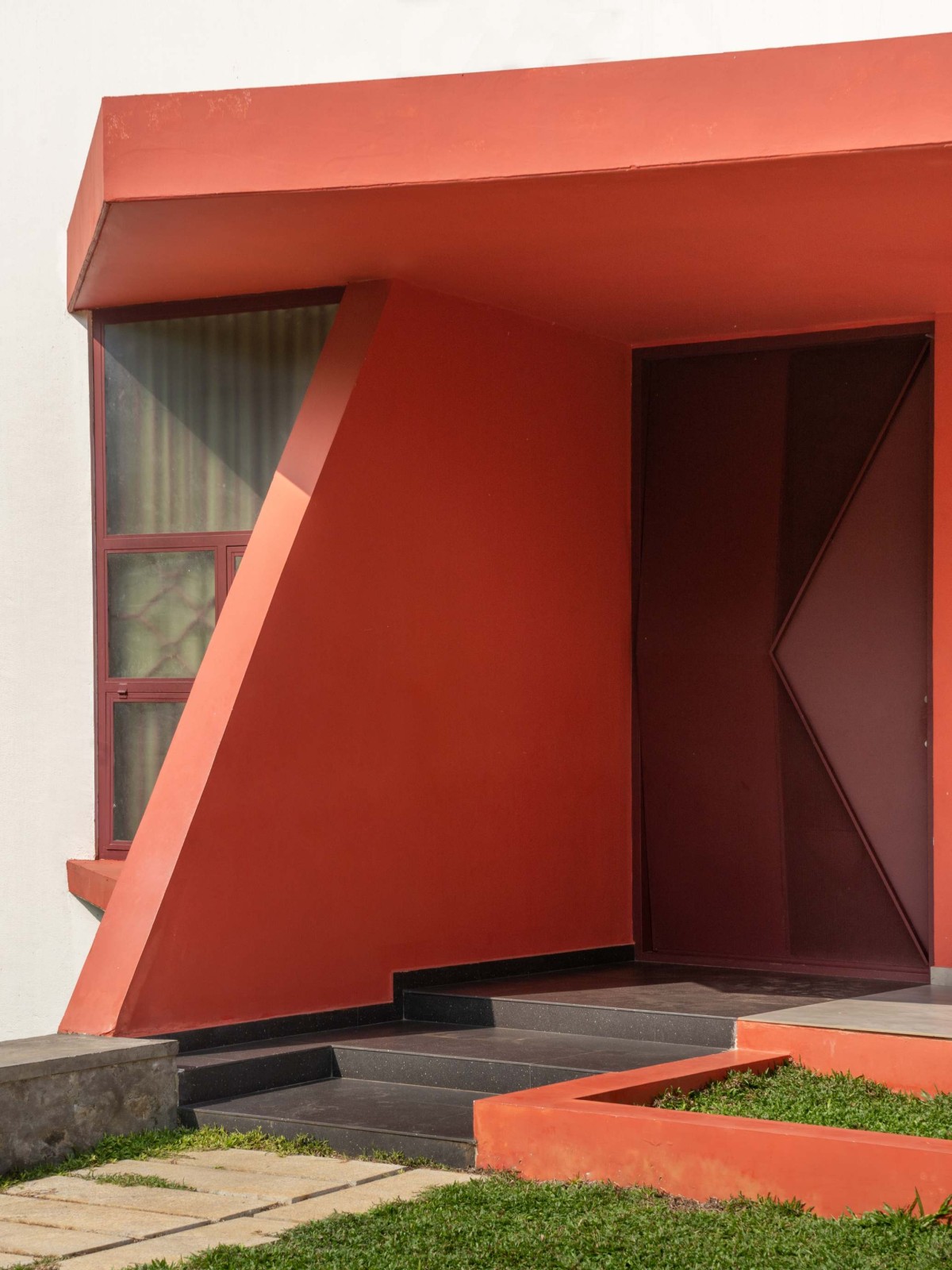
Entrance of Saba House by Project 51 A (h)
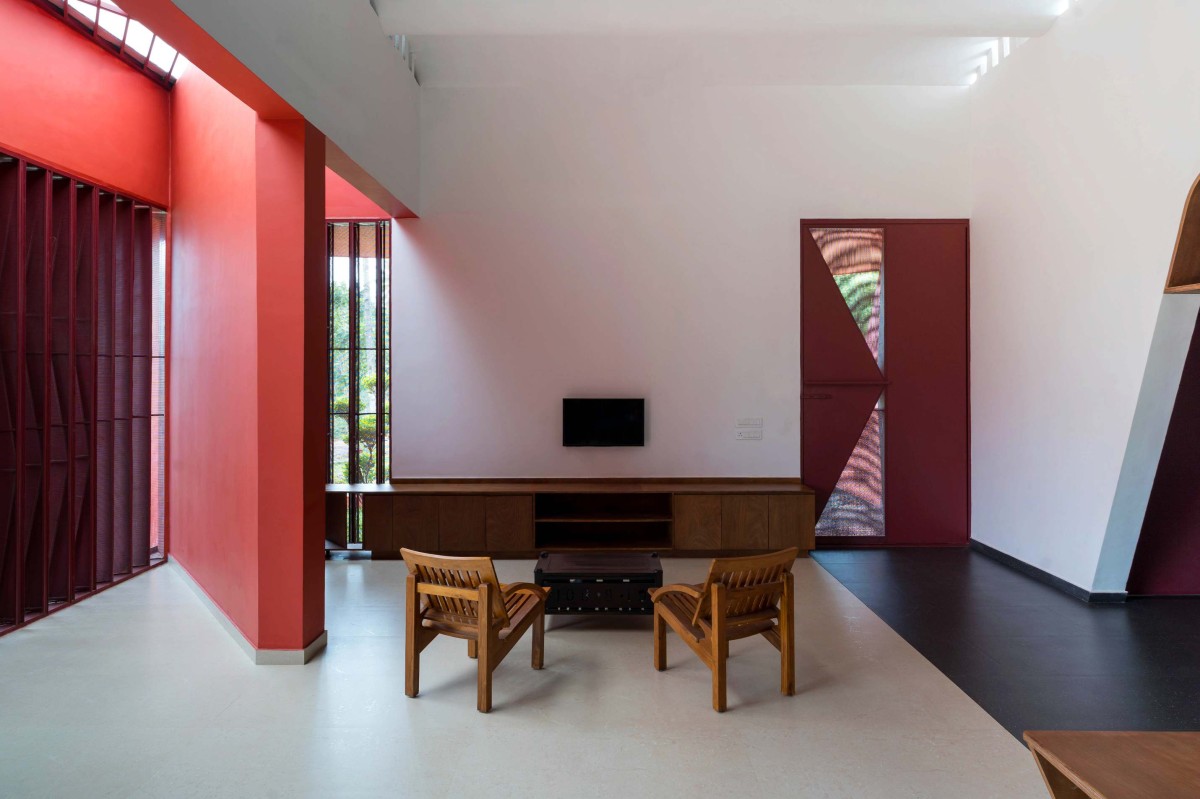
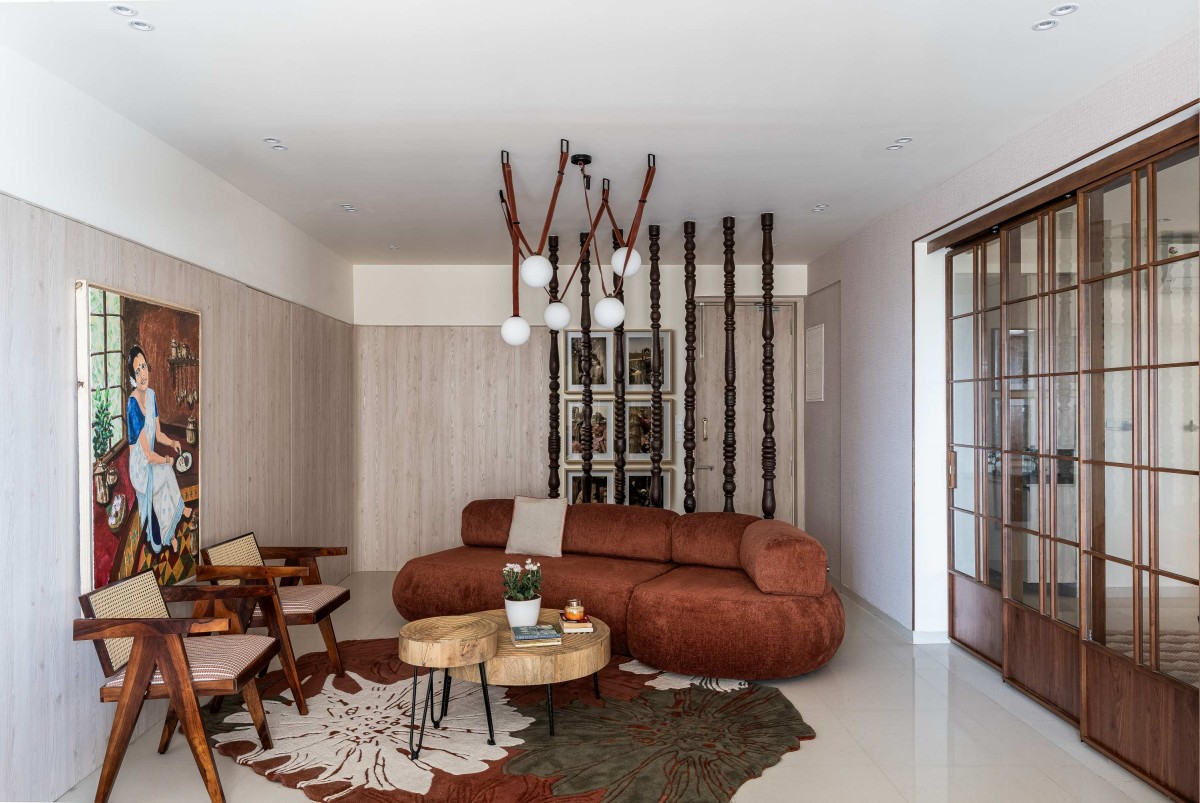
Living room of Saba House by Project 51 A (h)
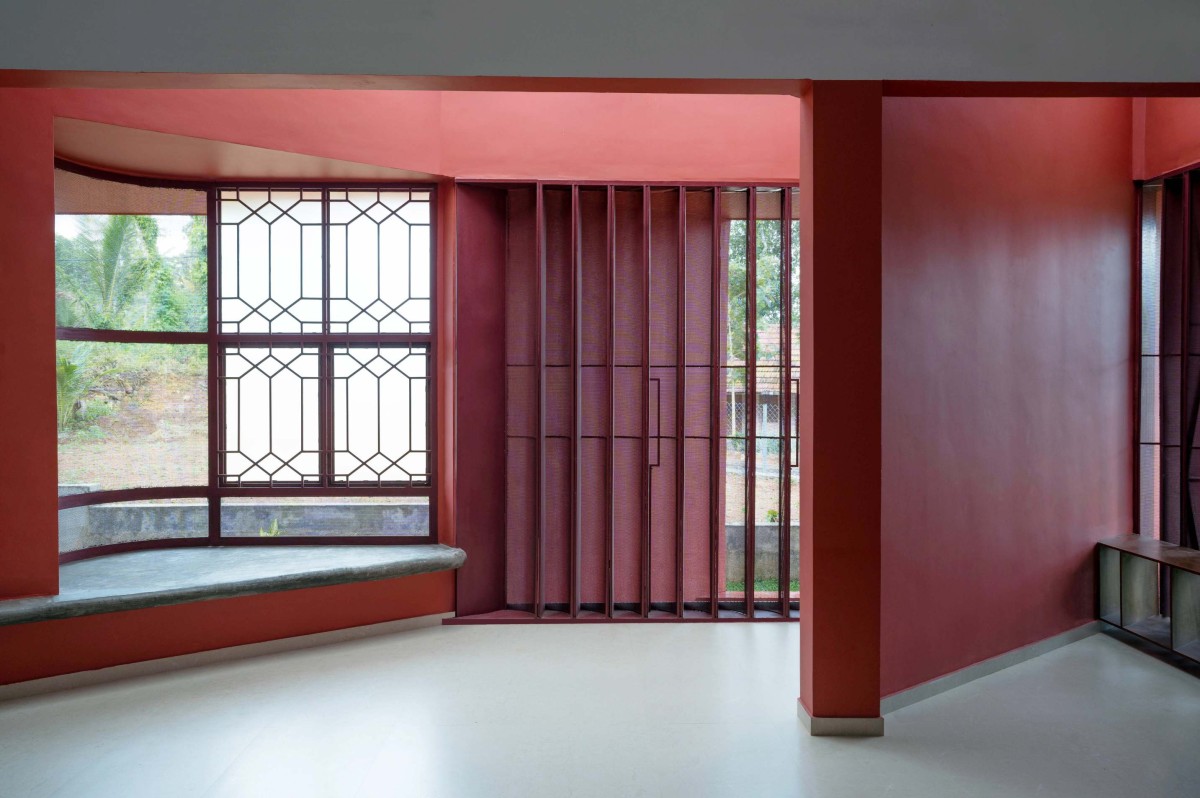
To enhance ventilation, wind catcher walls with perforated openings were placed on the southwest. A skylight between them brought daylight to common areas. The 10-foot-high main door, designed to channel airflow, was shifted west for privacy and circulation. When openings are closed, a jack arch roof—comprising elongated brick vaults on beams—allows continuous airflow through side vents without compromising privacy.
Solid expanses of red were placed for the walls cutting the wind stream and was extended to the interior and to the furnishings, a color picked for its contrasting and complementary qualities relative to the lush green of the surrounding that made the house to elevate from the shades of rubber plantation engulfing the surrounding and the old house.
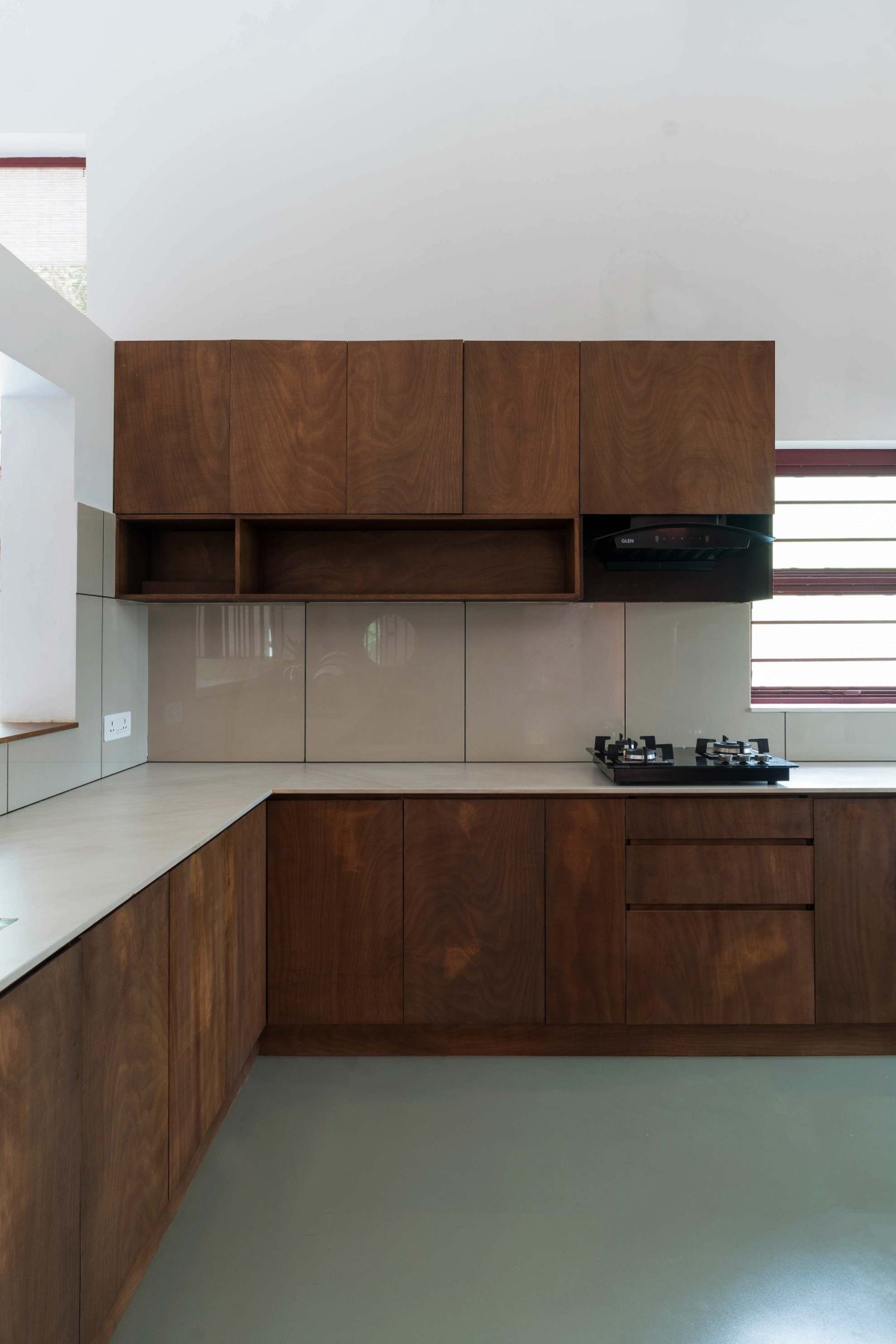
Kitchen of Saba House by Project 51 A (h)
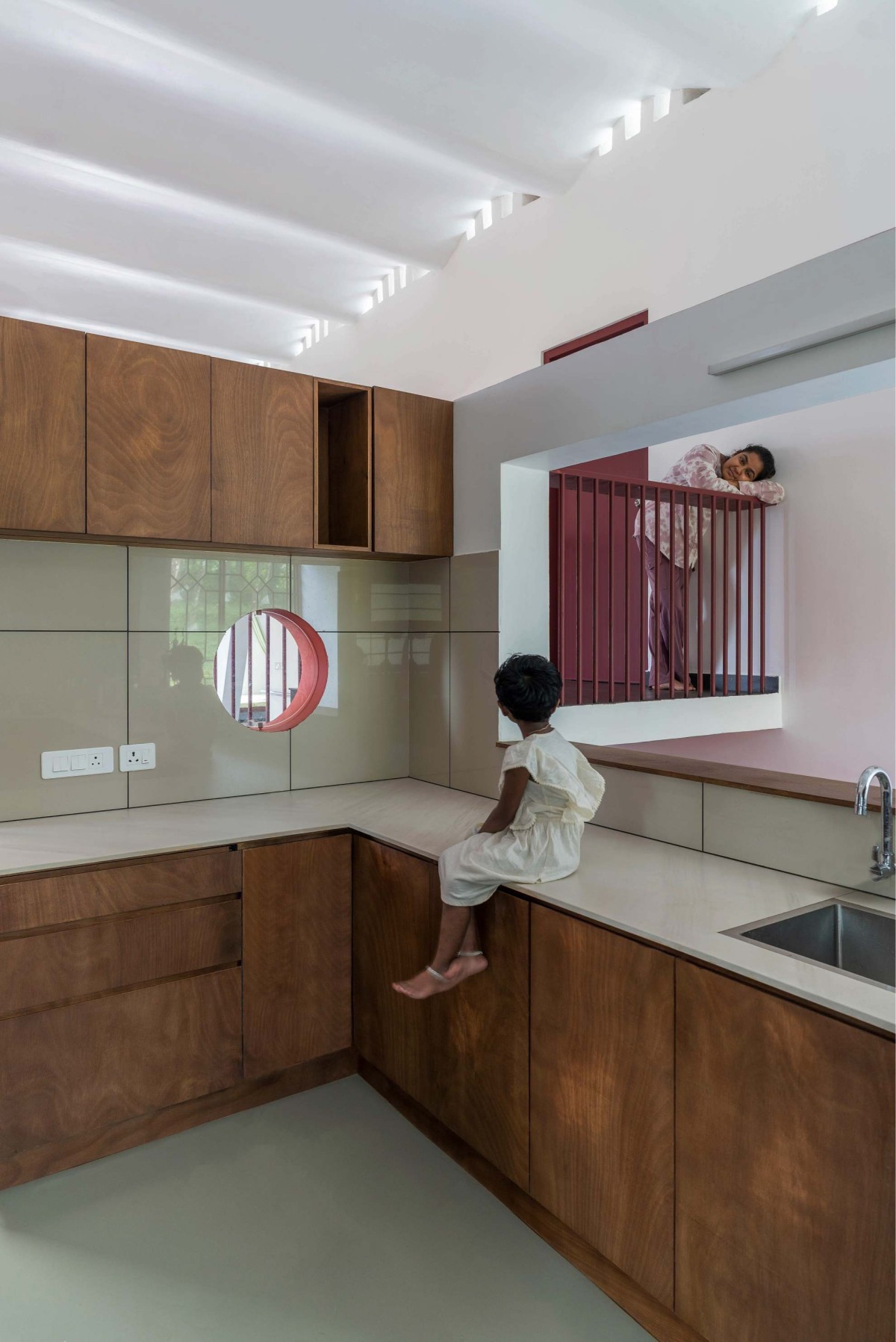
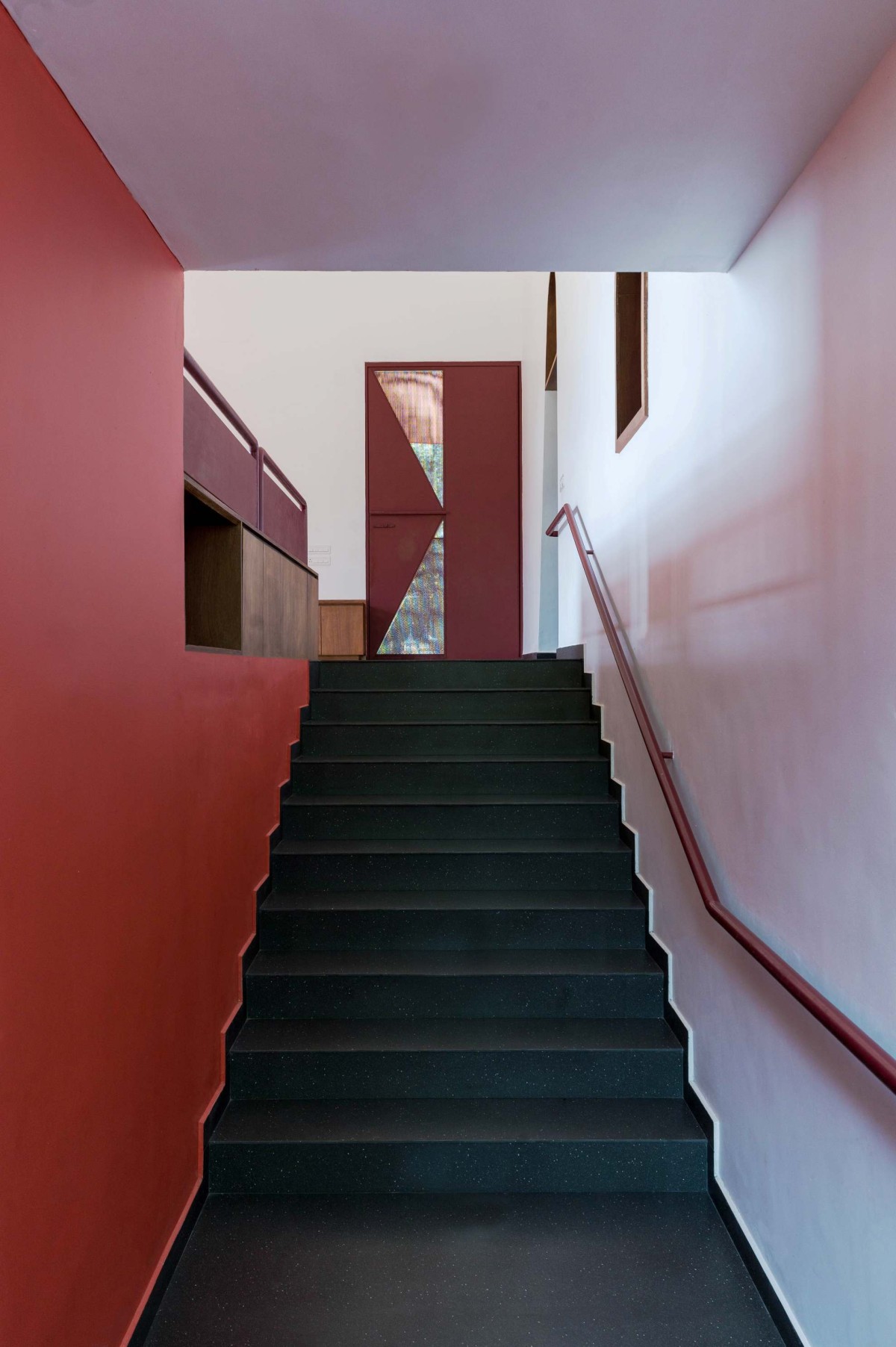
Staircase of Saba House by Project 51 A (h)
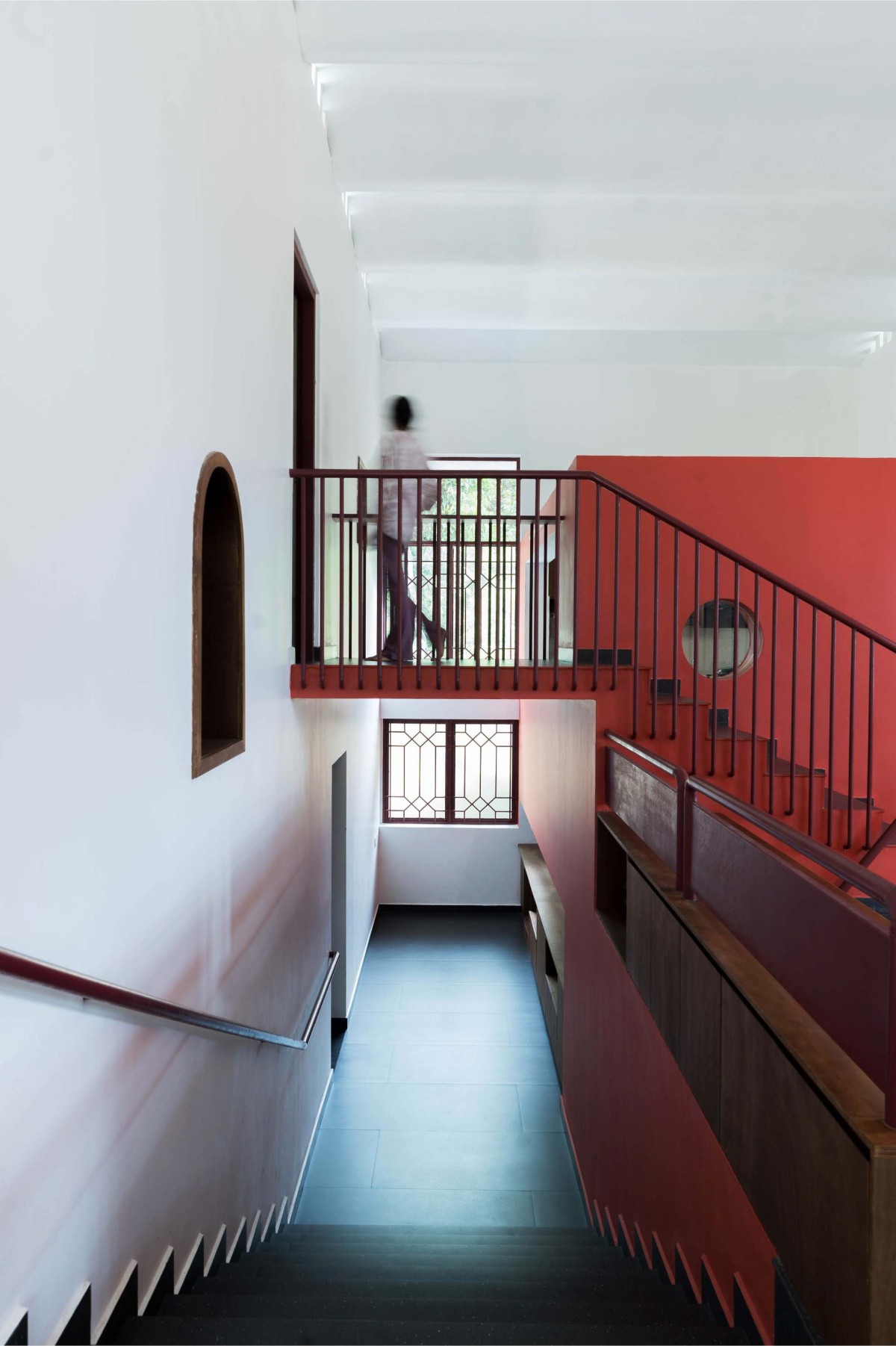
Staircase view of Saba House by Project 51 A (h)
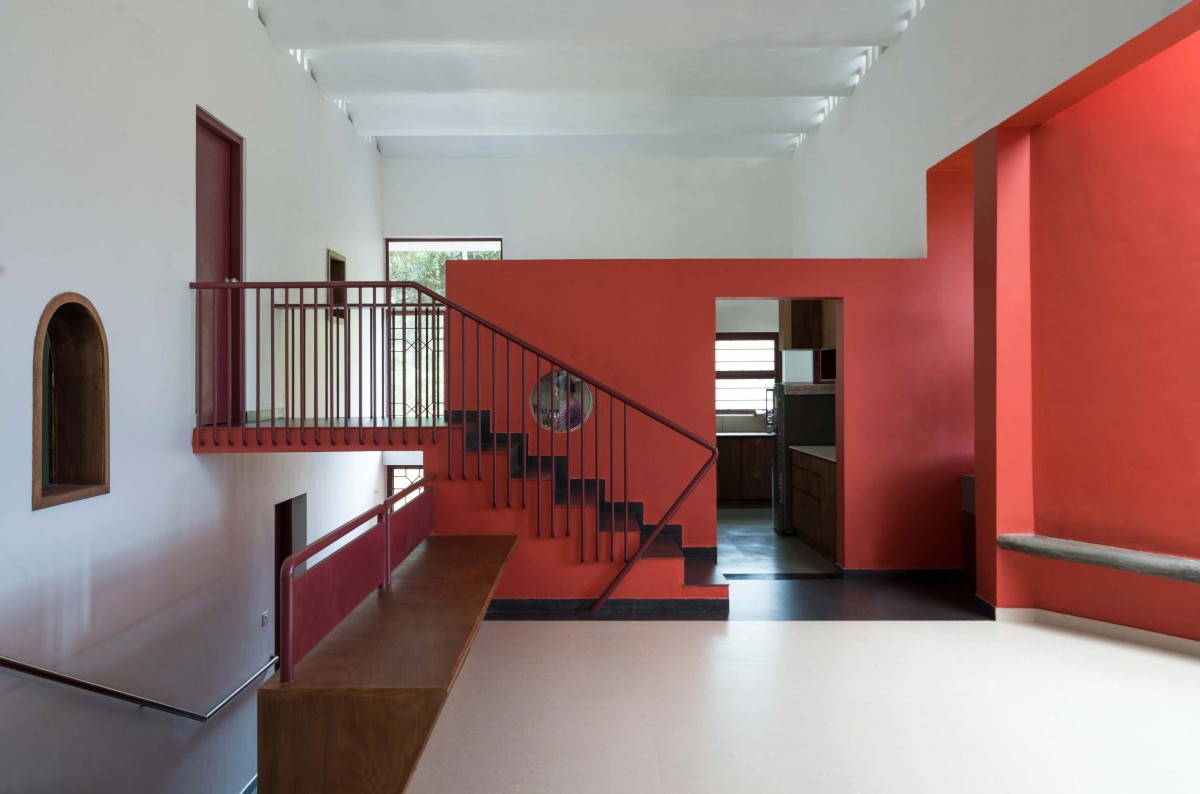
First Floor of Saba House by Project 51 A (h)
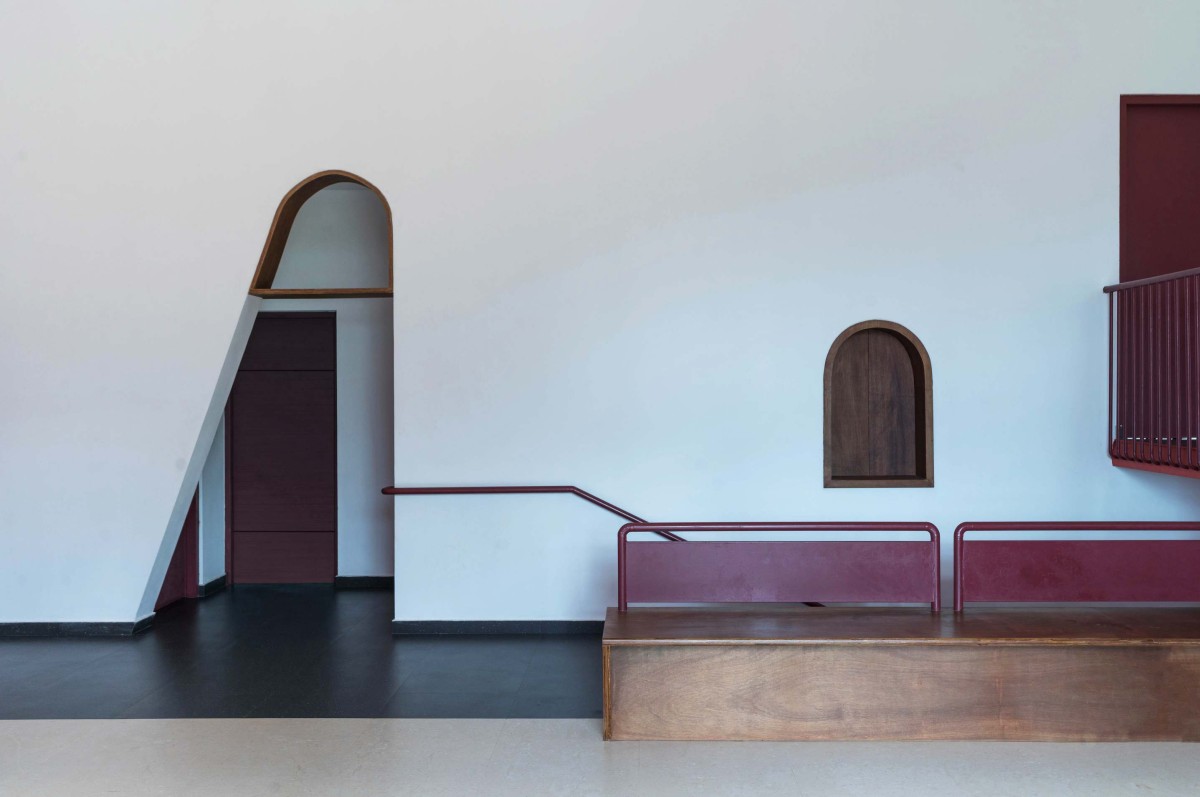
The sole purpose of the house was to accommodate all the residents without compromising the light and air ventilation within the limits of area and budget. The applied color made the house a marker in the neighborhood. Upon entering the new house grandmother Malathi teacher felt a breeze she never felt in her old house. She gave the house a name with the breeze she felt, that depicted a purpose the house holds- Saba.
Saba ensures accessibility, with elder’s rooms on the same level as the living space. The children’s rooms are on a lower level, six feet down, with their study area and bedroom further down the staircase. The master bedroom is positioned above the kids' space, accessible via a bridge. Openings from the kitchen and passage to the master bedroom create a visual connection with the children's areas, integrating the space. Bedrooms face the north side, offering views of the landscape and rubber plantation, while the grandmother’s room faces the northwest, connecting emotionally with the old house she lived in.
First Floor of Saba House by Project 51 A (h)
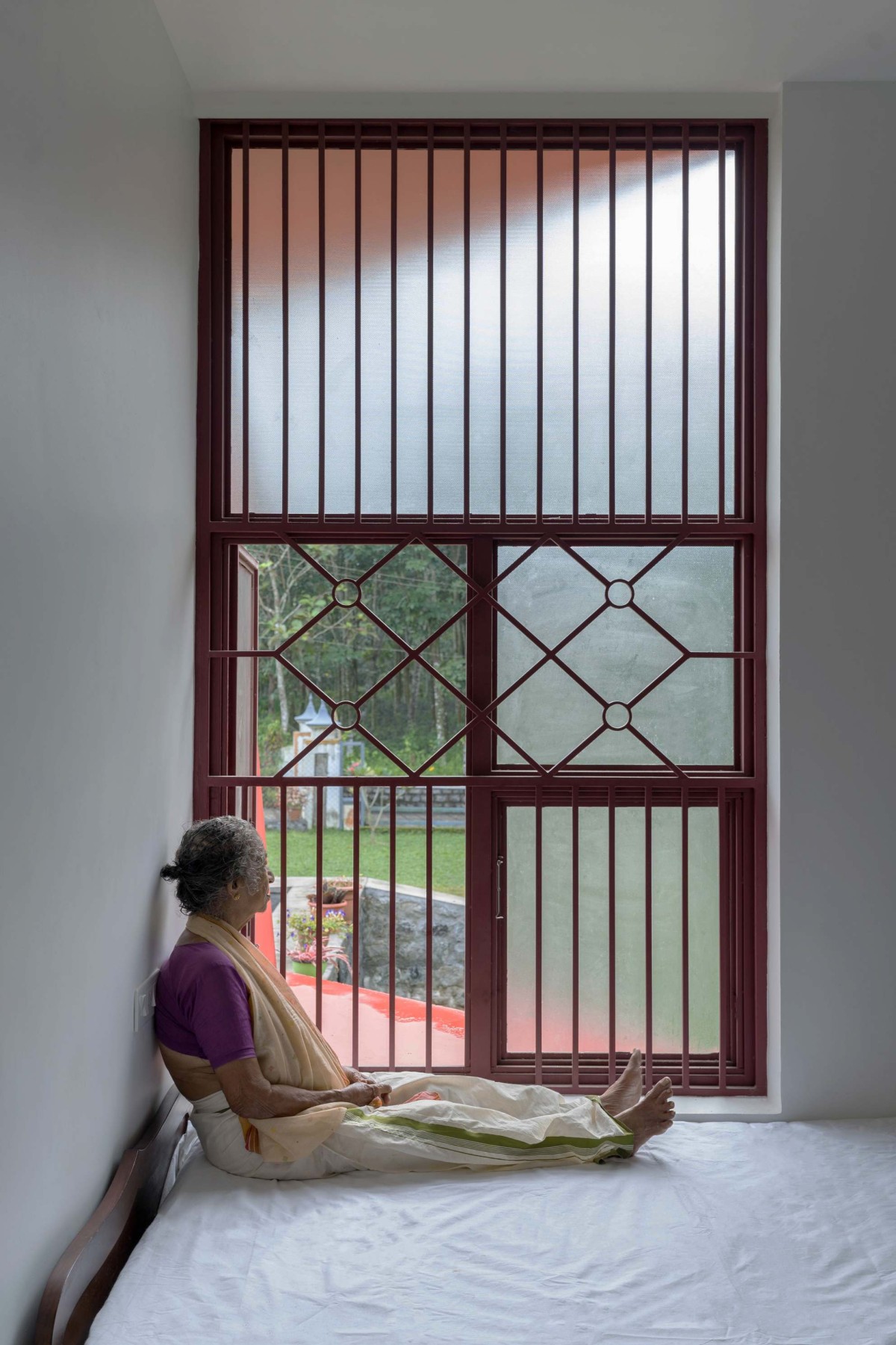
Grandmother's Bedroom of Saba House by Project 51 A (h)
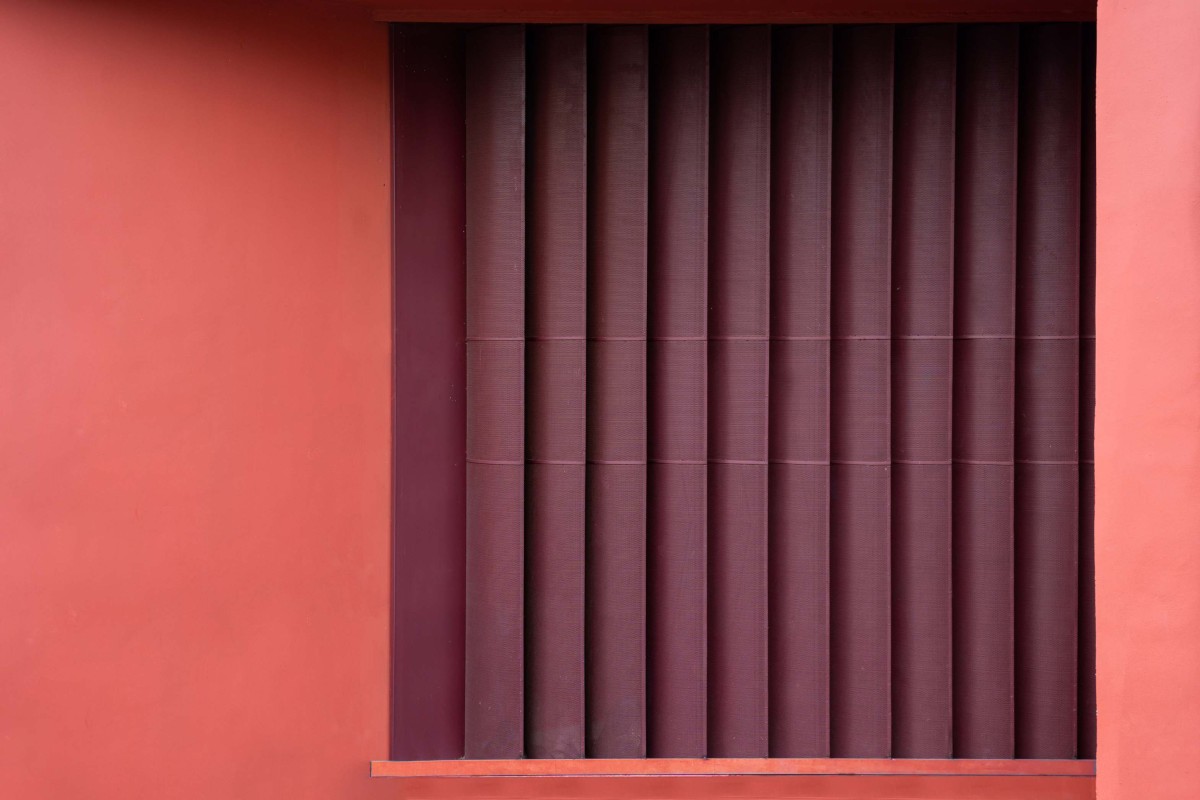
Detailed shot of wind catcher walls with perforated openings of Saba House by Project 51 A (h)
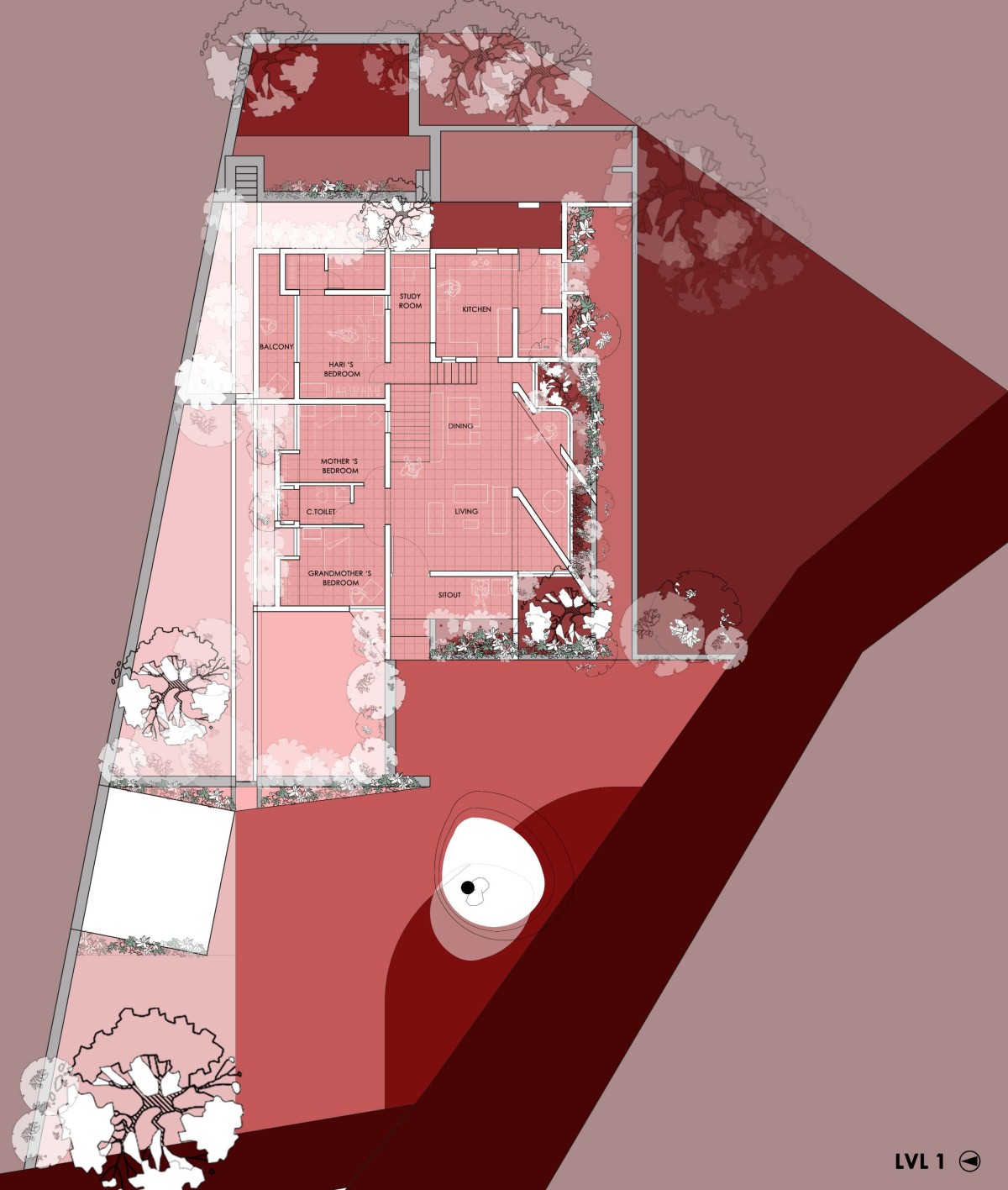
Level 1 Plan of Saba House by Project 51 A (h)
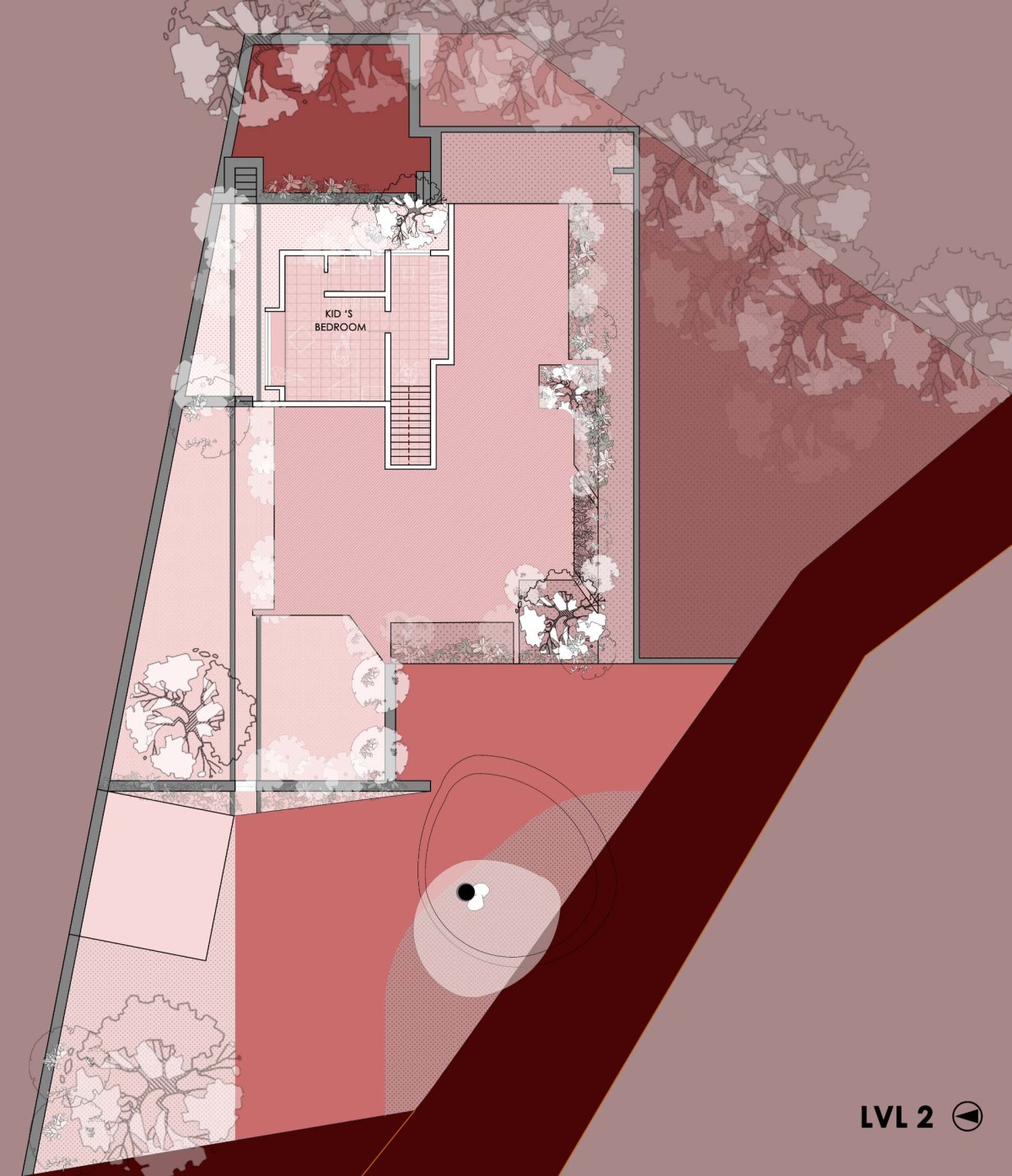
Level 2 Plan of Saba House by Project 51 A (h)
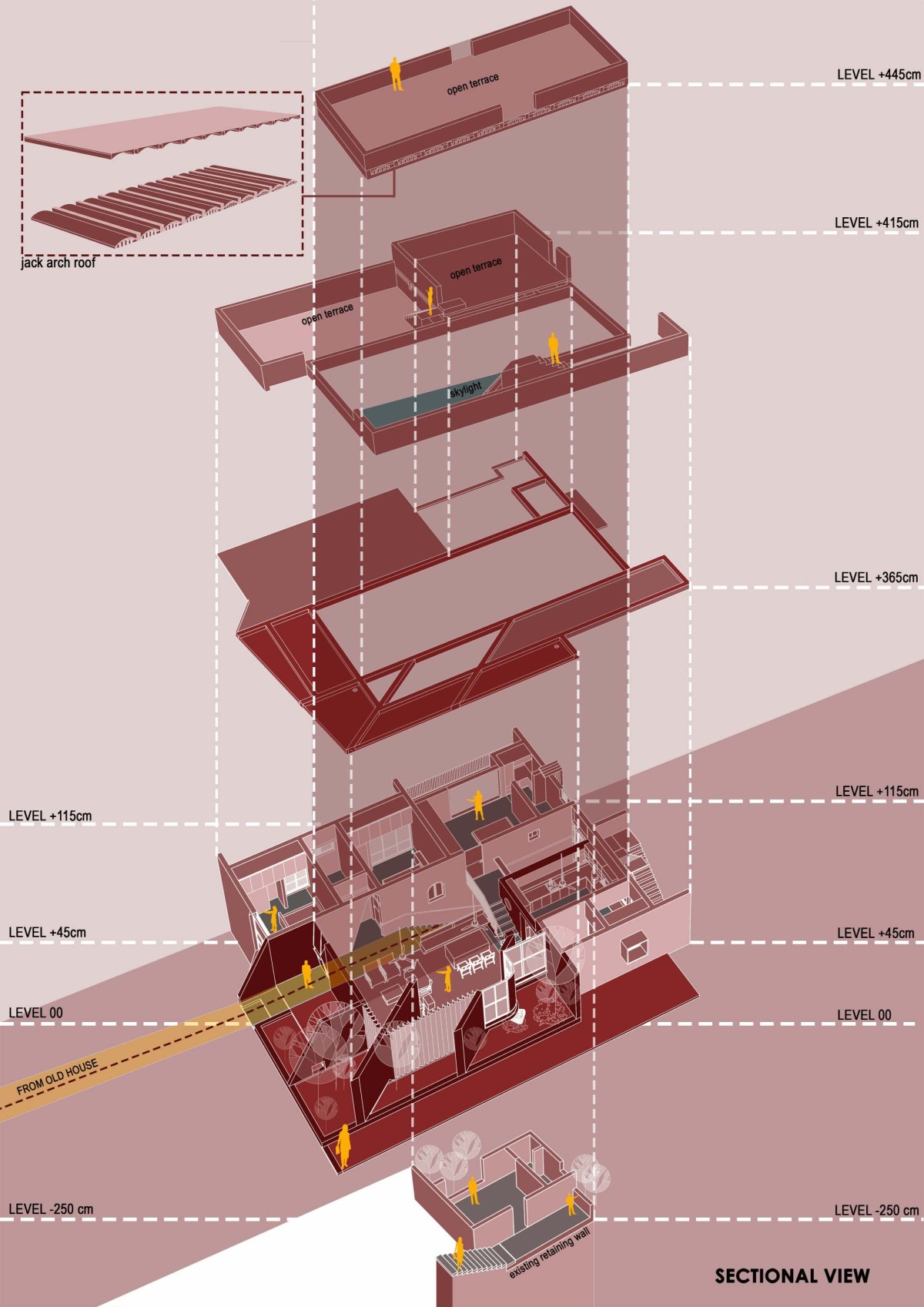
Section of Saba House by Project 51 A (h)