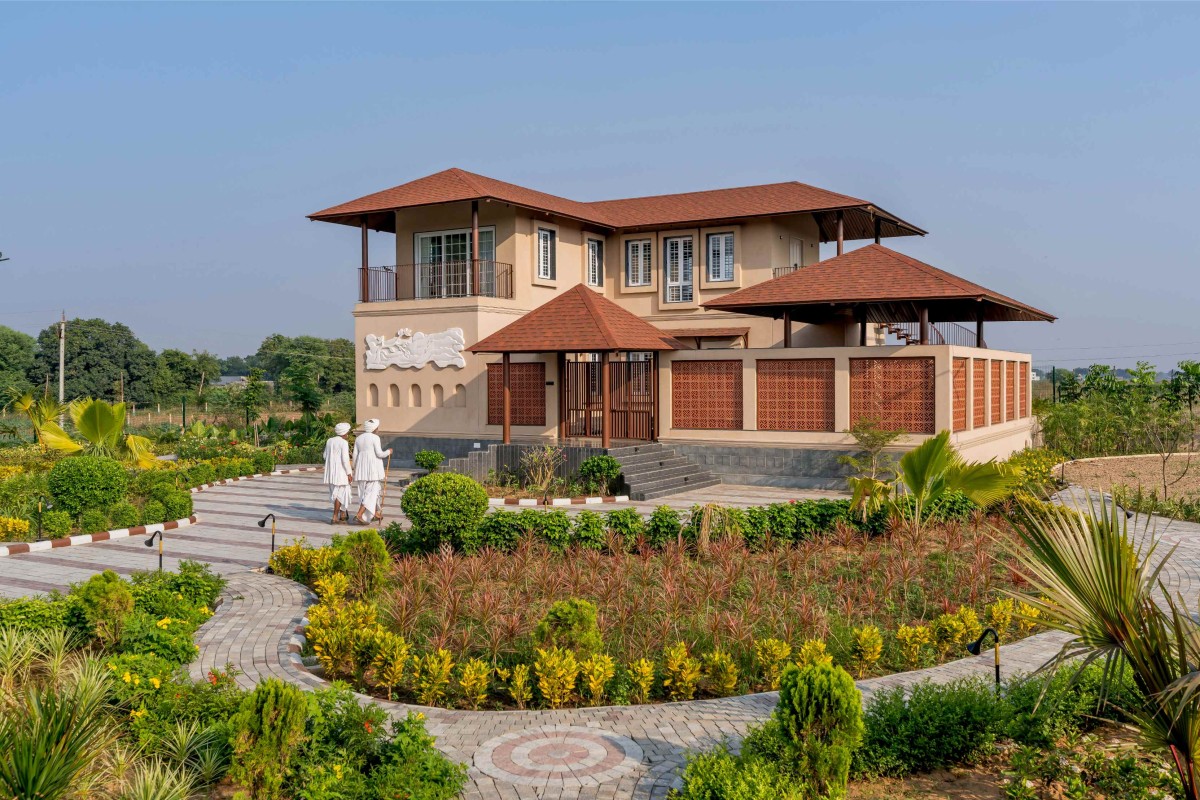
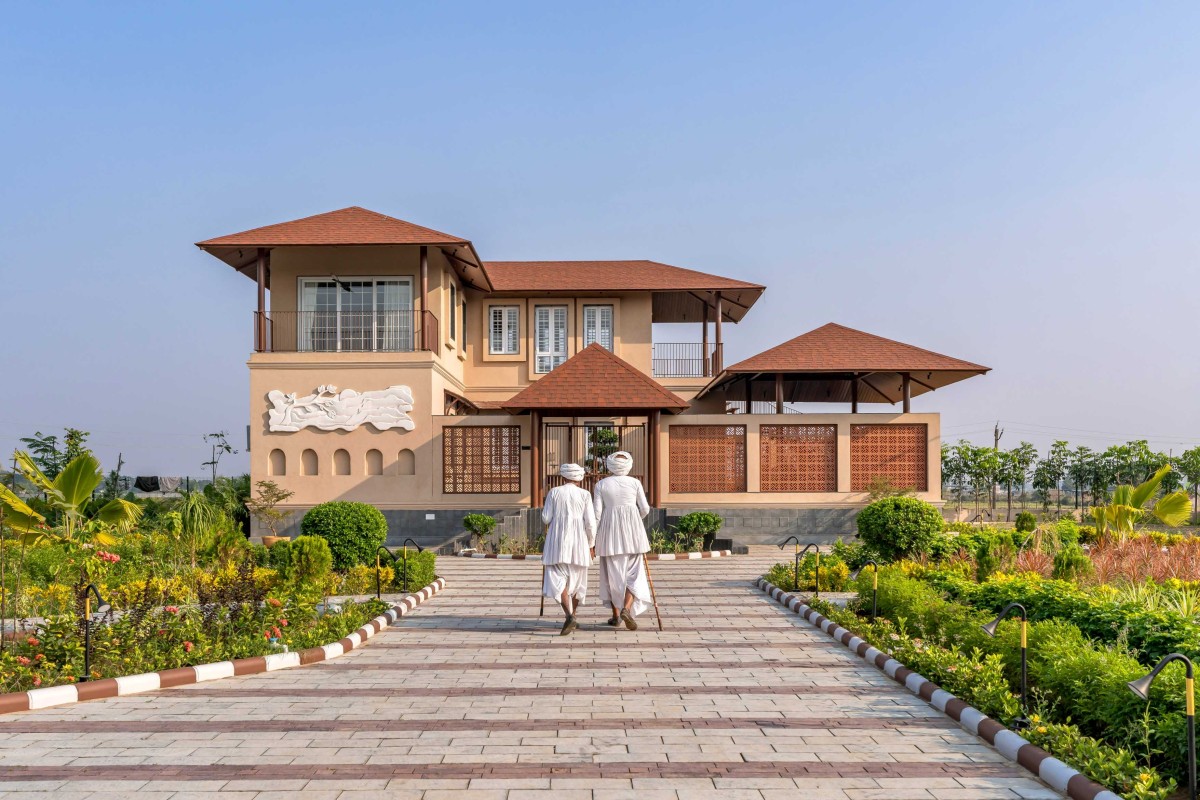
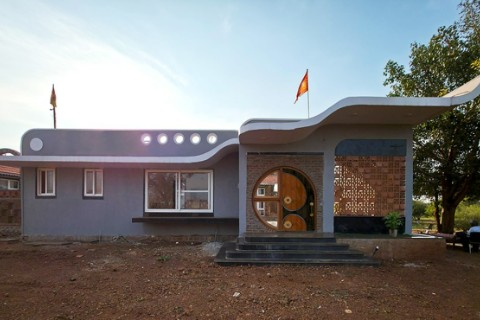
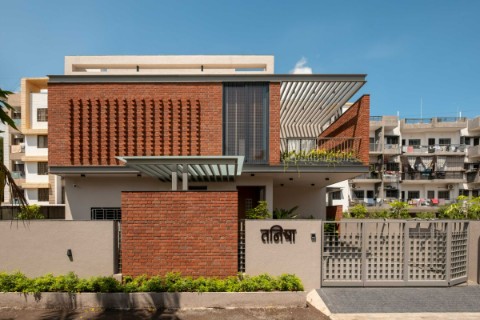
Exterior view of Slow Fields House by Studionine Architects
Exterior view of Slow Fields House by Studionine Architects
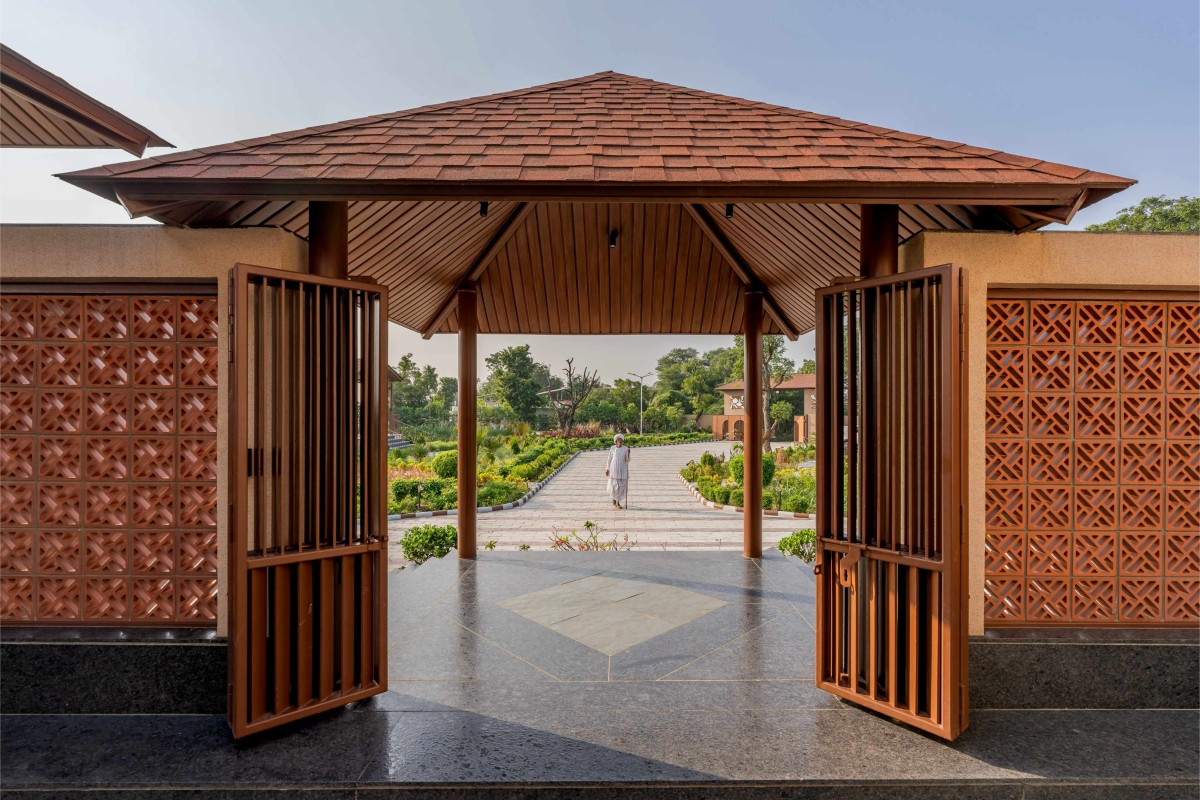
Entrance of Slow Fields House by Studionine Architects
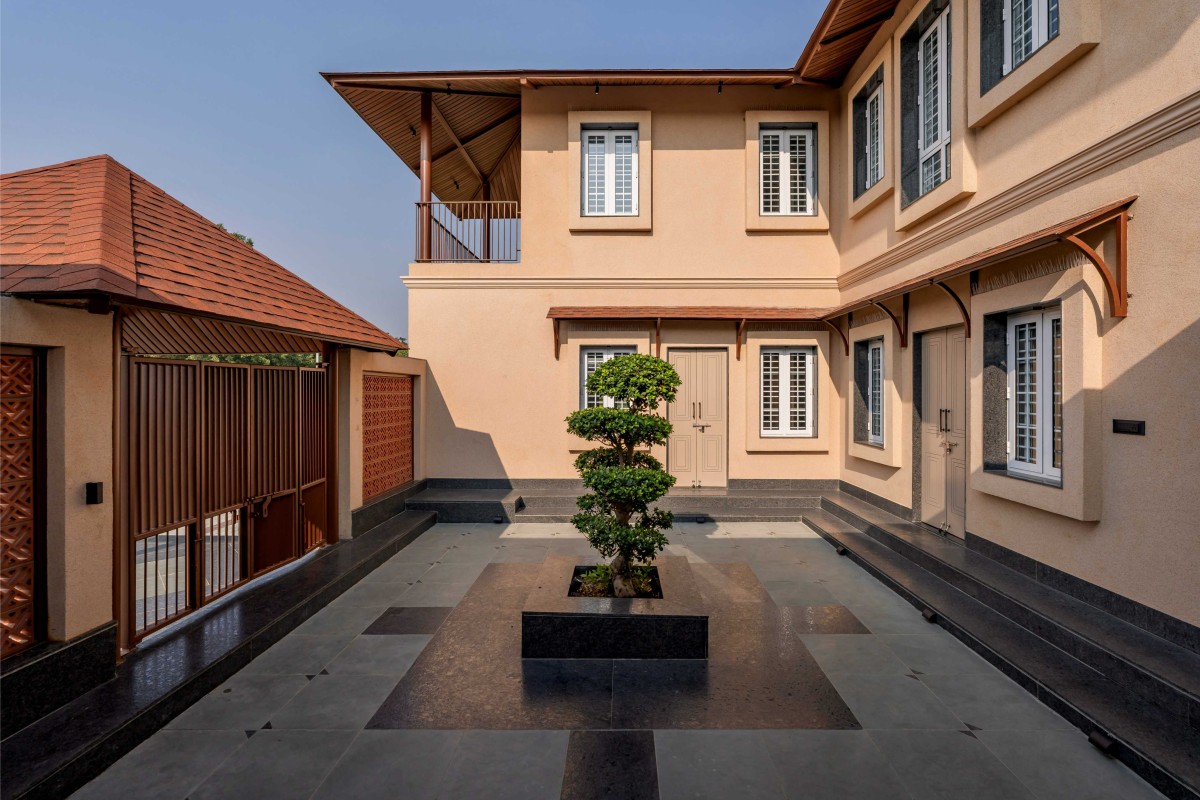
Courtyard of Slow Fields House by Studionine Architects
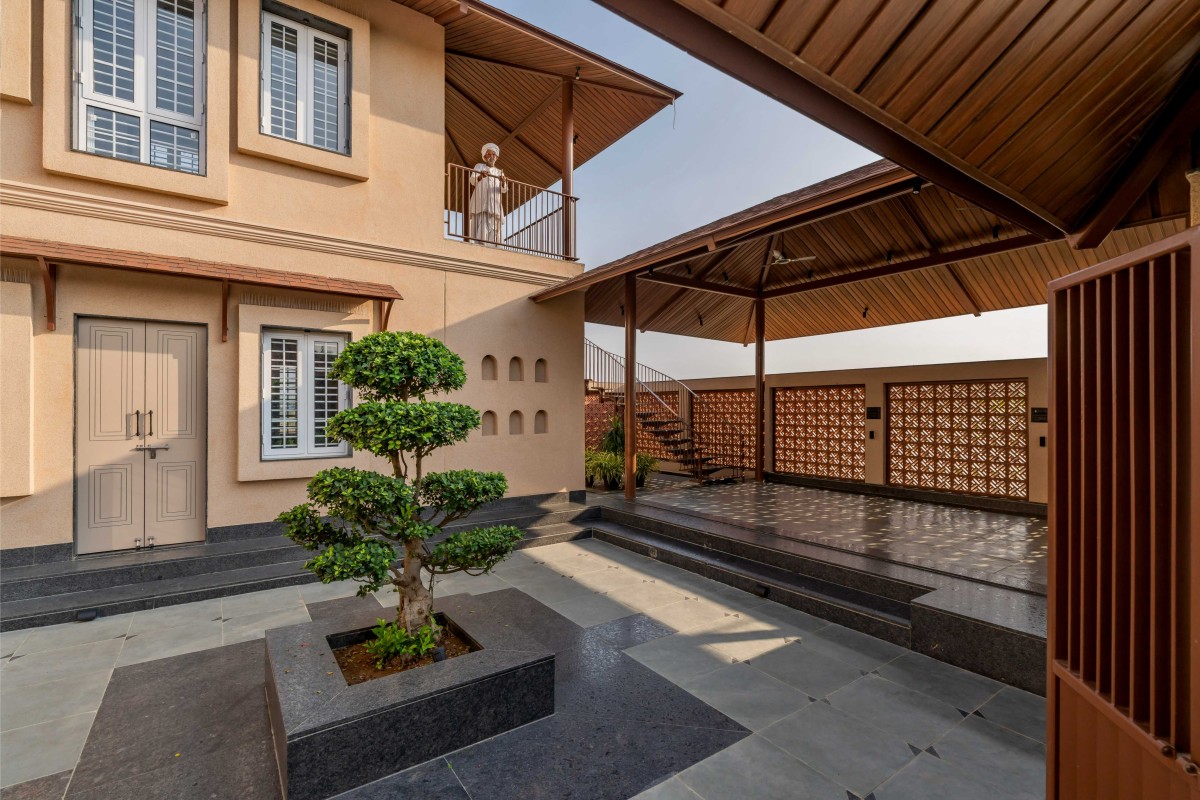
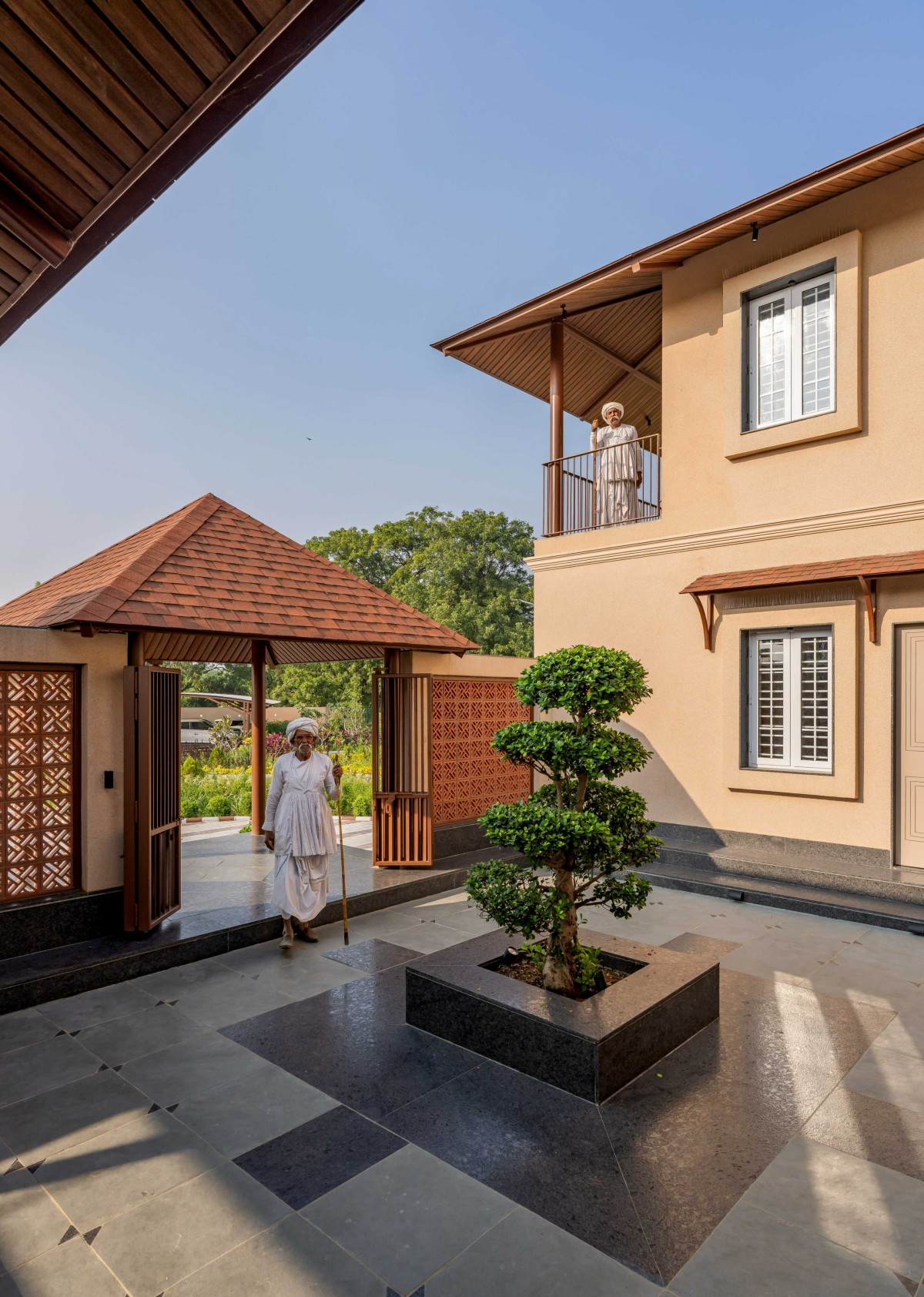
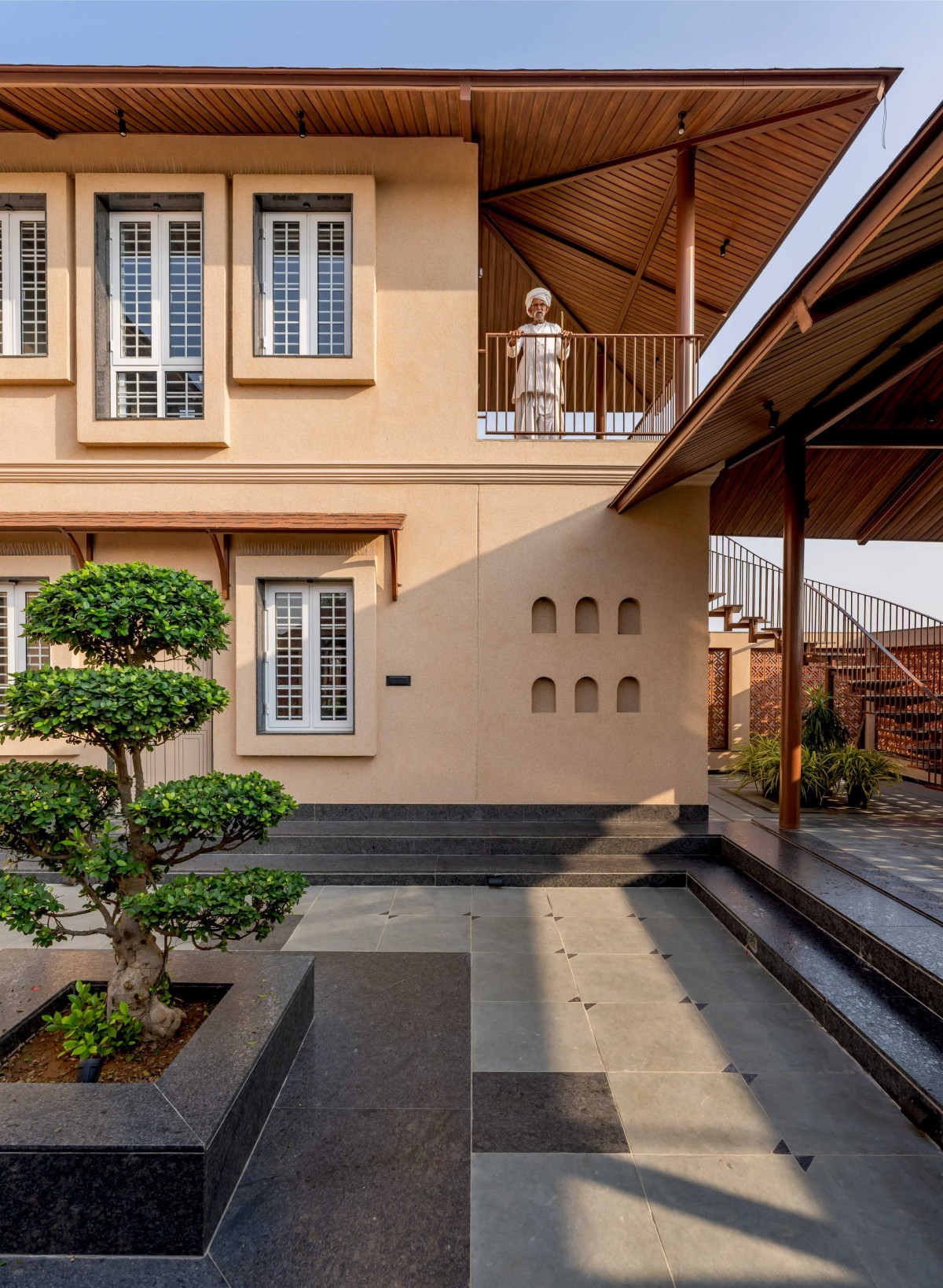
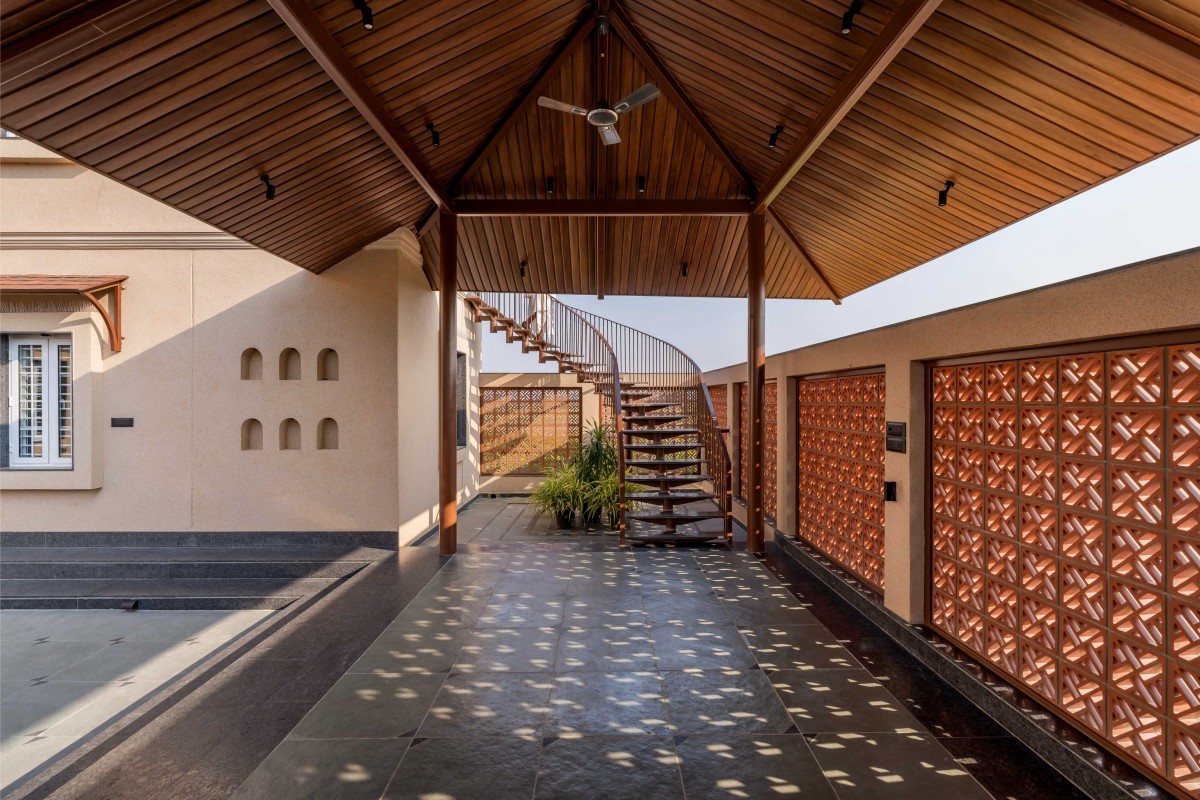
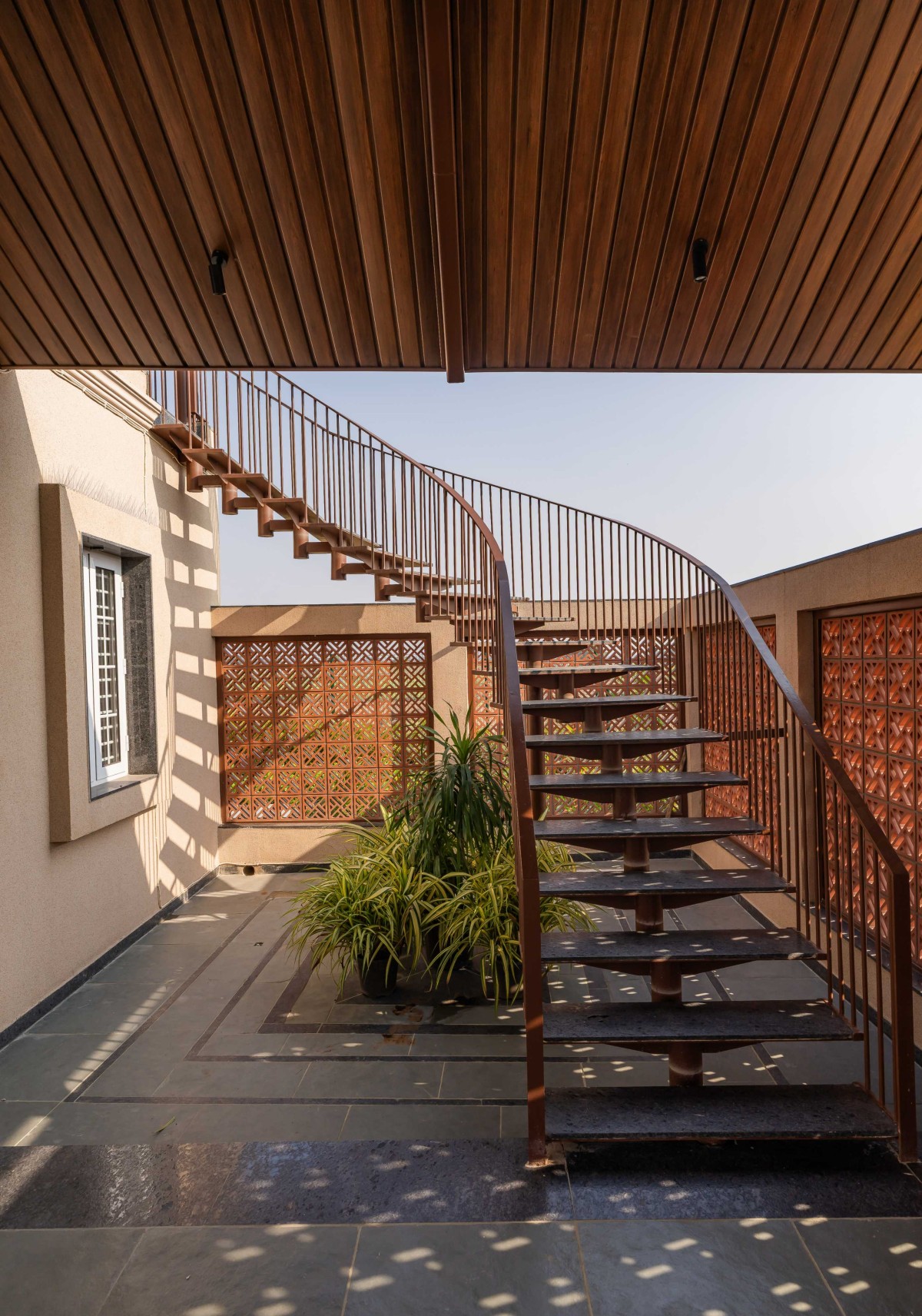
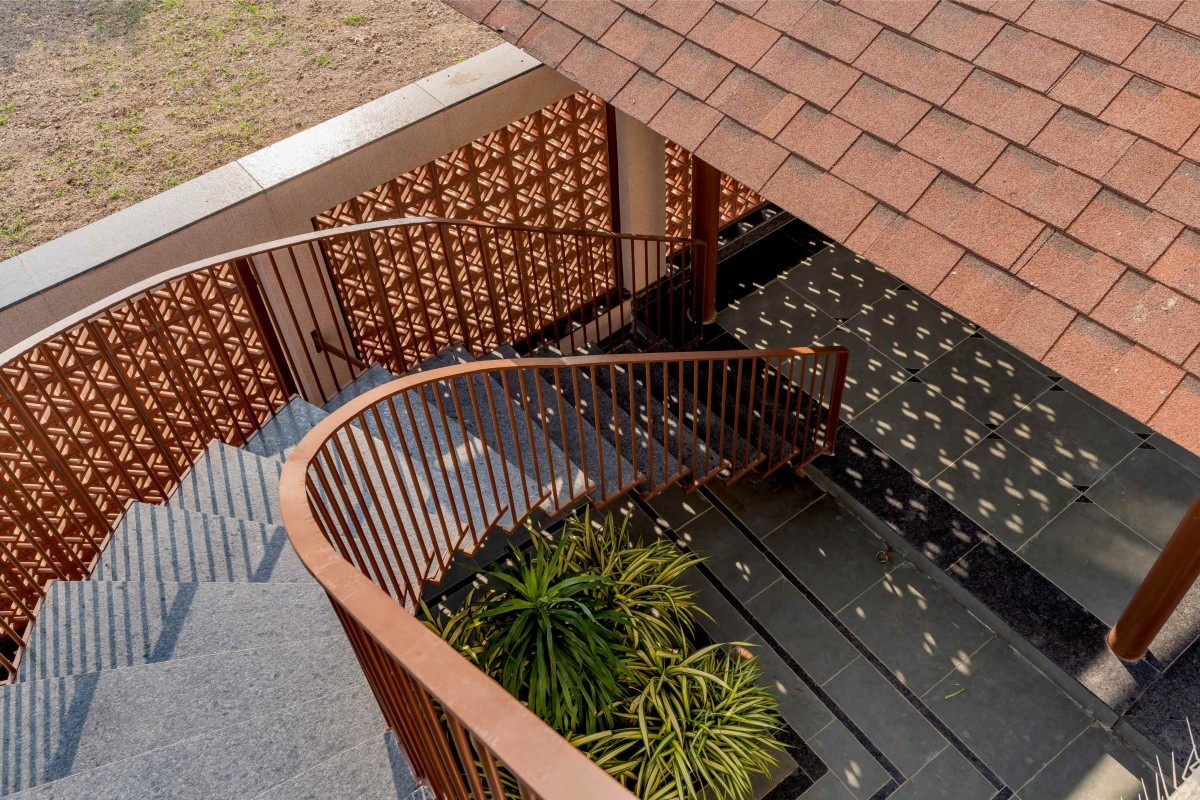
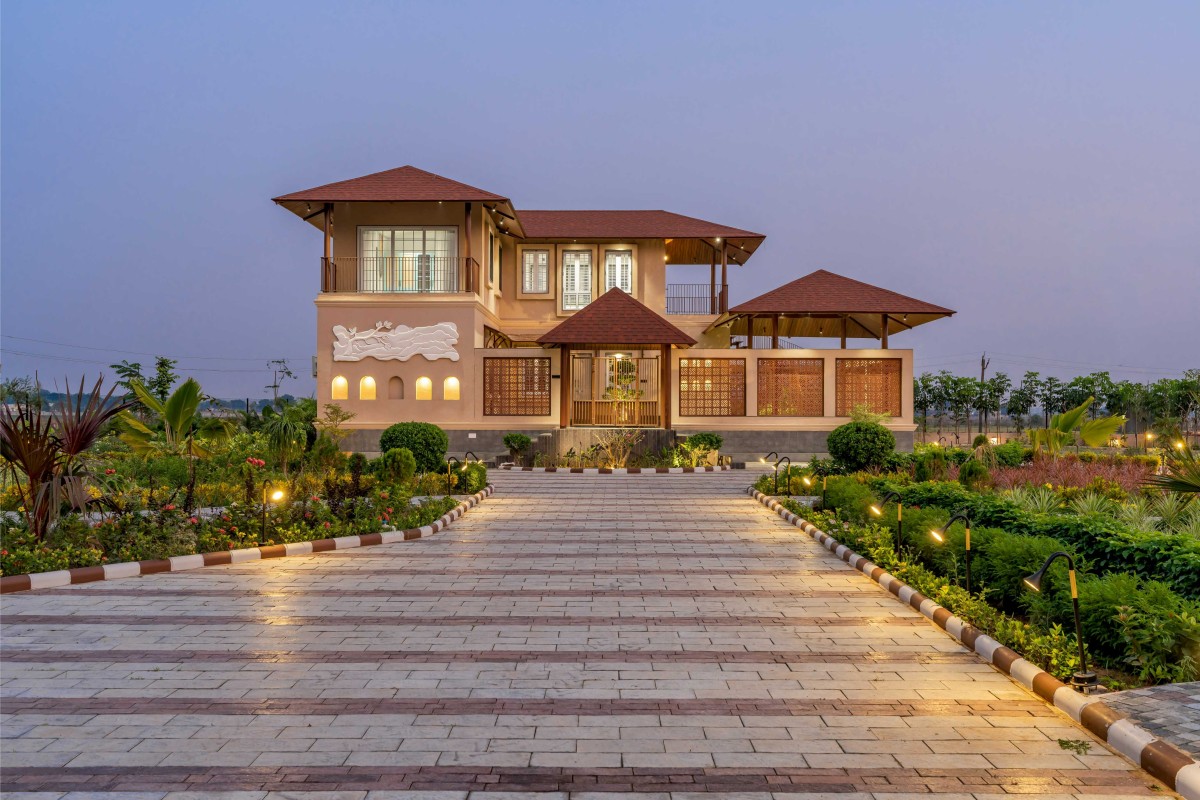
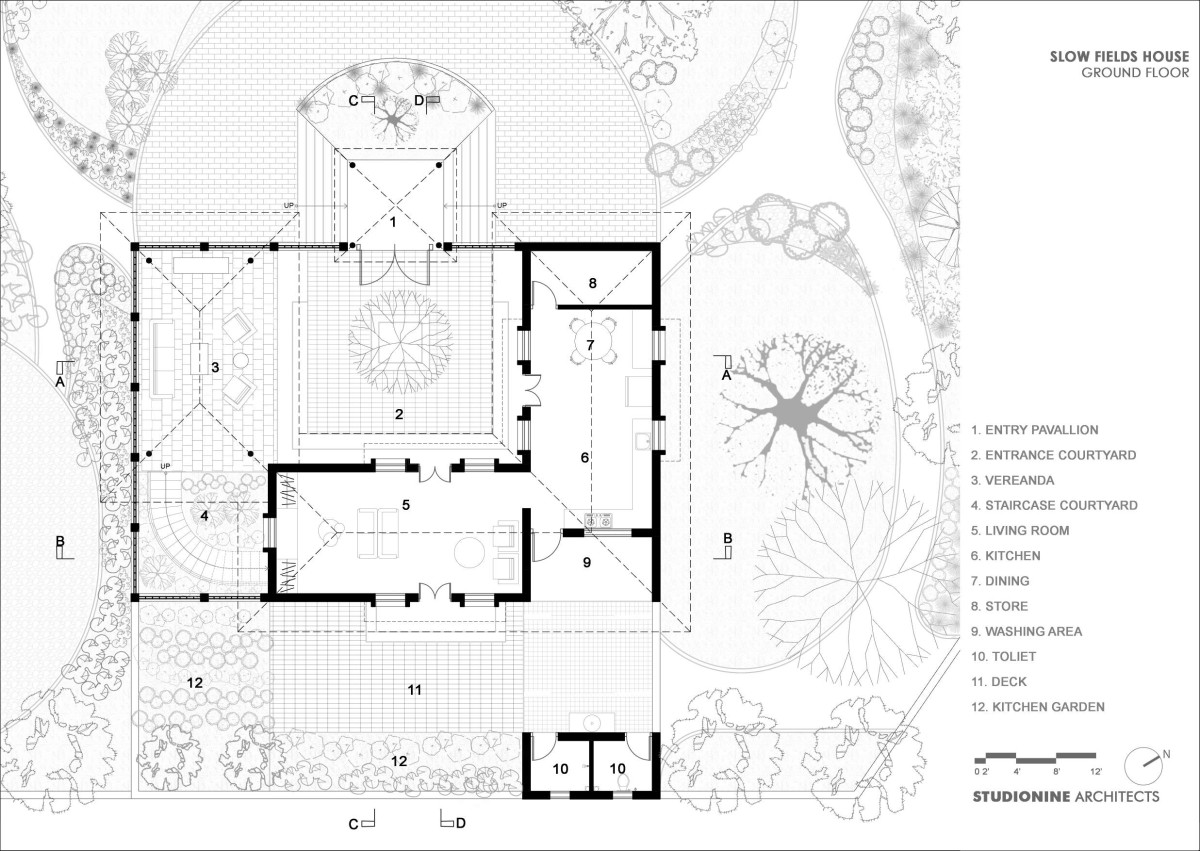
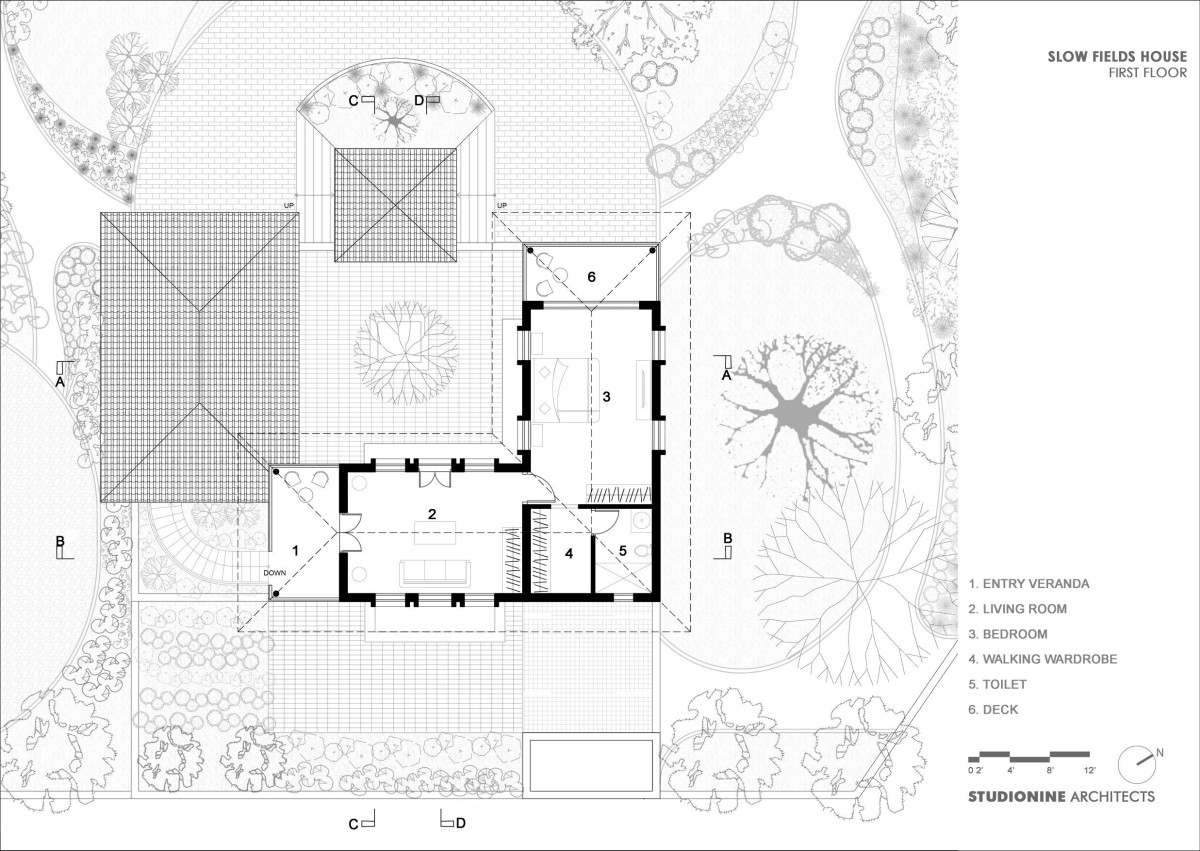
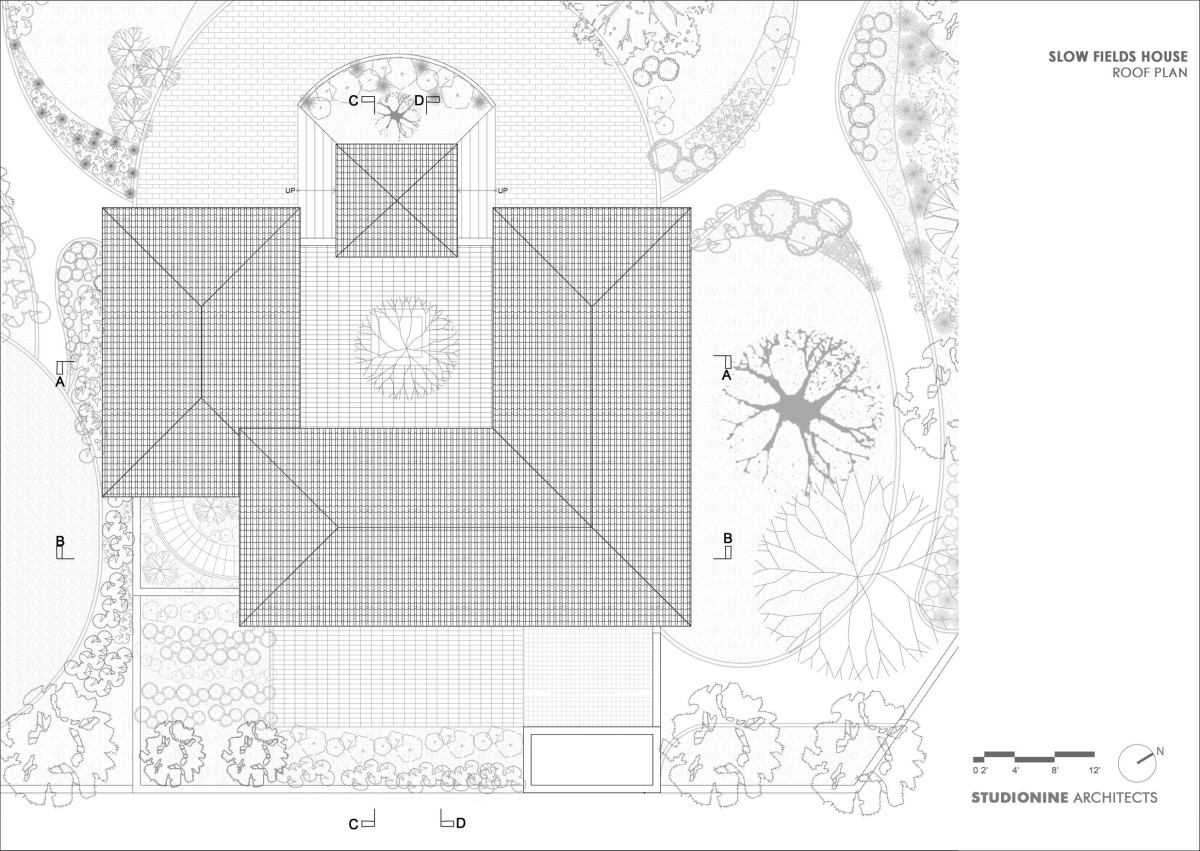
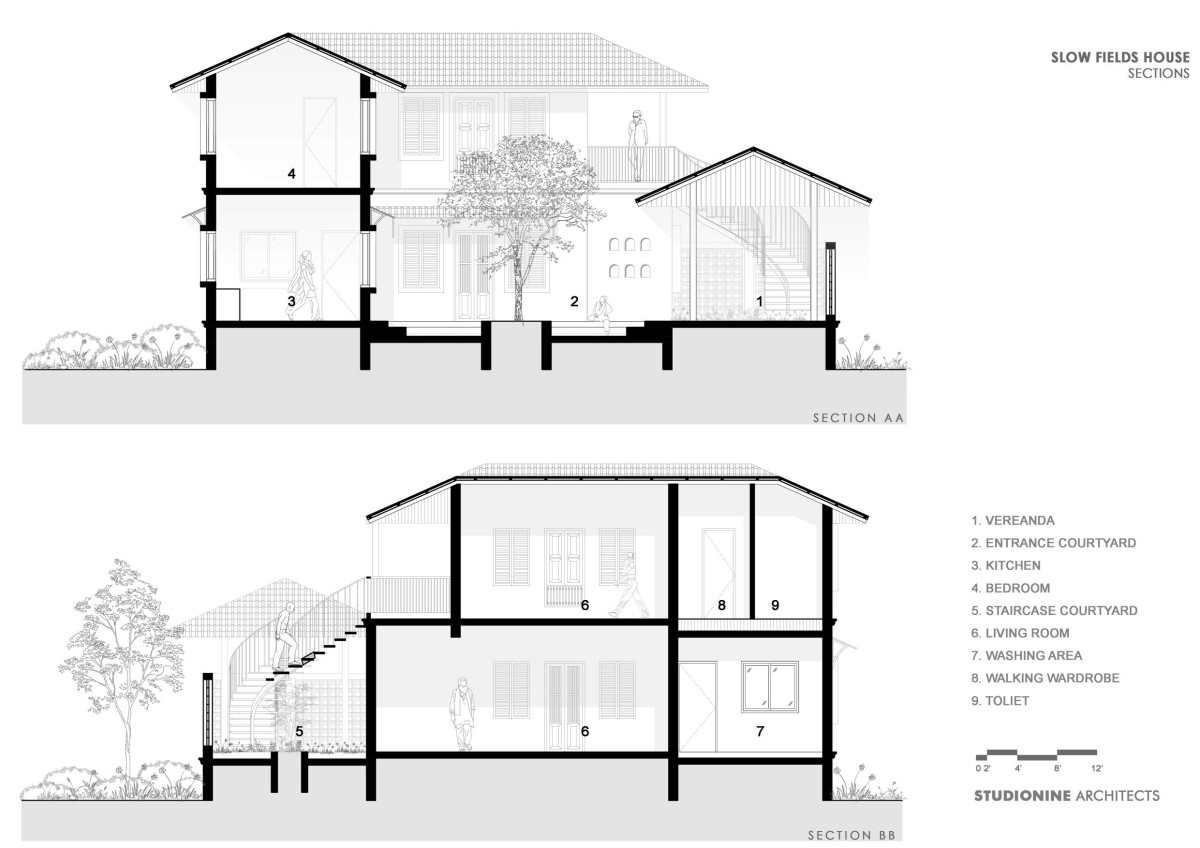
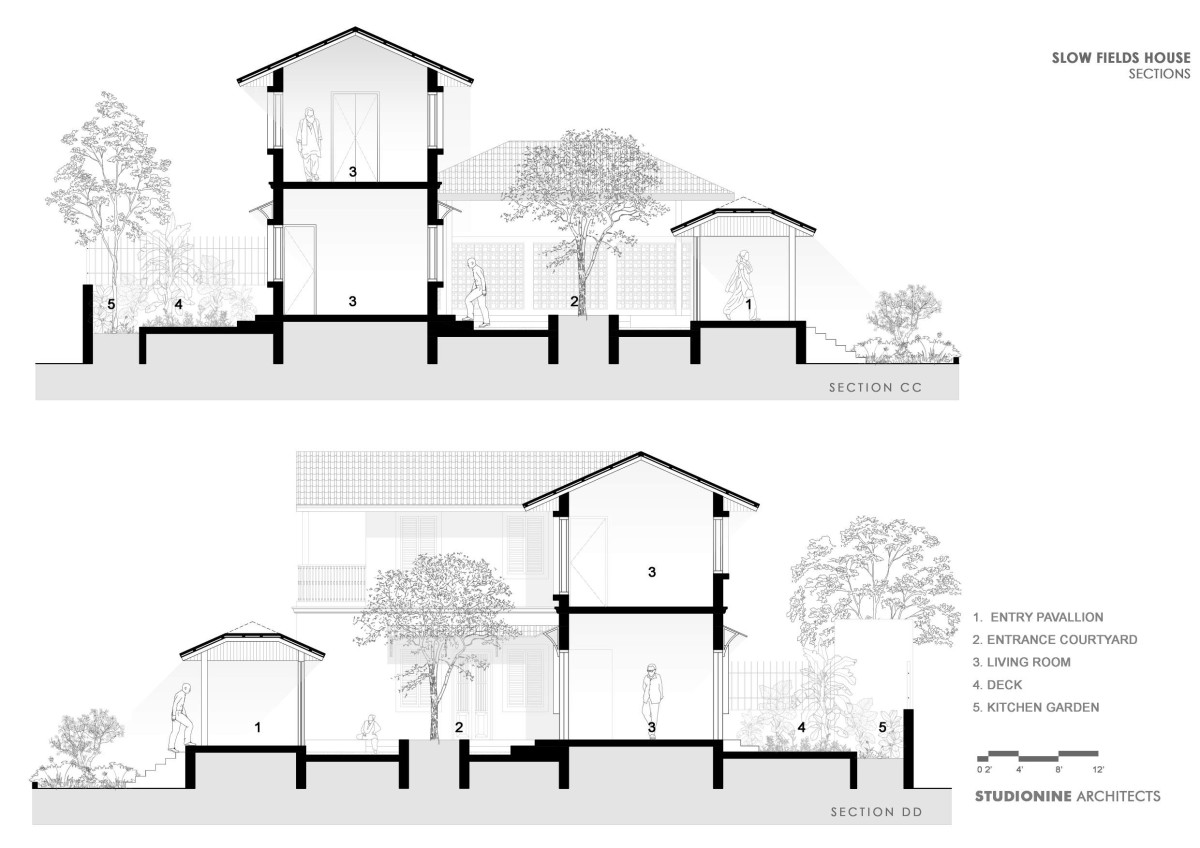
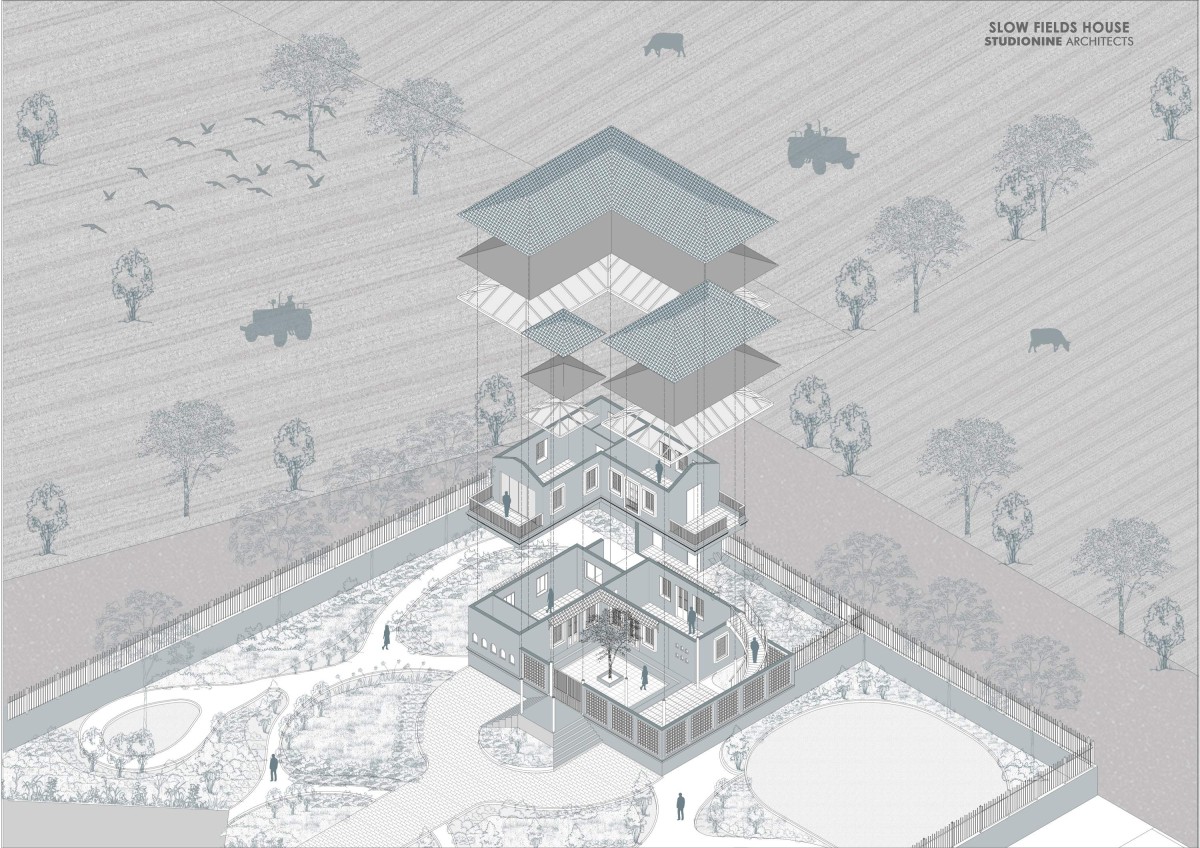
The planning of the house addressed these layered requirements through a design centered around the courtyard, which became the home’s spatial, emotional and social nucleus. The building is arranged as a series of thresholds; plinth, verandah, jaali screen, courtyard, each softening the transition between inside and outside. The form draws from familiar regional typologies: sloping clay-tiled roofs, extended eaves that provide shade, and deep verandahs that act as breathing spaces throughout the day. A lightweight spiral staircase ties the lower and upper levels together, adding visual movement without overwhelming the simplicity of the structure. The circulation is calm and fluid, with shaded passages encouraging a slow pace as one moves through the home.
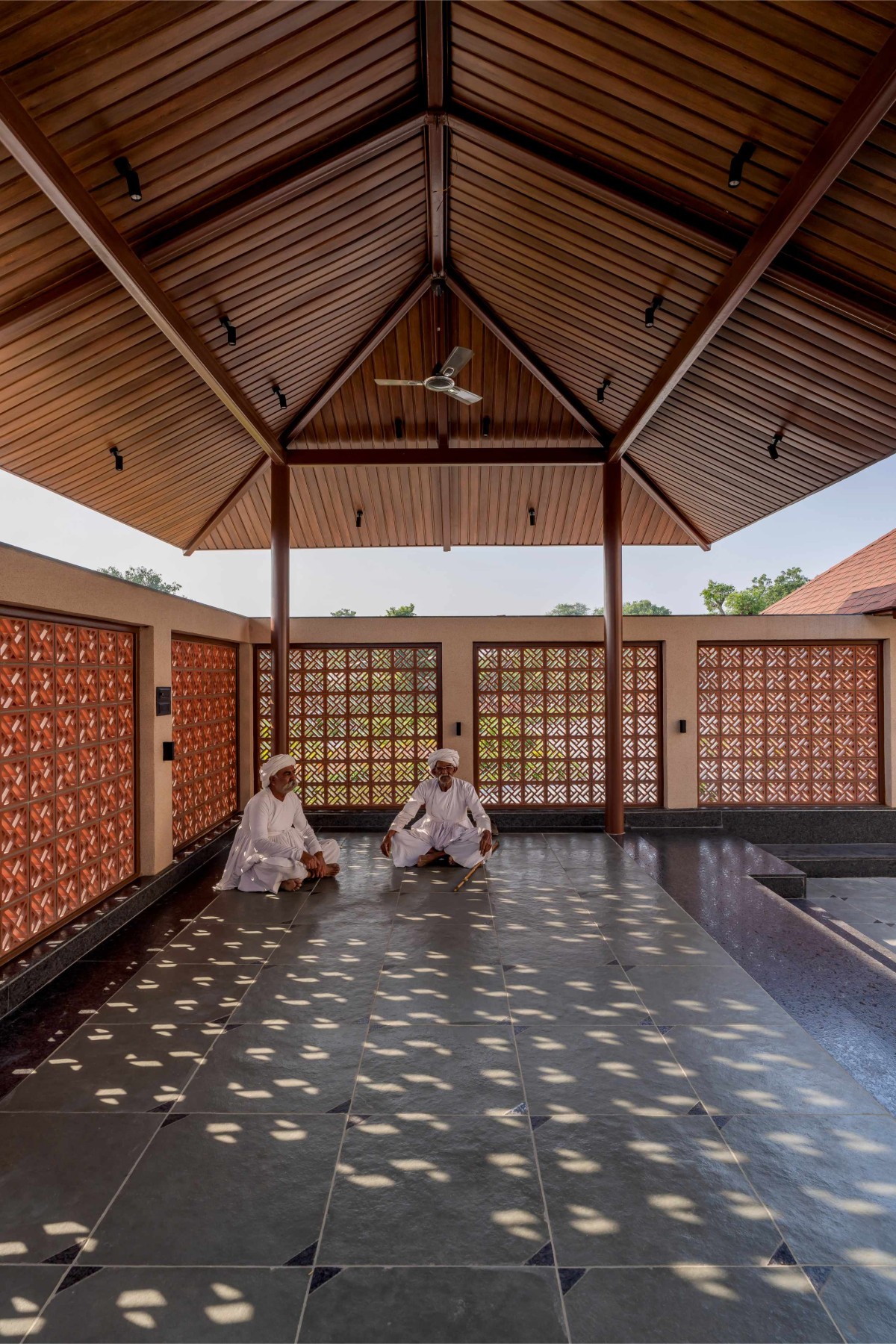
Material choices further root the project in its context. Textured plastered walls soften the massing and recall traditional village homes. Terracotta jaalis line the south-west shaded portico, enabling cross-ventilation while casting intricate patterns of light on the natural stone floors. Indian stone flooring composed of kota and kadappa stones ensures durability and thermal comfort, and invites visitors to sit on the floor, as is customary in this part of the world. At the heart of the entrance courtyard sits a carefully nurtured bonsai, tended by the client for years, symbolizing continuity, patience, and the personal history that grounds the home.
Courtyard view of Slow Fields House by Studionine Architects
Courtyard view of Slow Fields House by Studionine Architects
Courtyard view of Slow Fields House by Studionine Architects
Verandah of Slow Fields House by Studionine Architects
The experience of inhabiting the home is guided by sensory stillness—dappled sunlight, shifting shade, the breeze moving through perforated screens, and long views toward the fields. The spaces are scaled to host people generously, replicating the social openness of traditional village households. The home becomes a setting for unhurried interactions: conversations under the verandah, children playing in the courtyard, elders resting in the filtered light.
This weekend home offers more than a temporary retreat, it becomes a continuation of the land’s legacy and the family’s memory. It preserves cultural rituals of hospitality, honors local craftsmanship, and celebrates the understated beauty of rural Gujarat. The entire construction strategy is intentionally simple and robust, acknowledging that the home is occupied only intermittently. By reimagining the ancestral village home through a modern lens, the project contributes meaningfully to its environment and community, shaping a place where memory, landscape, and architecture coexist with quiet dignity.
Verandah of Slow Fields House by Studionine Architects
Staircase court of Slow Fields House by Studionine Architects
Staircase view of Slow Fields House by Studionine Architects
Dusk light exterior view of Slow Fields House by Studionine Architects
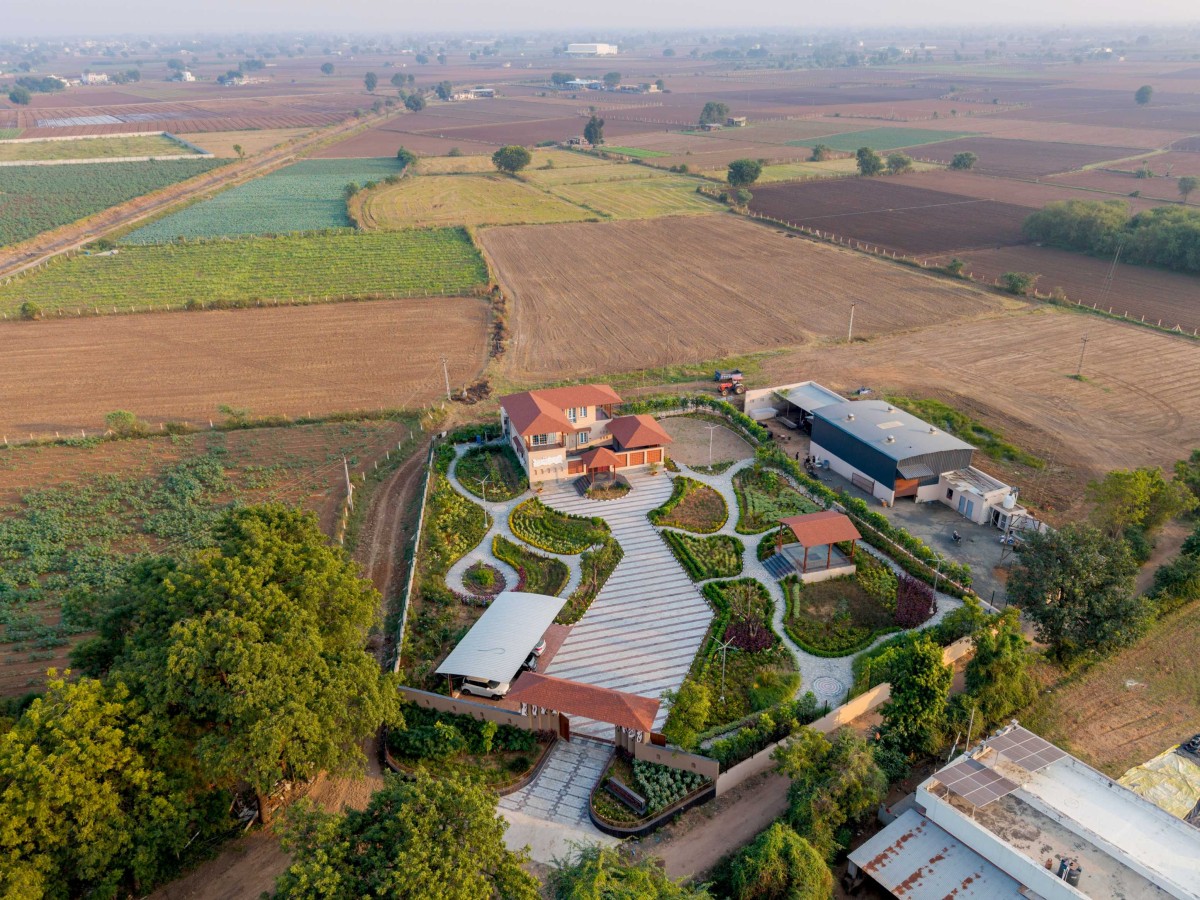
Aerial view of Slow Fields House by Studionine Architects
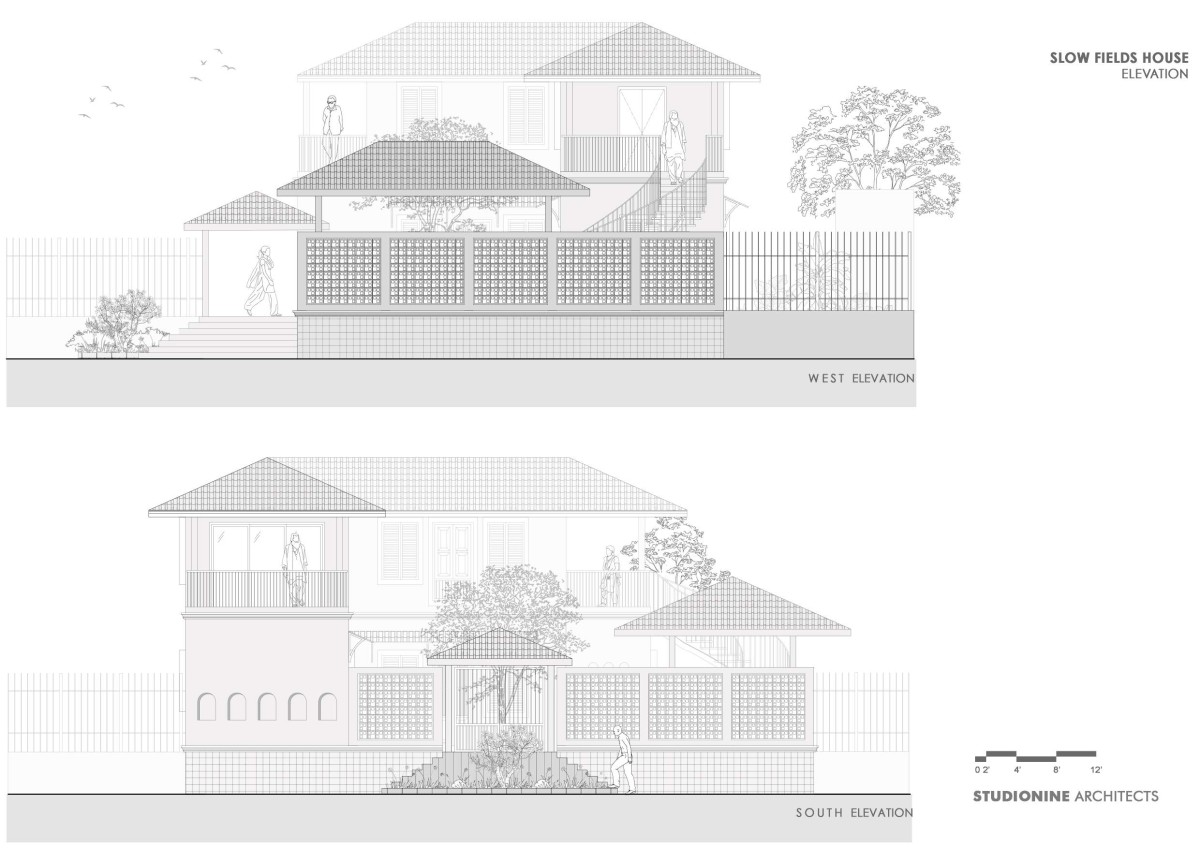
Elevations of Slow Fields House by Studionine Architects
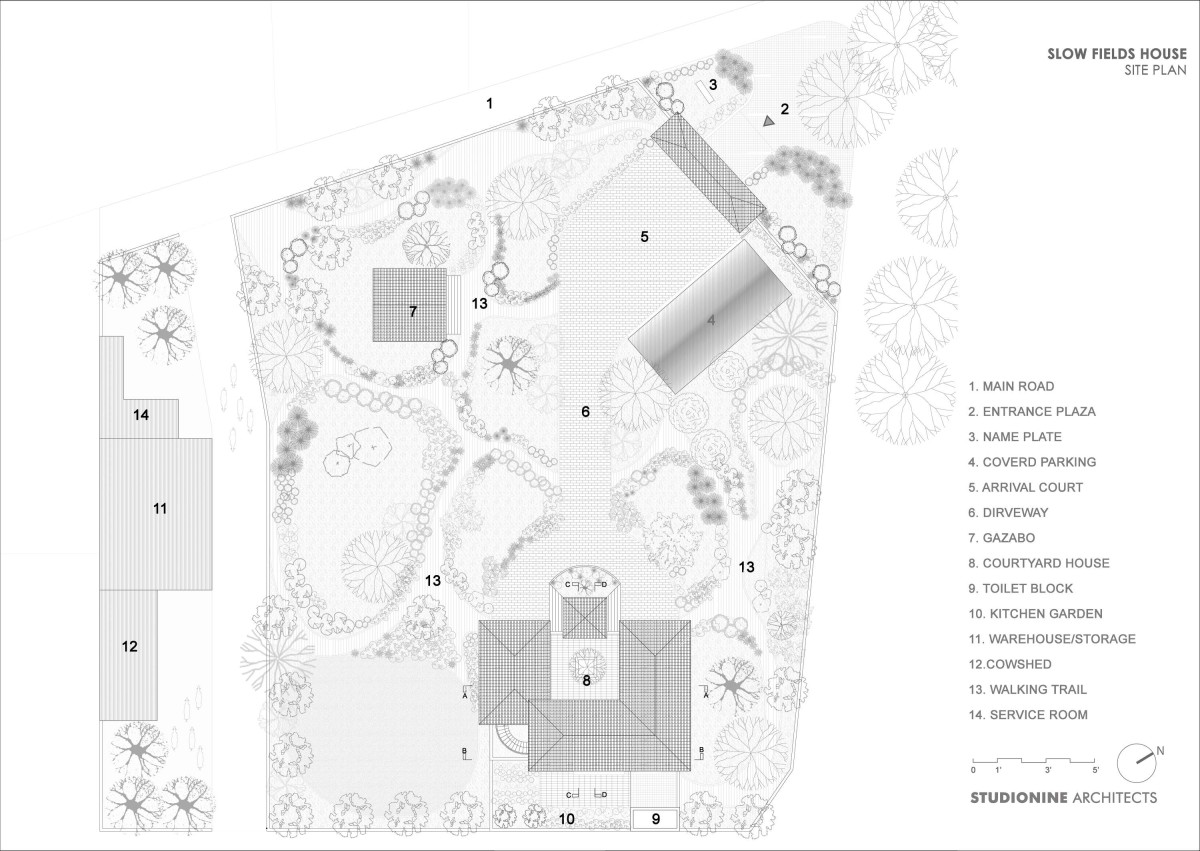
Site Plan of Slow Fields House by Studionine Architects
Ground Floor Plan of Slow Fields House by Studionine Architects
First Floor Plan of Slow Fields House by Studionine Architects
Roof Plan of Slow Fields House by Studionine Architects
Section AA & BB of Slow Fields House by Studionine Architects
Section CC & DD of Slow Fields House by Studionine Architects
Isometric view of Slow Fields House by Studionine Architects