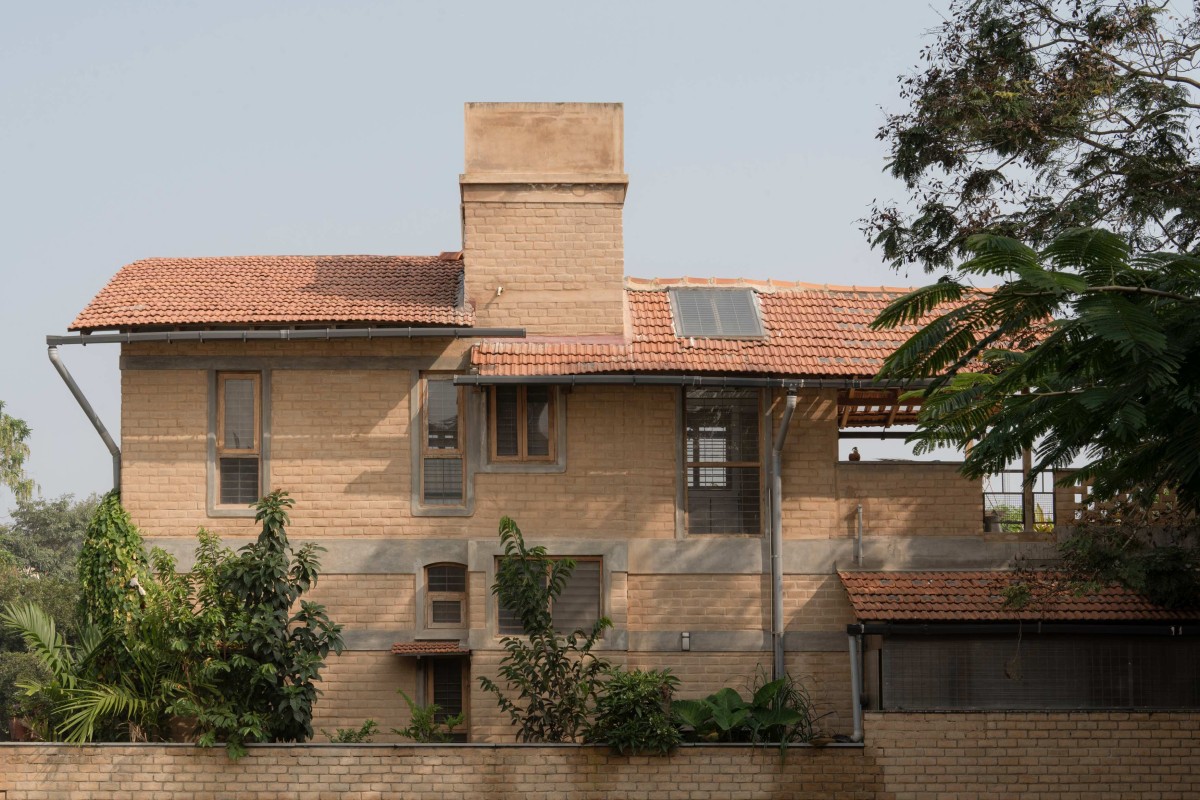
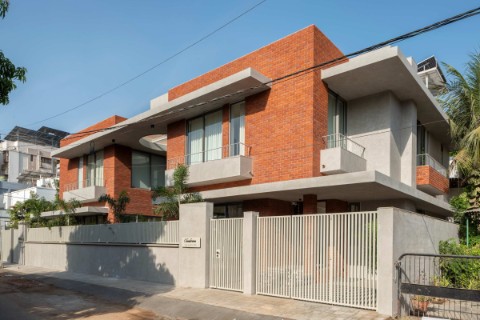
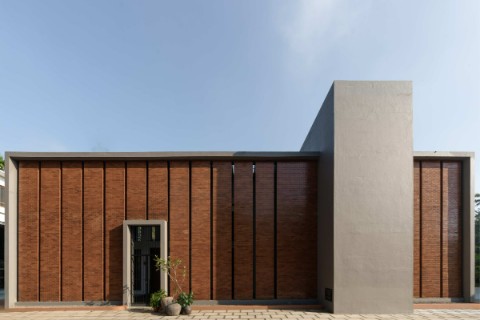
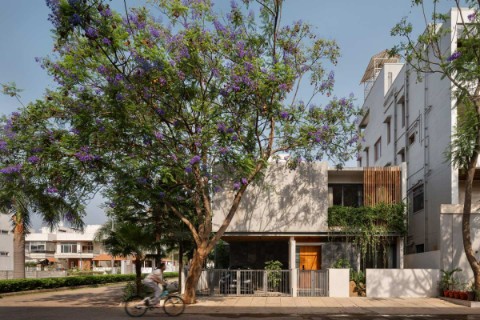
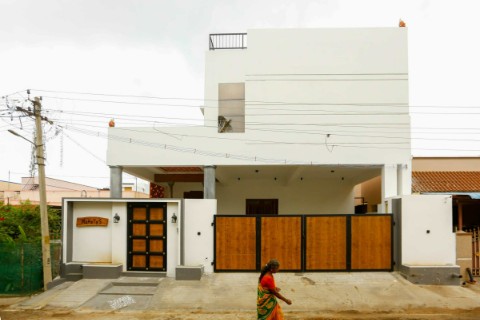
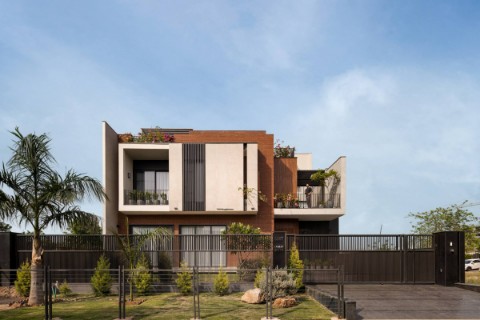
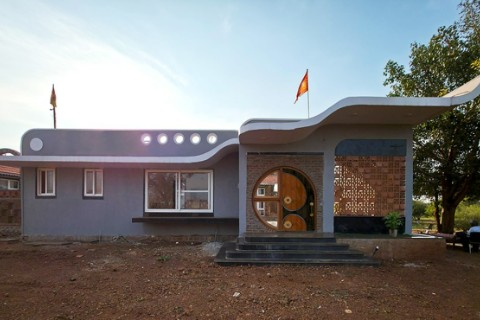
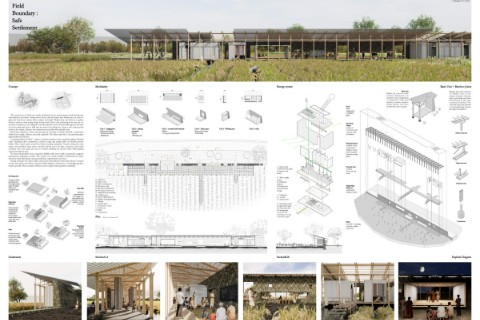
South Elevation of Taṇṇeḷalu by Out of The Box
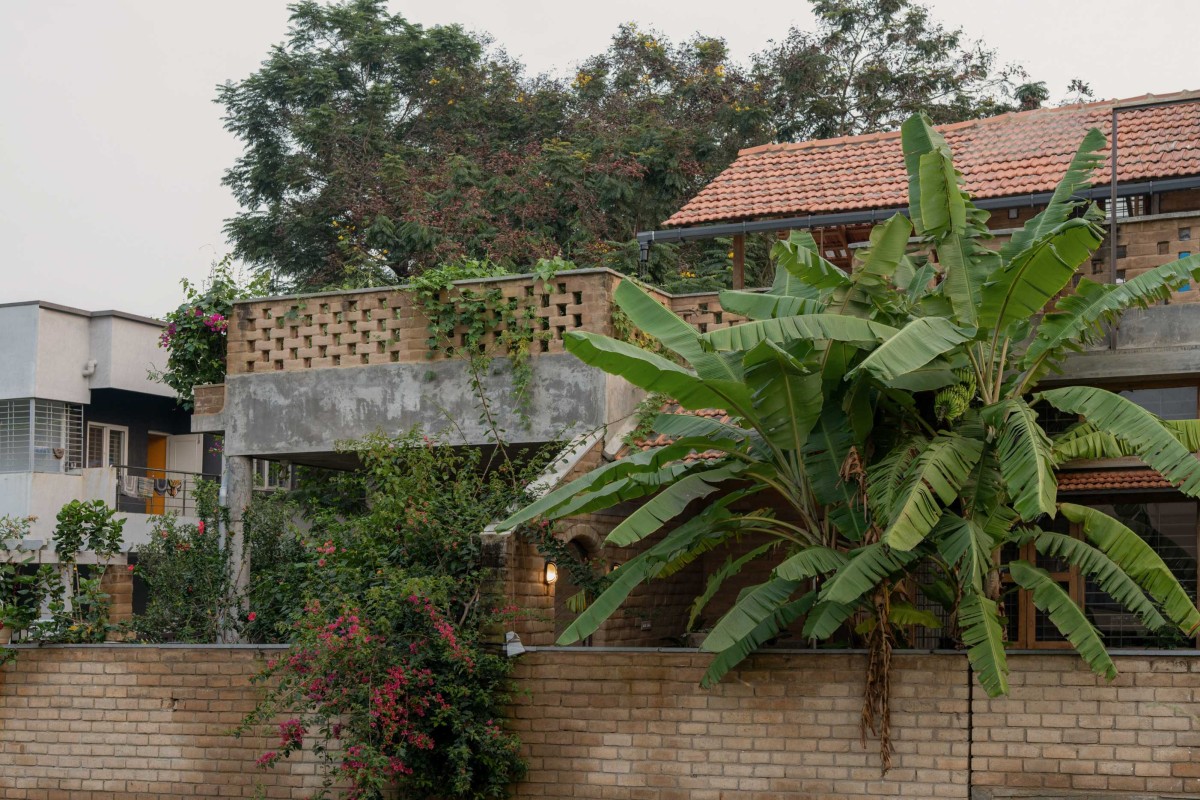
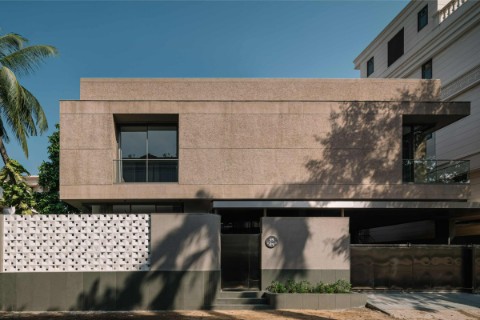
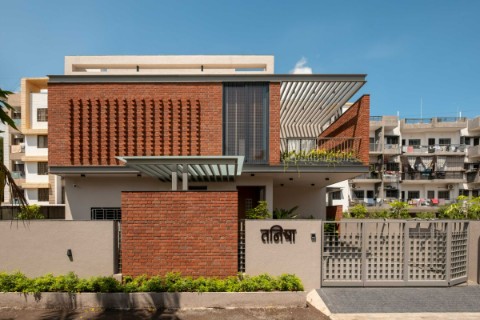
North Elevation of Taṇṇeḷalu by Out of The Box
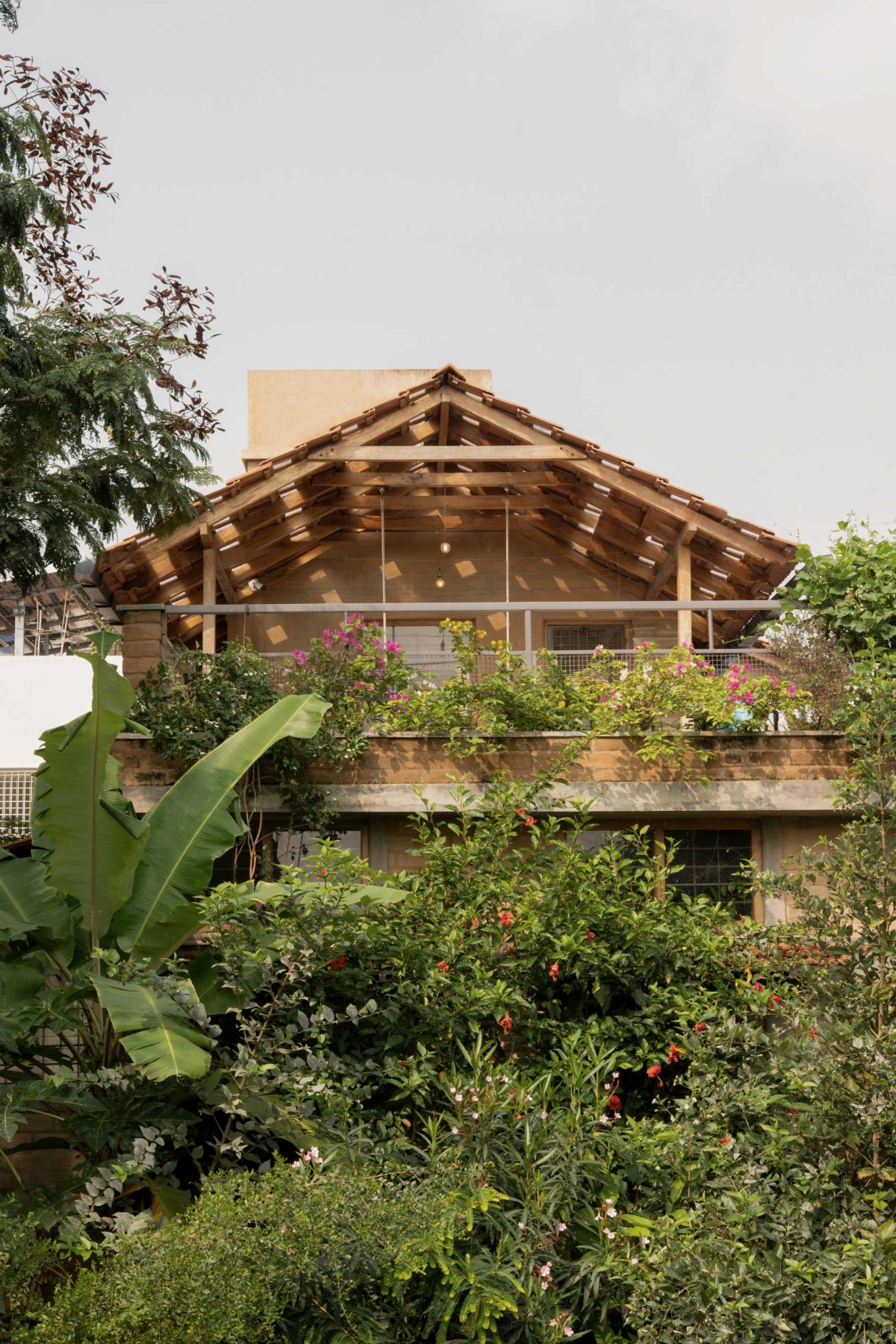
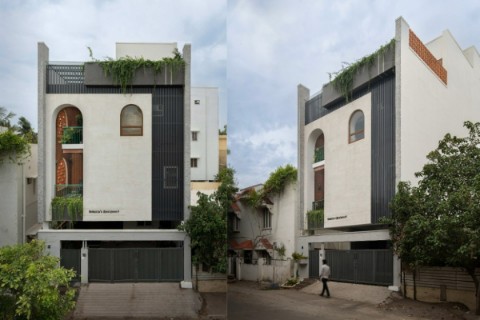
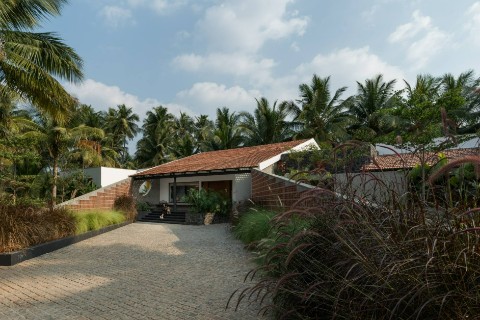
East Elevation of Taṇṇeḷalu by Out of The Box
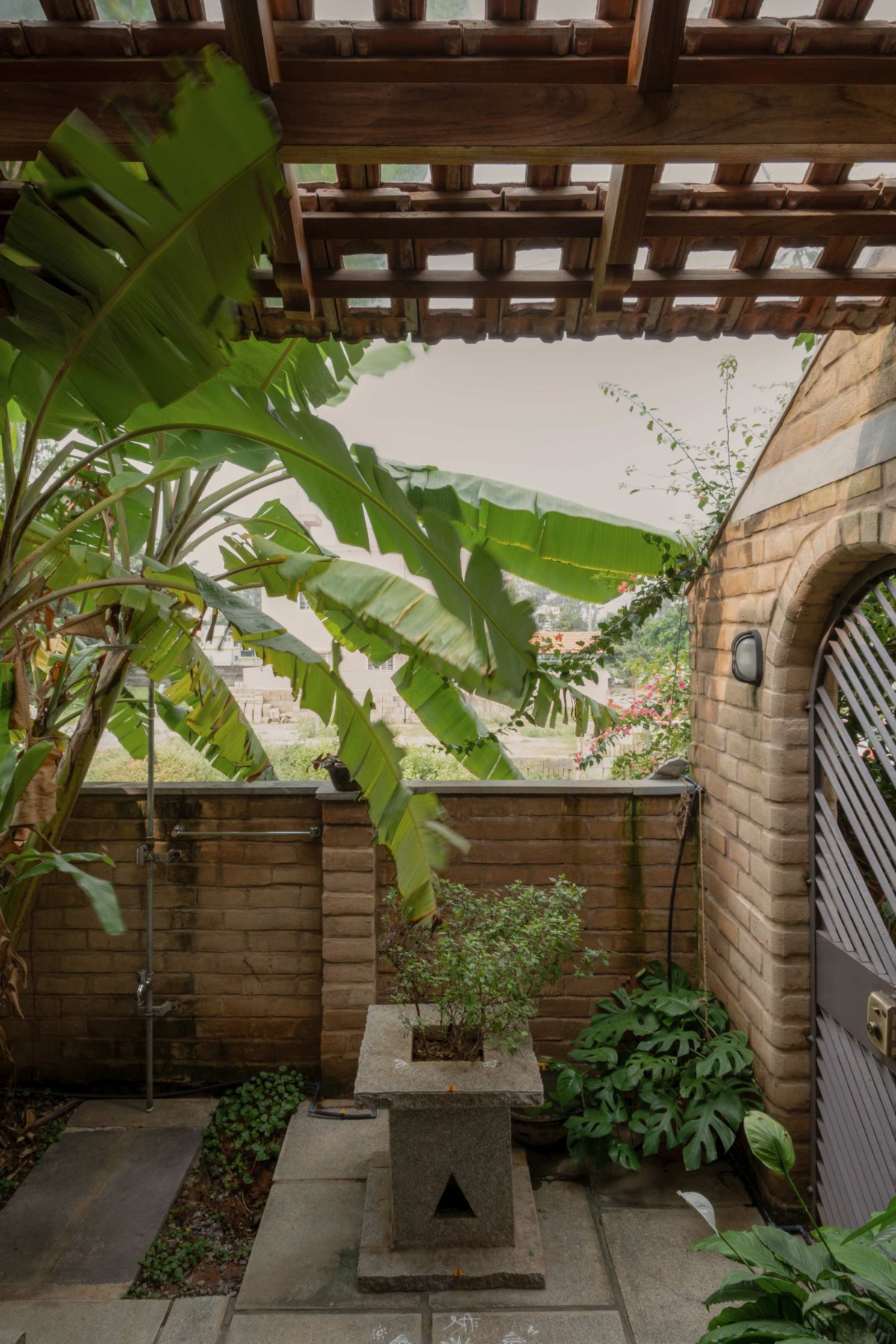
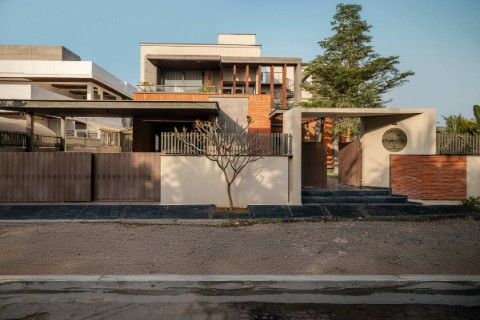
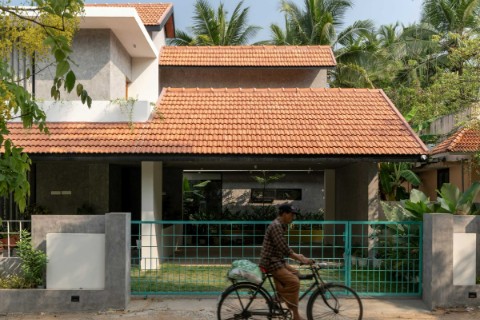
Entrance Porch of Taṇṇeḷalu by Out of The Box
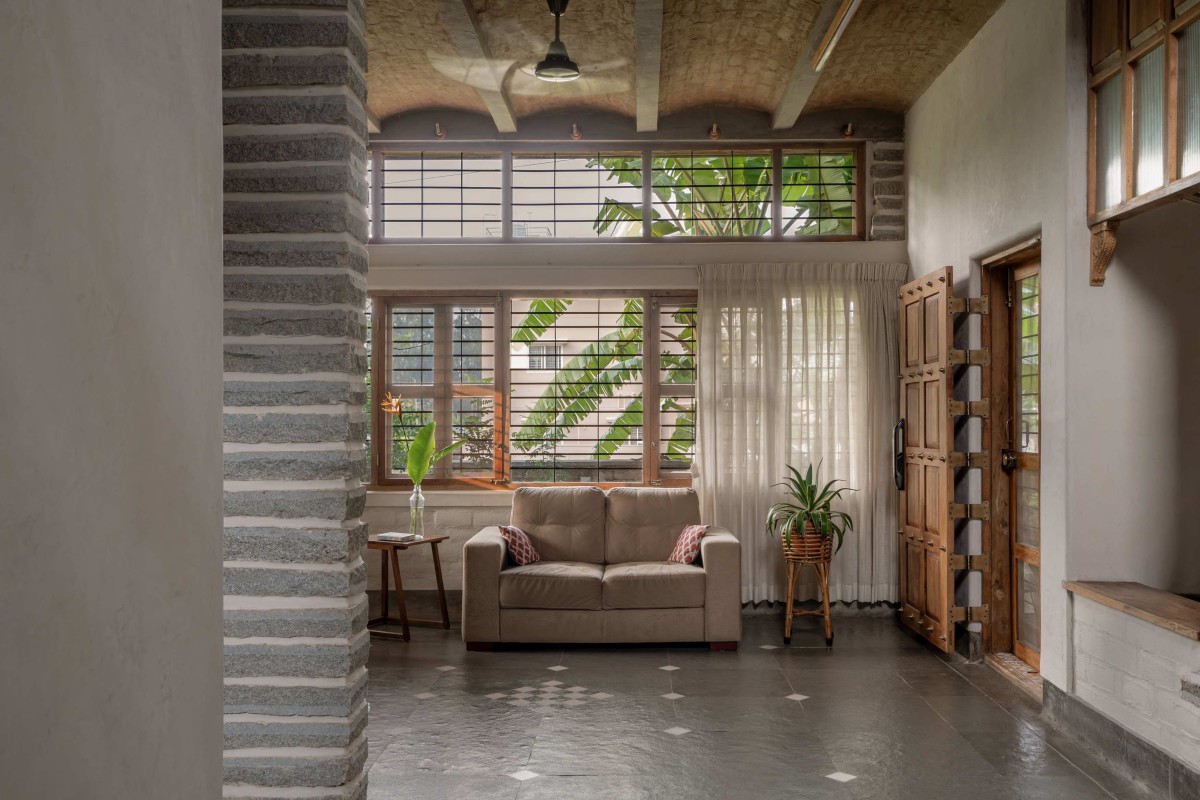
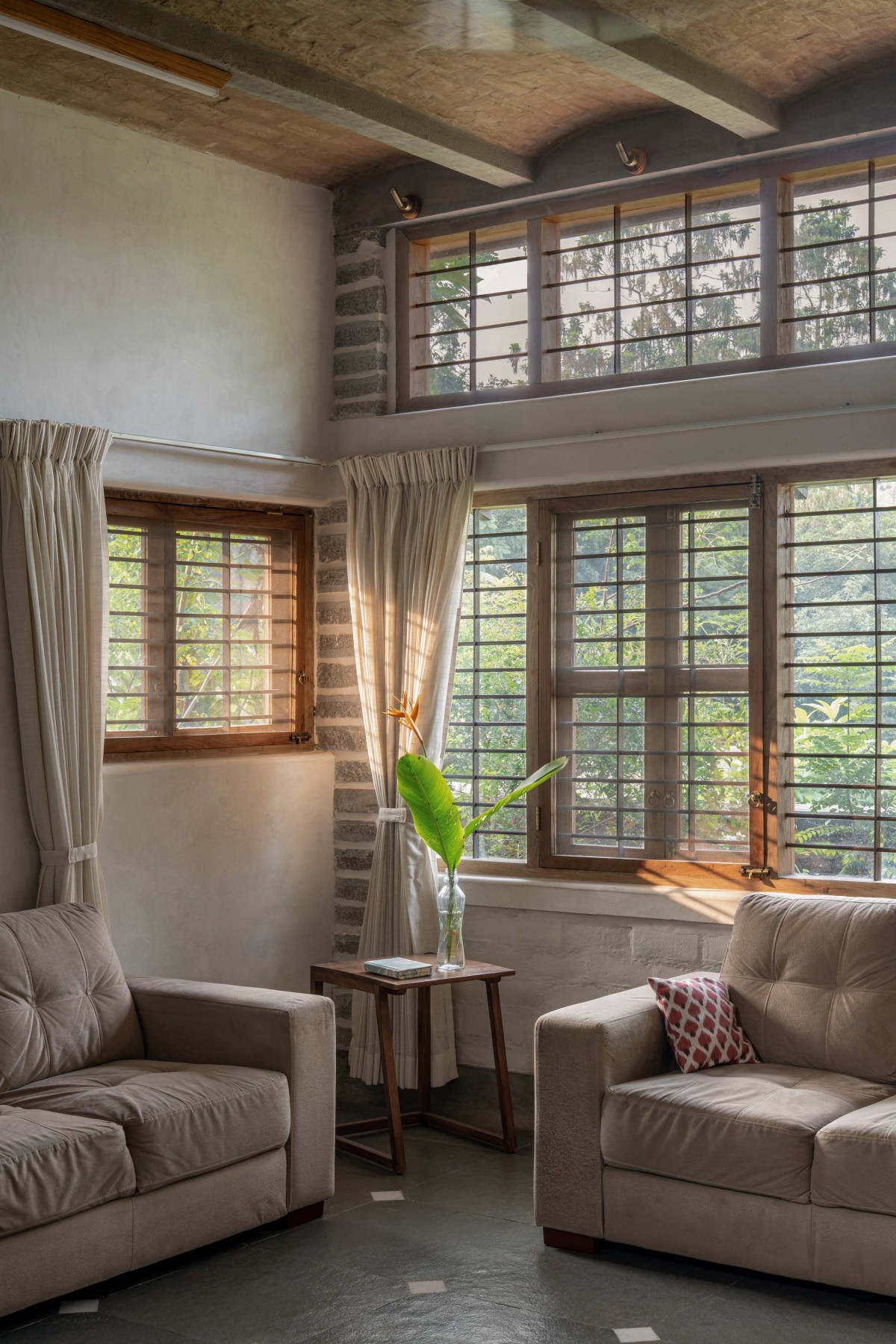
From the entrance veranda, where a tulsi katta marks the threshold, the house flows inward to the living and dining areas and onward to the kitchen. Here, east-facing windows catch the morning sun as it rises, filling the space with golden light. “For our clients, mornings are lived outdoors,” reflects architect Harshita Tophakhane. “There is the purifying bath taken under the open sky, flowers plucked from the terrace garden for puja, tea sipped by the tulsi katta. The house simply gives form to a way of life that already valued slowness, ritual, and nature.”
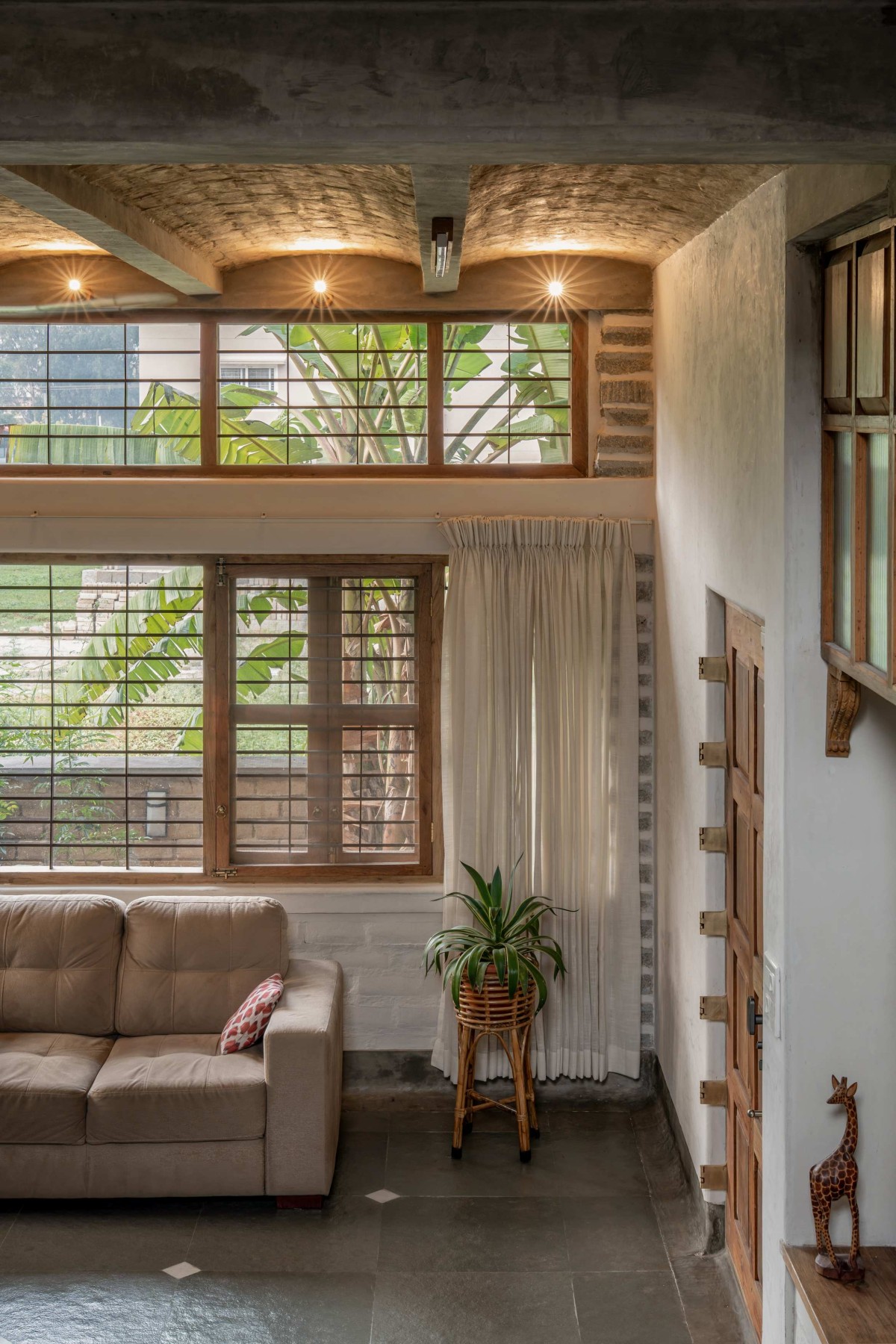
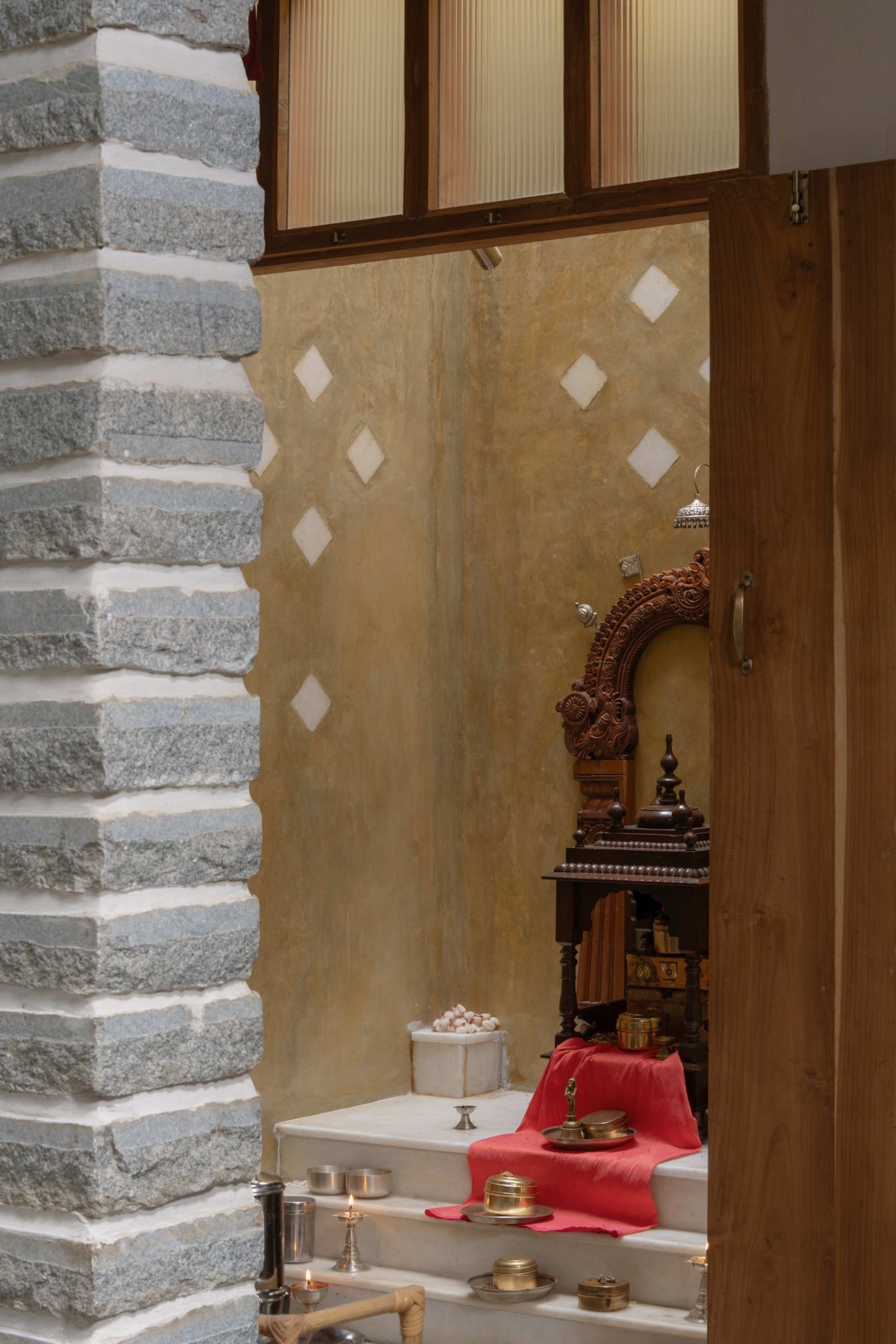
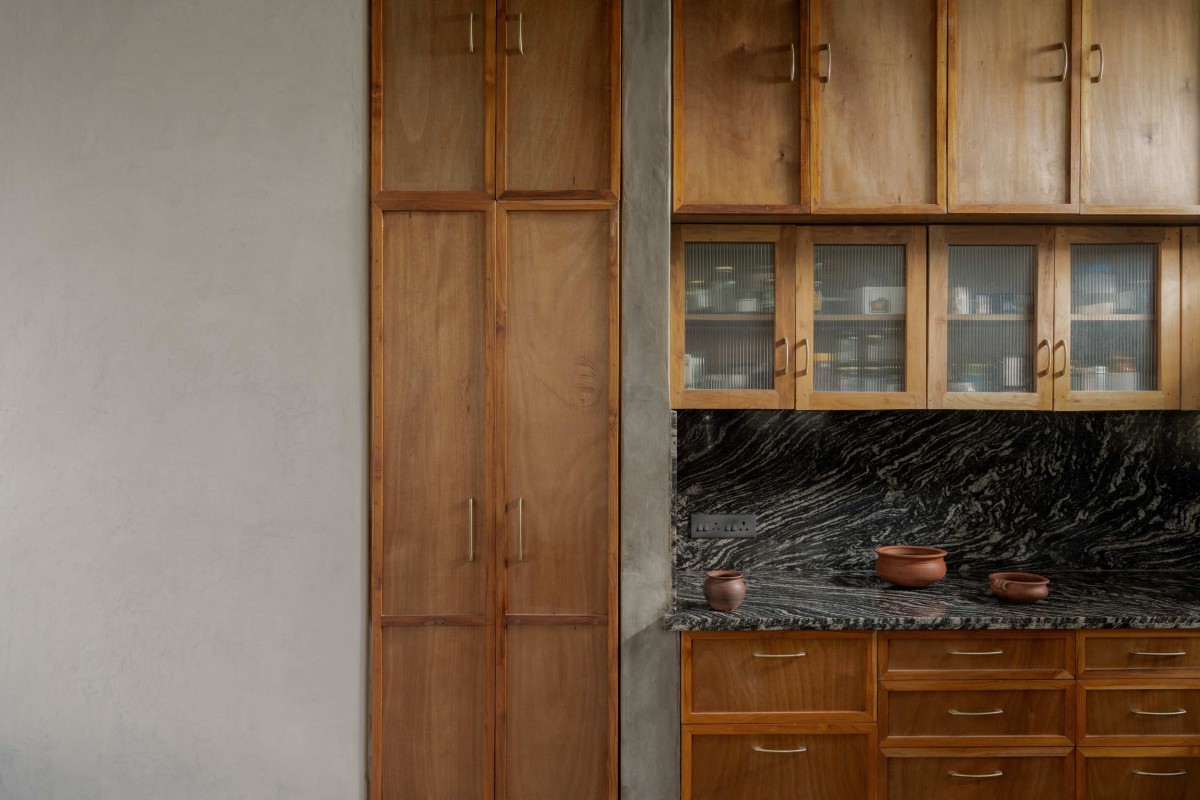
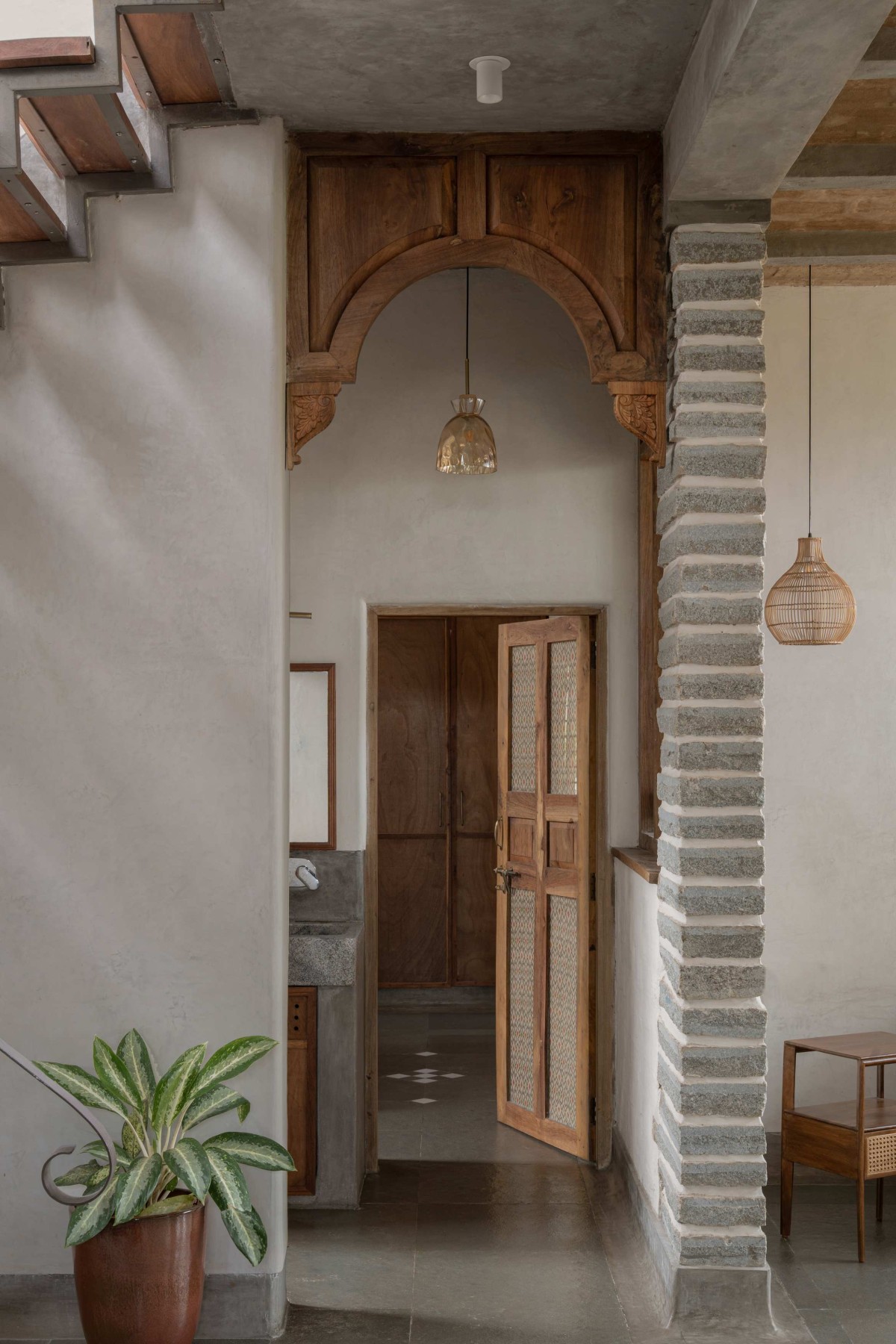
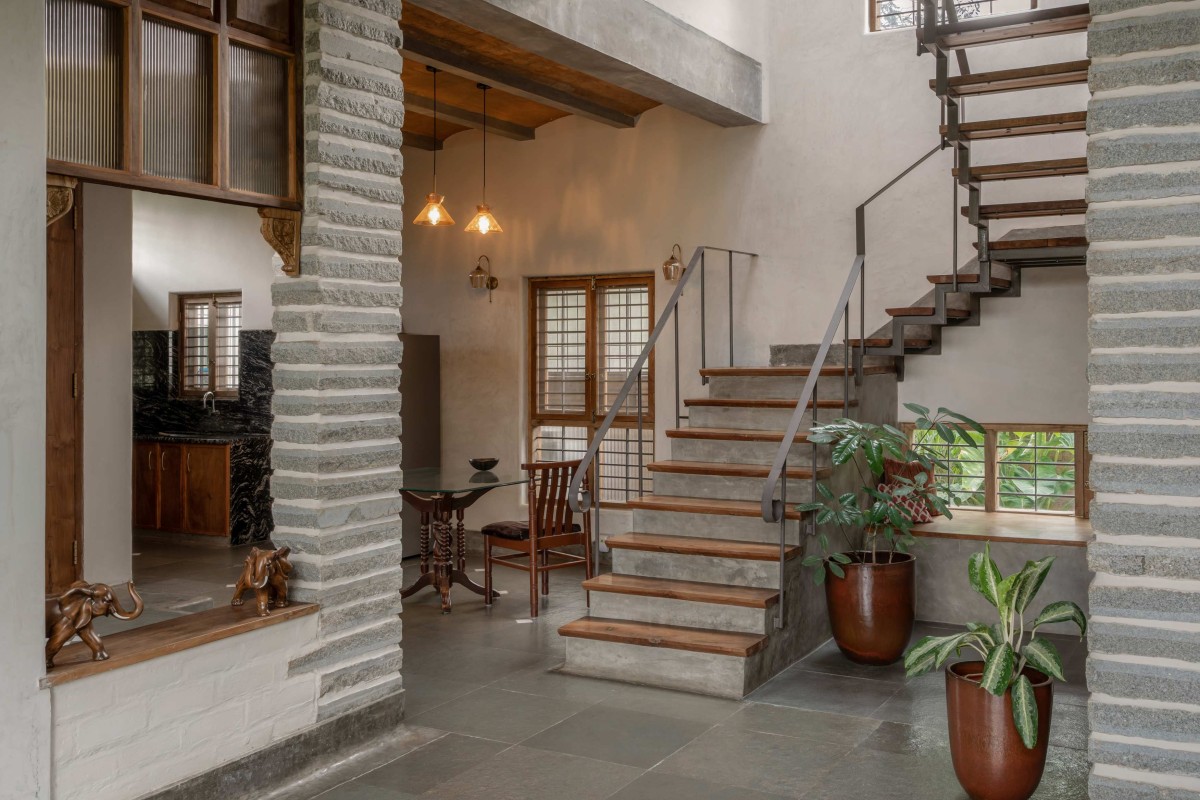
Throughout Taṇṇeḷalu, there is an insistence on honesty. Jack-arch roofs are left with a mud wash rather than plaster, allowing their hand-built effort to remain visible. Timber beams, doors and windows are polished only with natural oils, their hues deepening with time. Bathrooms are finished in oxide plaster, seamless and tactile. Chappadi stone columns carry the marks of quarrying. Every imperfection is not concealed but celebrated, grounding the house in craft and memory.
Living room of Taṇṇeḷalu by Out of The Box
Living room of Taṇṇeḷalu by Out of The Box
Living room of Taṇṇeḷalu by Out of The Box
Pooja room of Taṇṇeḷalu by Out of The Box
Kitchen of Taṇṇeḷalu by Out of The Box
Corridor of Taṇṇeḷalu by Out of The Box
Staircase court of Taṇṇeḷalu by Out of The Box
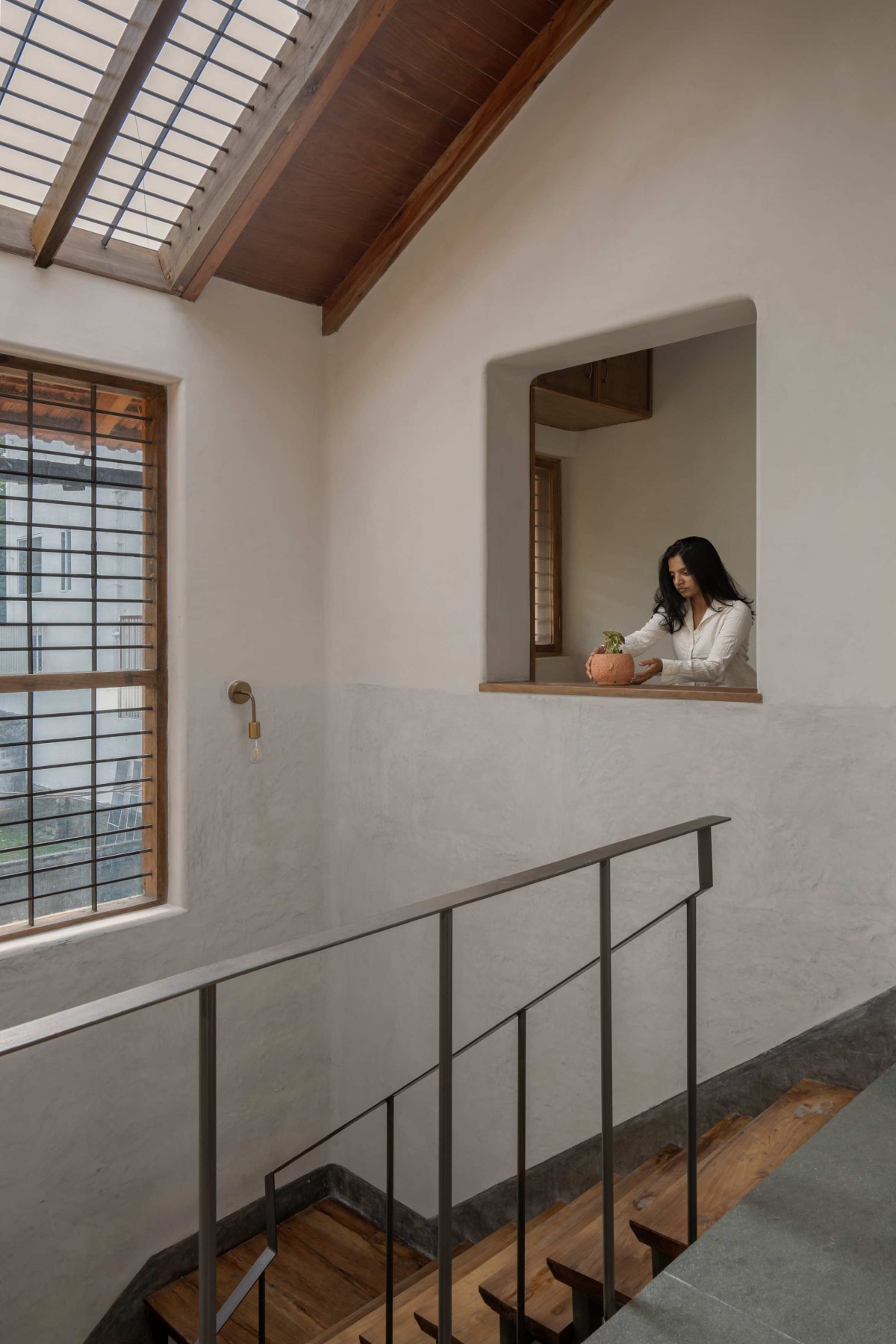
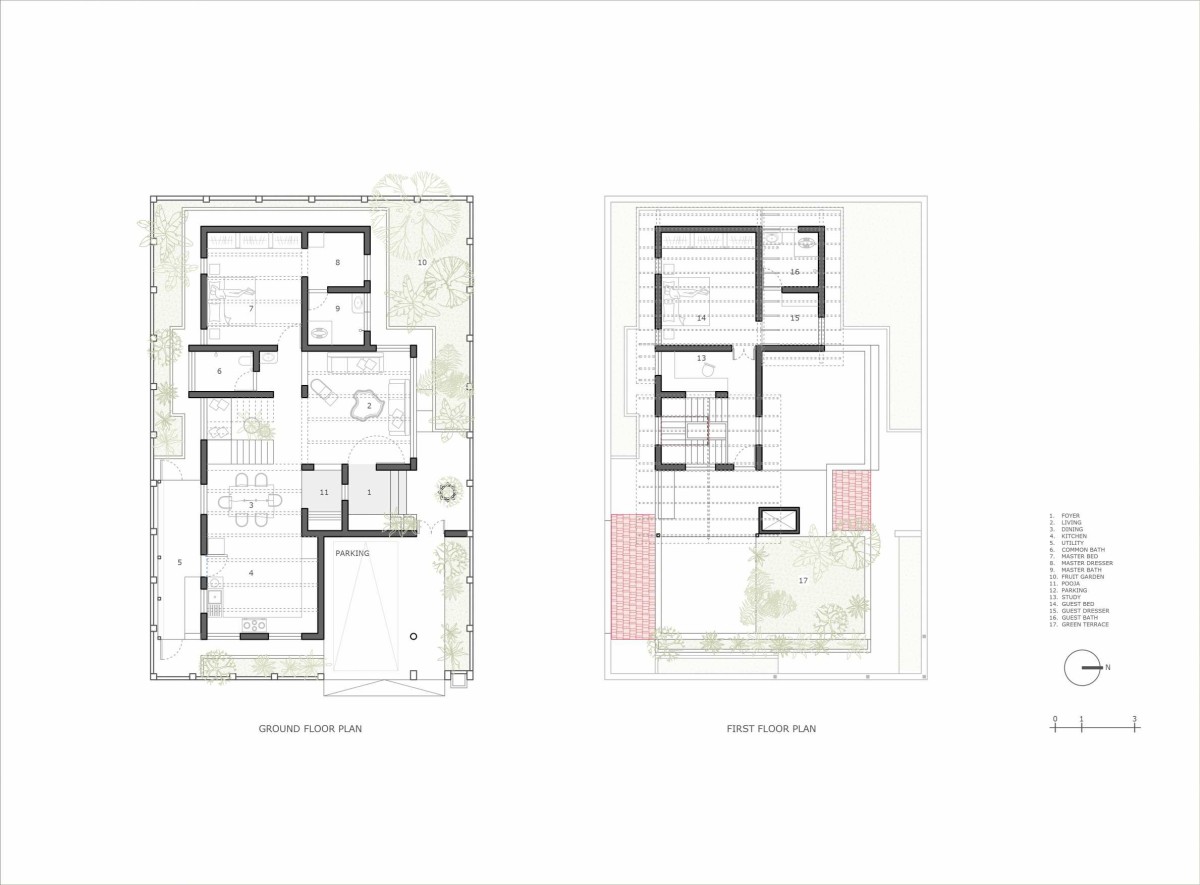
The plan unfolds in an L-shape around a double-height stair court. From clerestory windows high above, daylight spills down into this central space, while warm air rises and escapes, drawing cooler air in through shaded openings below. The house needs no air-conditioning. Even in the rising heat of Bengaluru summers, the family finds comfort in the soft breeze that drifts through the rooms. In winter, thick walls and lime plaster contain warmth, while operable clerestory windows keep it gently sealed.
Staircase view of Taṇṇeḷalu by Out of The Box
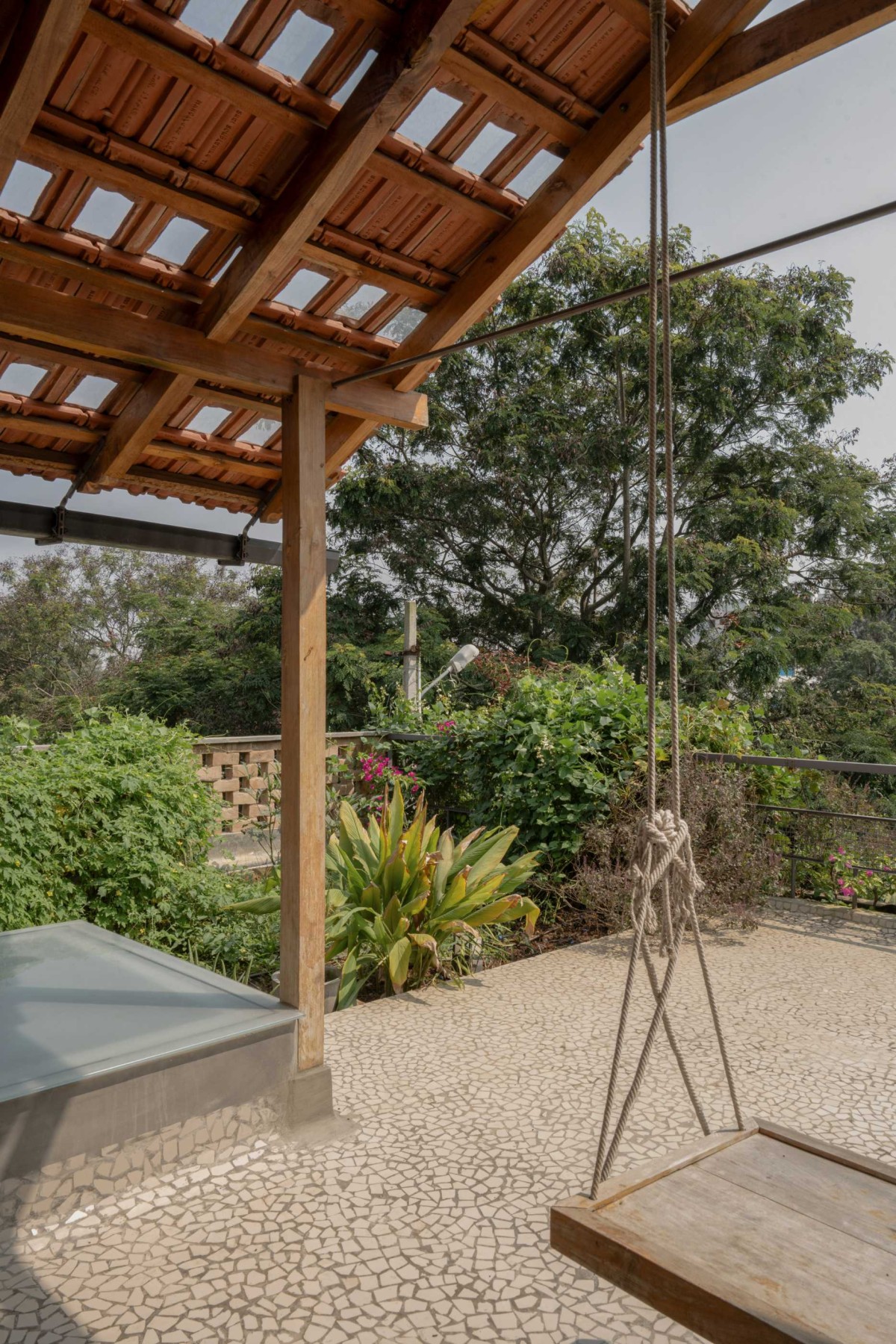
Above, a terrace garden extends the home’s relationship with nature. Fruits, vegetables, herbs and flowers grow here, supplying the family’s kitchen and rituals. Herbs are brewed into traditional kashaya, flowers are offered at puja, vegetables are gathered for daily meals. A swing under a small pergola makes this terrace feel less like a rooftop and more like another garden. “When we sit here with tea or sort vegetables,” Shridevi says, “it feels as though we are on the ground, in the middle of our own farm, not on a first floor terrace in the middle of the city.”
Even the external walls participate in this dialogue with climate. The uneven surface of mud bricks creates tiny shadows on one another, reducing heat absorption through the day. Deep overhangs protect the walls from rain, edged with slim granite strips. Rainwater harvesting channels feed the groundwater, solar panels heat water, and discreet modern systems provide convenience without intrusion.
In a neighbourhood of fast-built, concrete houses, Taṇṇeḷalu stands apart. Guests often remark that stepping through its veranda feels like leaving the city behind, as if arriving at a farm or a retreat. Yet this is no spectacle. Its beauty lies in what it chooses not to hide: the texture of hand-cast blocks, the ripples of stone, the marks of craft. “I wanted nature to be a collaborator, not an accessory,” says Tophakhane. “And I wanted the house to age with dignity, the way the memories it was born from have endured.”
Taṇṇeḷalu is not just a shelter from the city. It is a home that listens, adapts, and slows time. A place where light shifts, air moves, and materials remember, allowing the family to live with comfort and rootedness in the midst of a hurried world.
Terrace of Taṇṇeḷalu by Out of The Box
Plans of Taṇṇeḷalu by Out of The Box