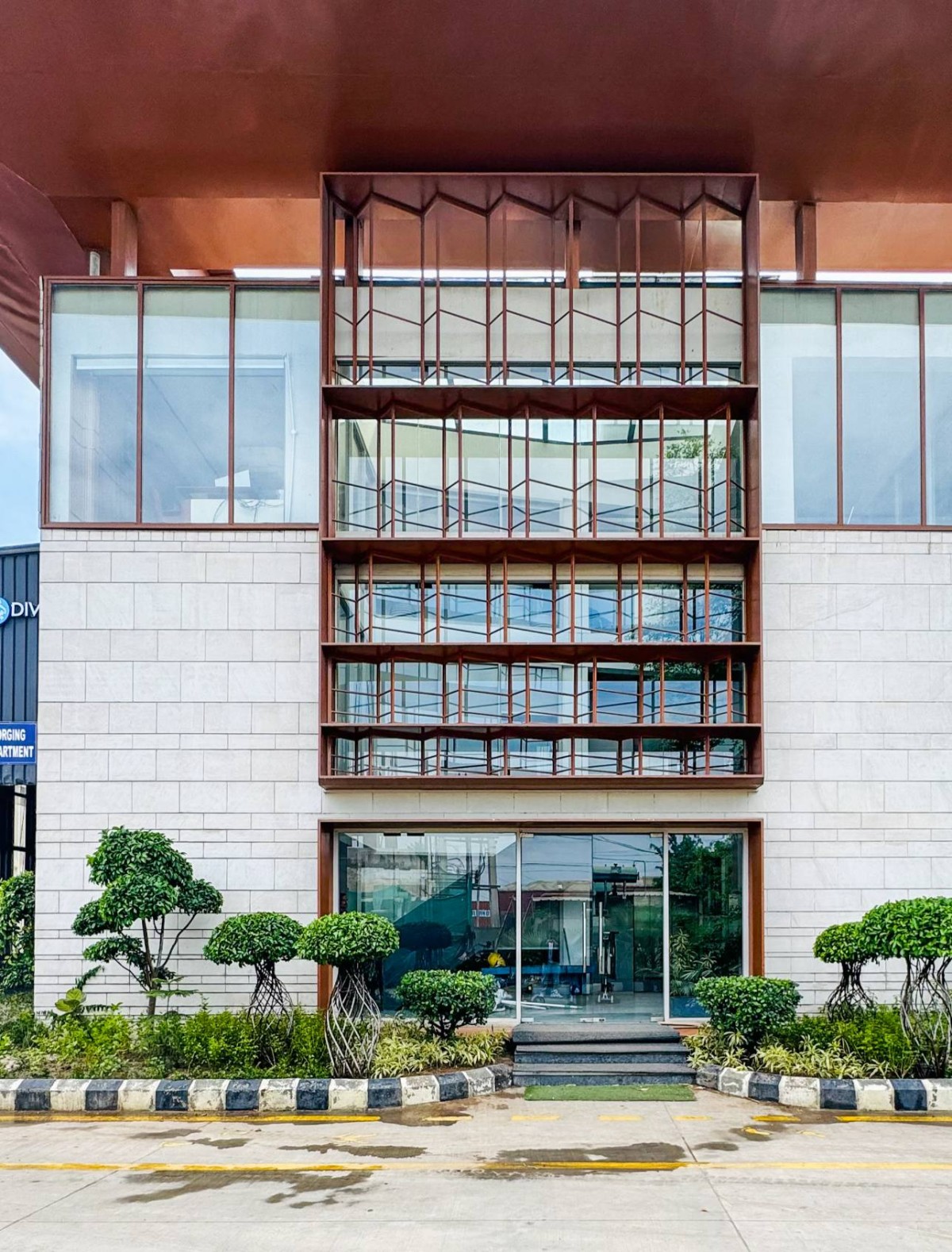
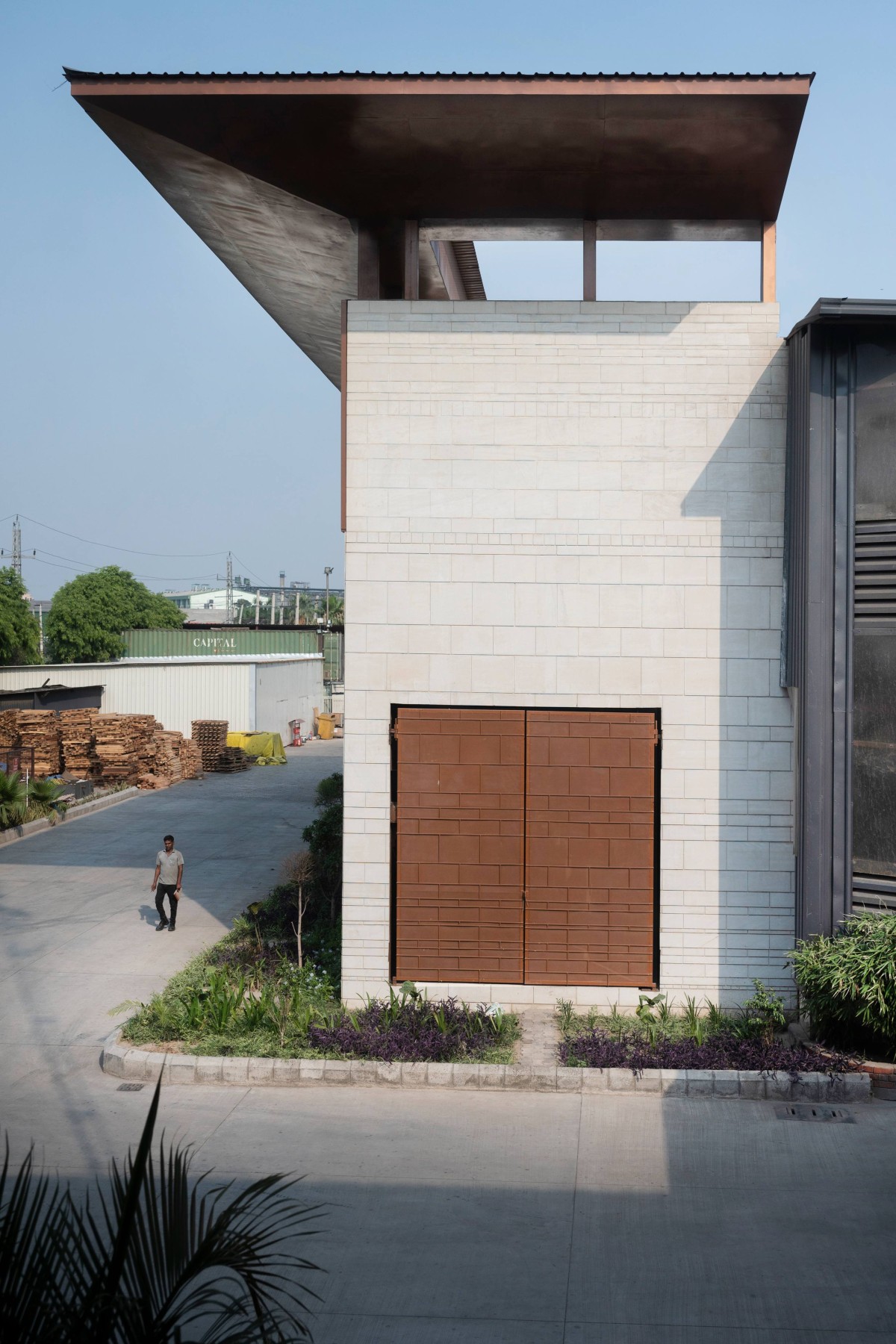
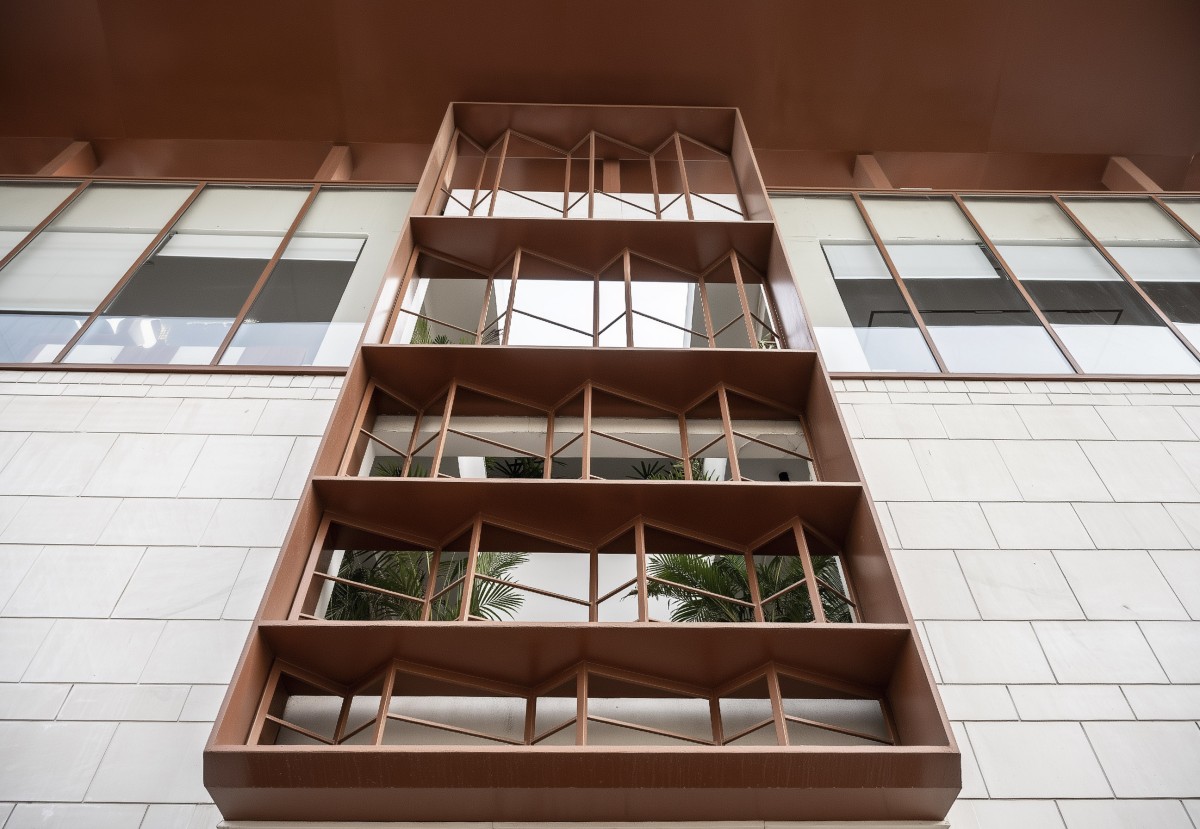
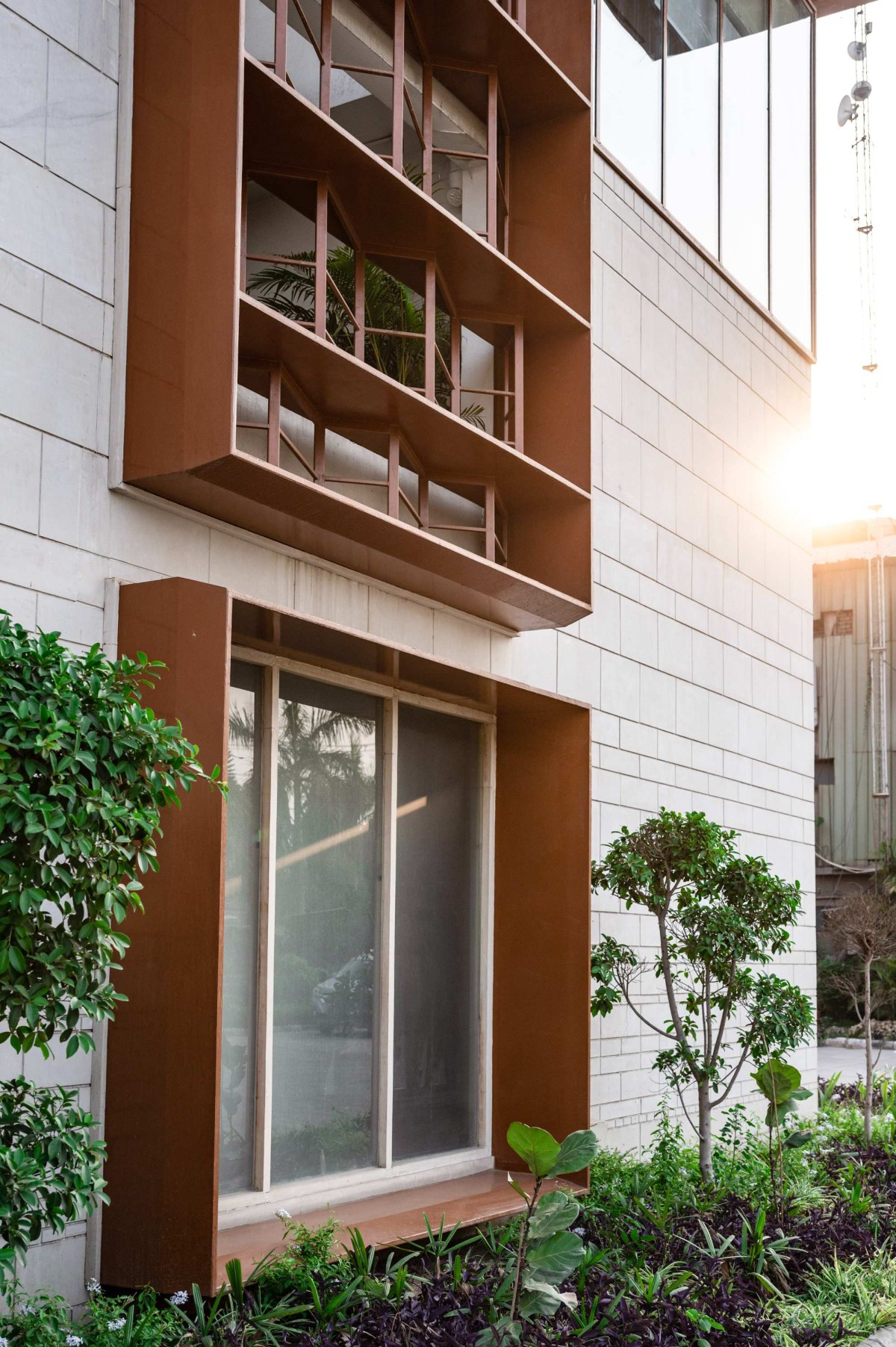
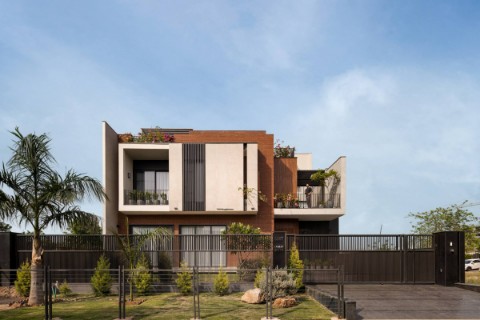
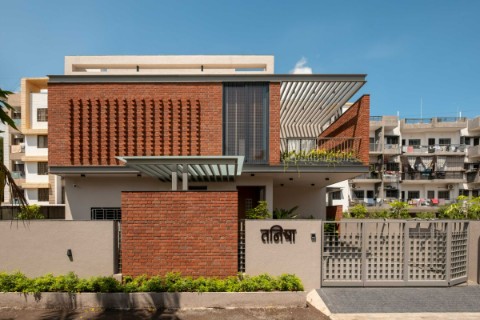
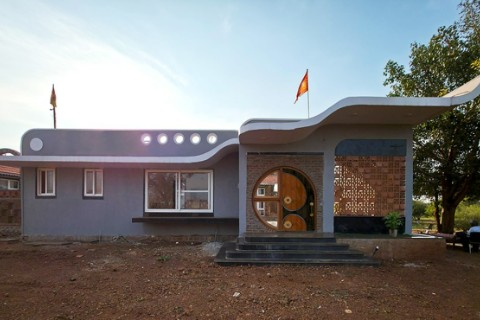
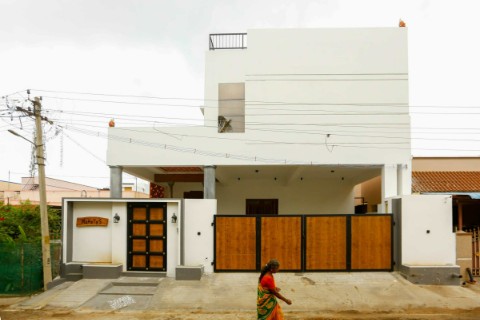
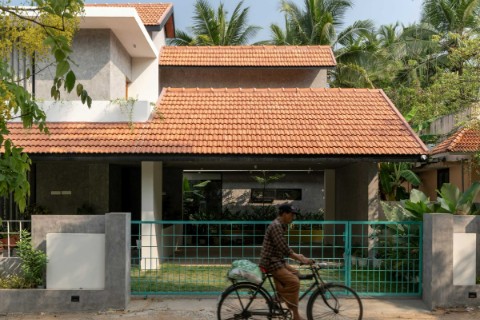
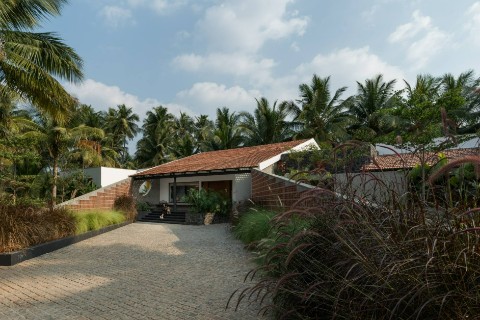
Exterior view of Antara by AGXDS Architects
Exterior view of Antara by AGXDS Architects
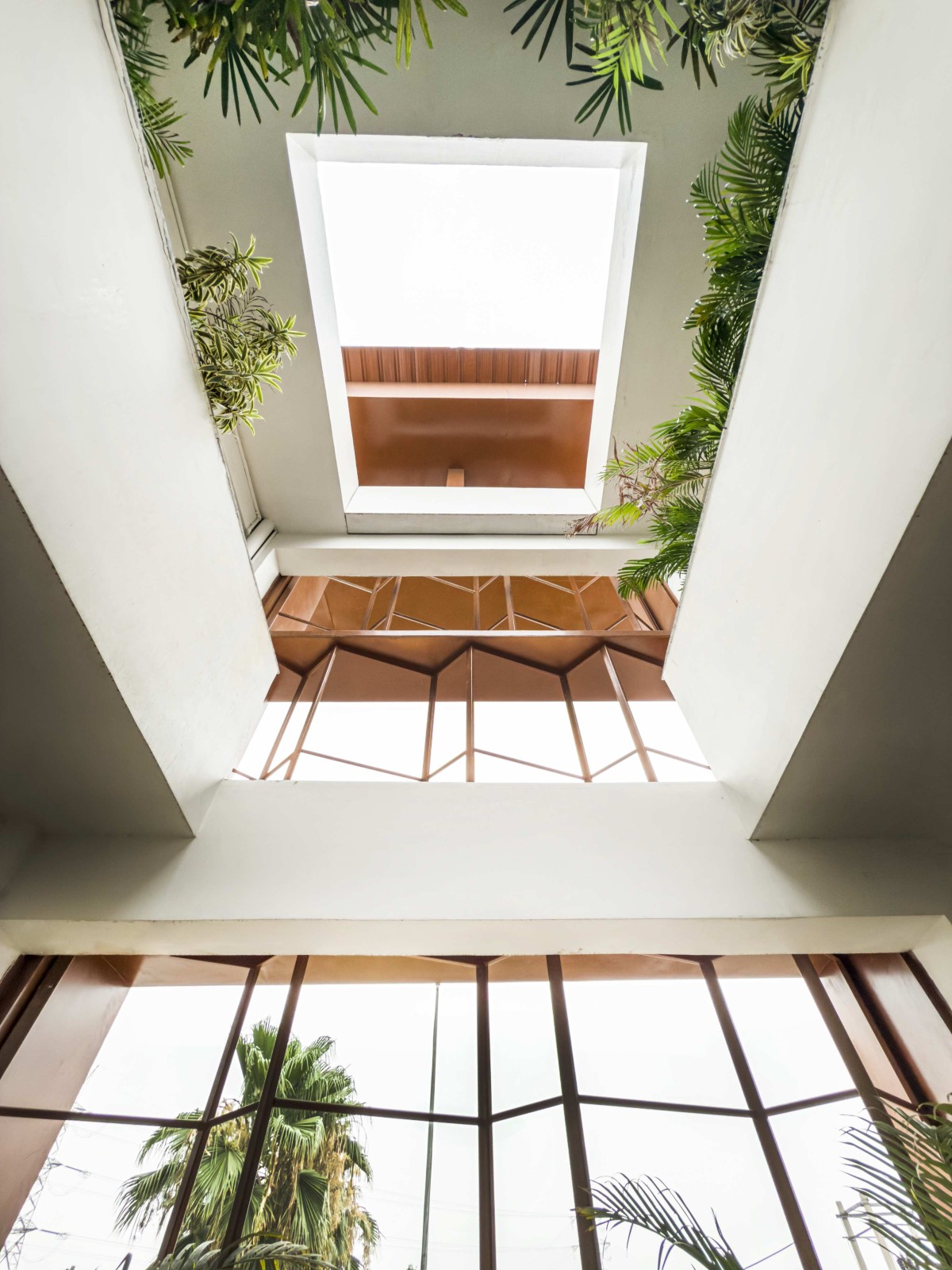
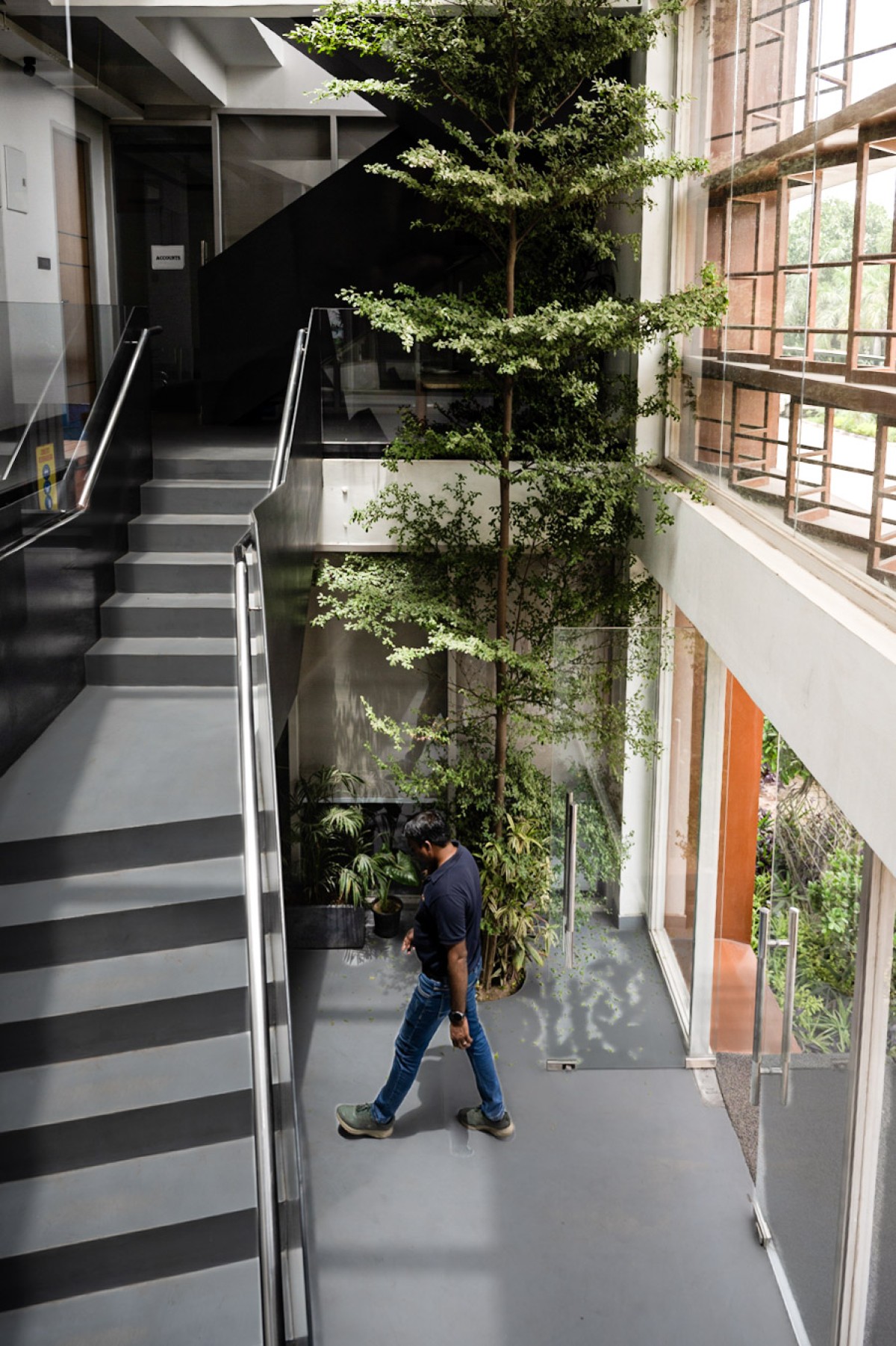
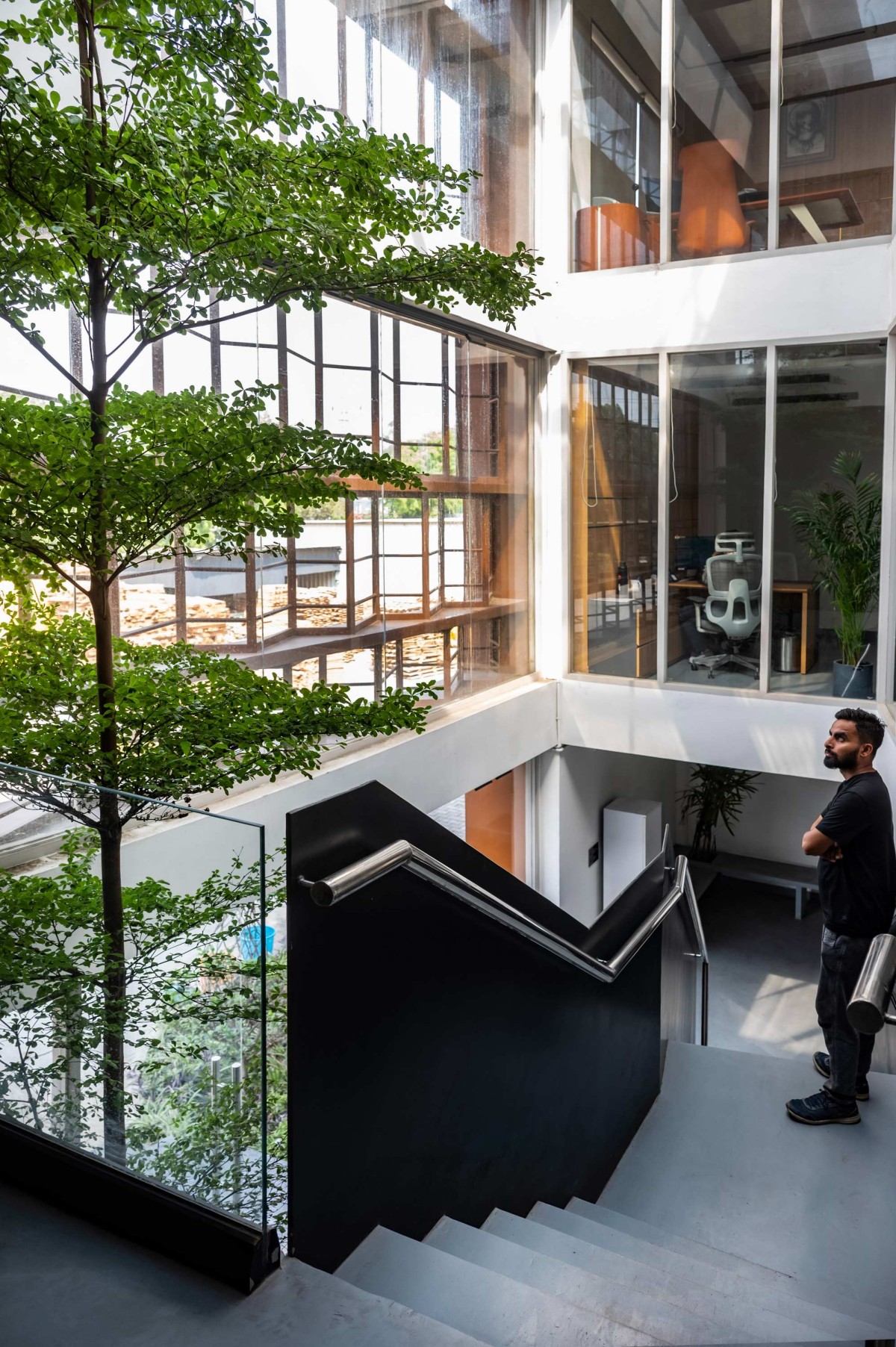
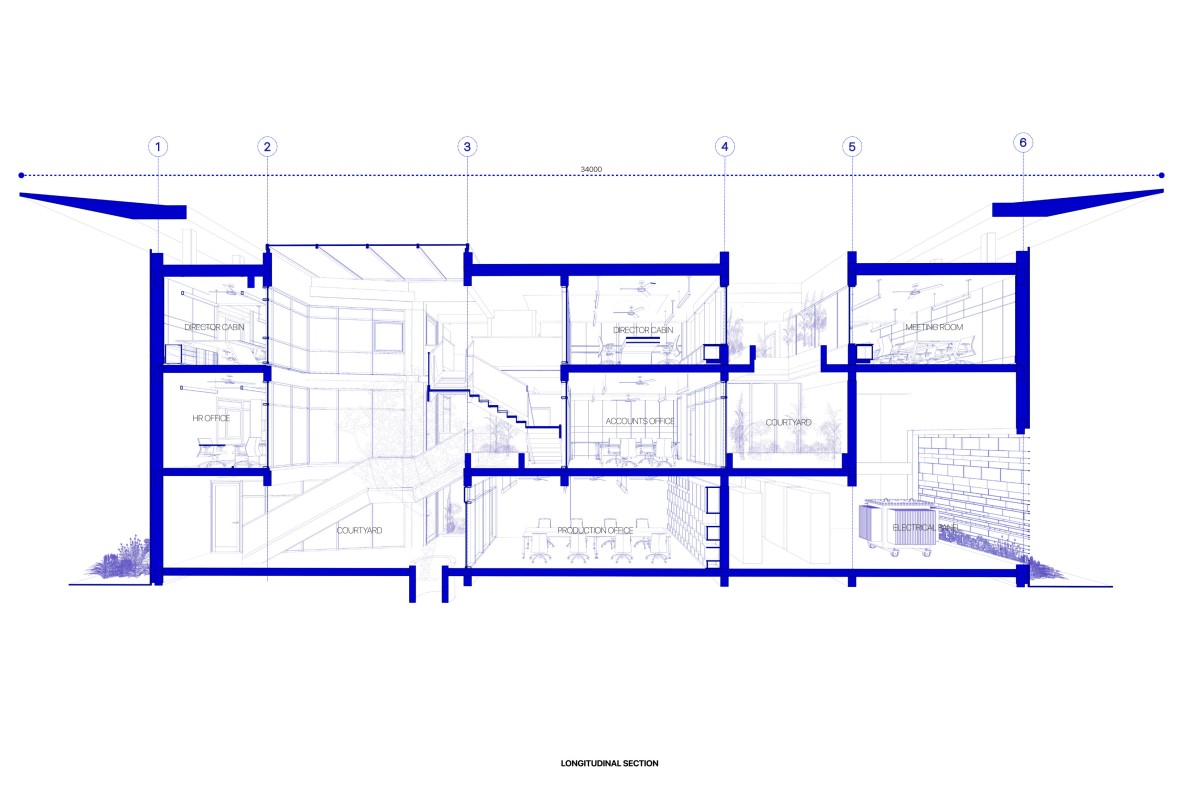
The section is therefore a sequence of compressions and releases. Mass, then void. Stone, then sky. A three-floor court that arrives with the verticality of a well, then a two-floor court more intimate in scale, then a single-storey void where the glazing is close enough overhead that the sky reads as a surface rather than an abstraction. This is the spatial intelligence of the traditional Indian haveli, the alternation of enclosure and openness, shade and light, translated into the section of a contemporary workplace. The building borrows nothing of the imagery of those precedents. It borrows their atmospheric logic entirely.
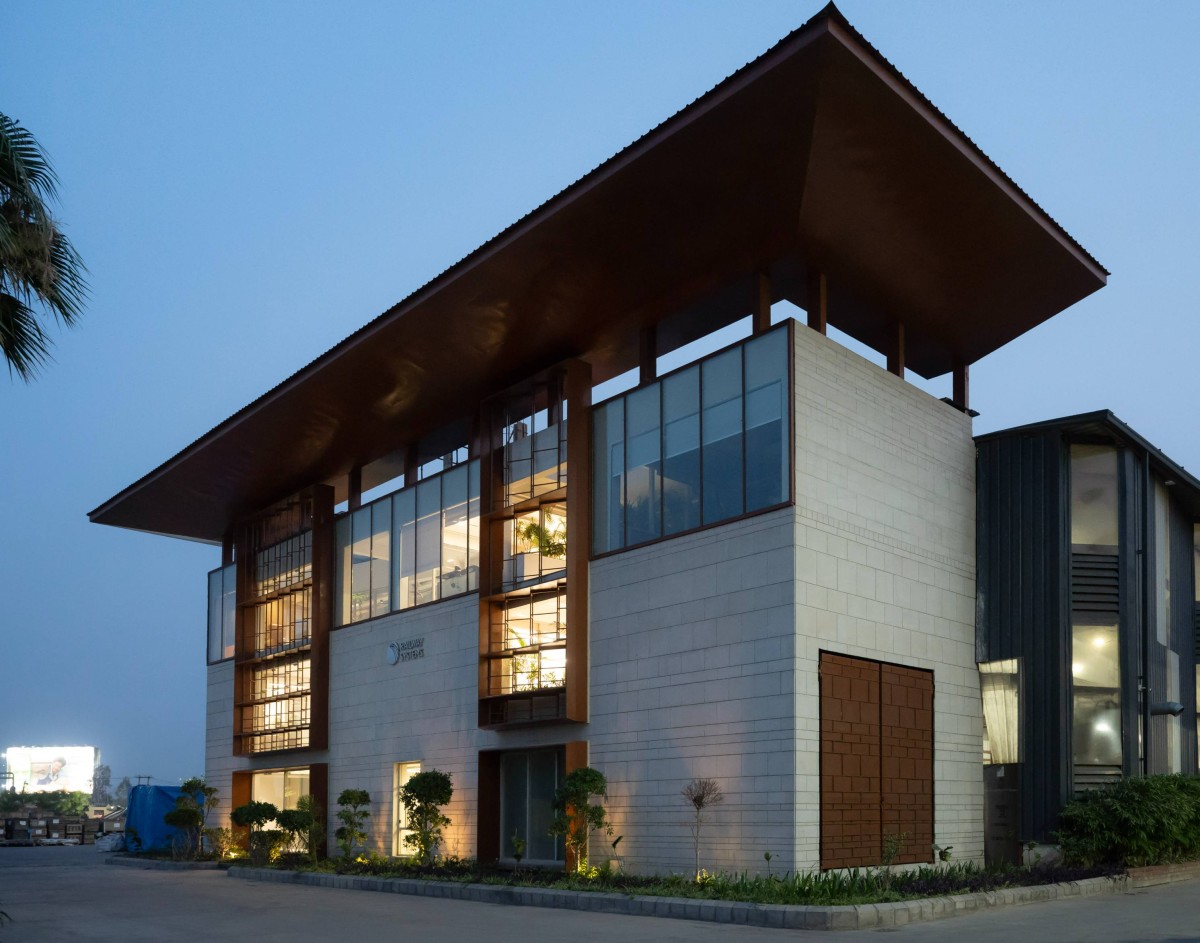
The facade's coursing rhythm is not arbitrary. The horizontal joint intervals were derived from the talamana, the ancient Indian proportional canon by which temple sculptors set out the body of a deity from crown to foot in precise modular relationships. Those intervals, translated into the varying heights of sandstone courses, produce a facade that the eye moves across with particular ease. The variation is subtle enough that most observers would not identify it consciously. But the eye registers it. The facade has a rhythm rather than a pattern.
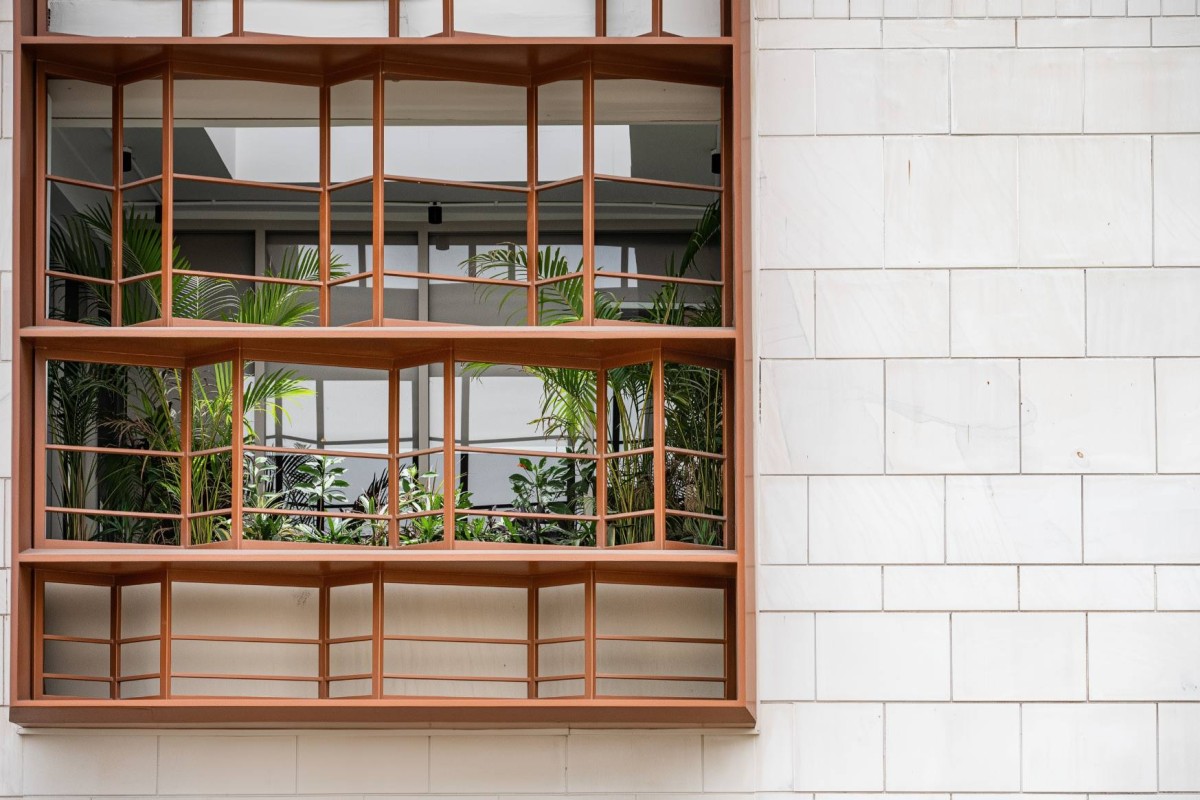
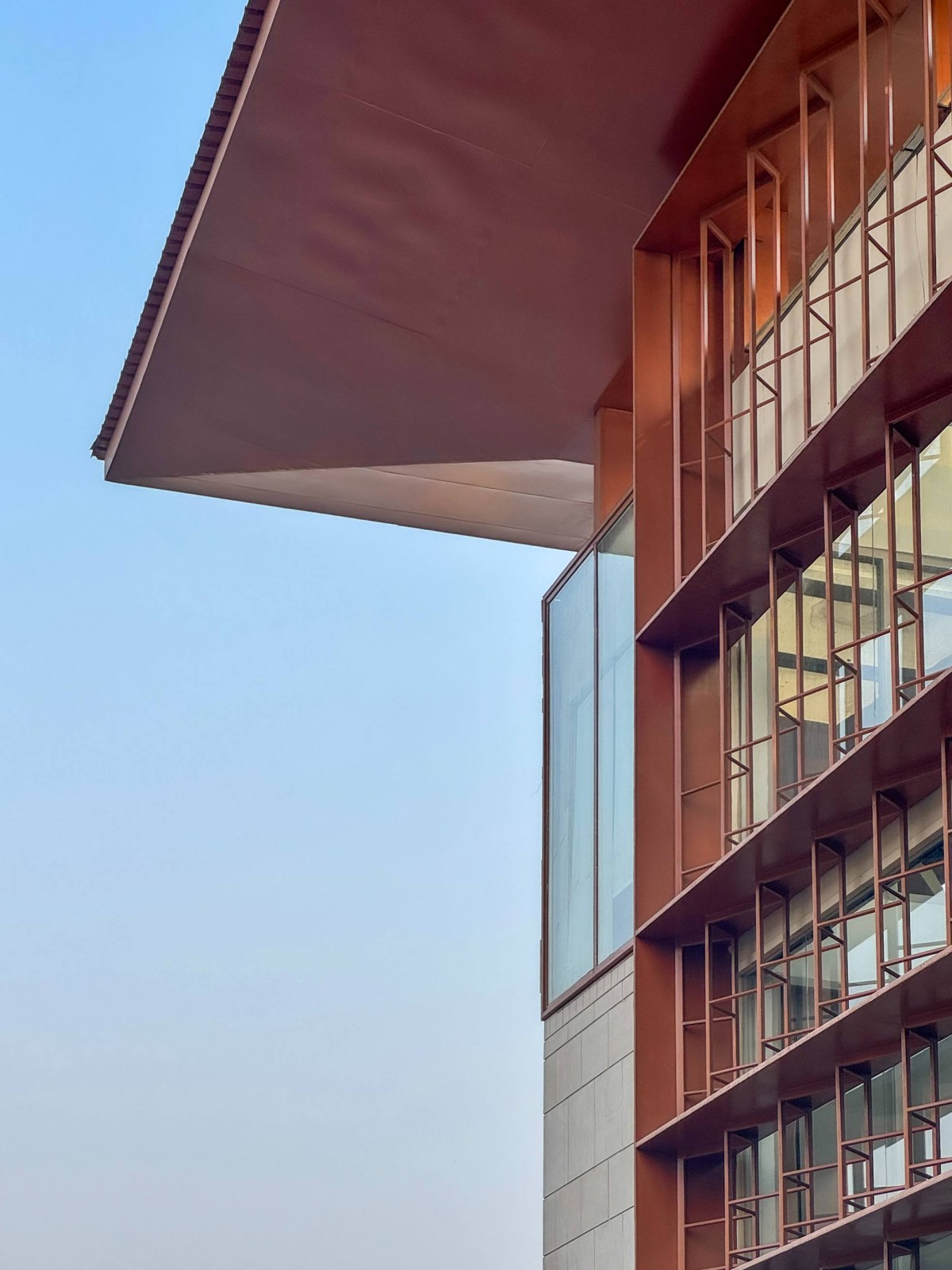
Against this mass, mild steel does what stone cannot. Oxide-finished columns hold a roof plane that floats above the entrance. Fixed horizontal fins; calculated against sun angles at latitude 28.9° North, throw precise shadows across the glazed bays without sensors, without motors, without maintenance. The steel is new. The stone is ancient. The conversation between them is the architecture.
Steel Shading Fin System of Antara by AGXDS Architects
The sandstone does not stop at the perimeter. Interior partition frames and window surrounds continue the same stone vocabulary, dressed by the same craftsmen who laid the exterior wall, cut on site against the actual opening rather than a shop drawing. Every profiled element, mullion, lintel, and surround was custom-fabricated because no standard section existed for the required geometry. The mason's skill was the specification.
Metal and Stone Wall of Antara by AGXDS Architects
Open to Sky Courtyard of Antara by AGXDS Architects
Courtyard of Antara by AGXDS Architects
The numbers followed the convictions. Peak cooling load sits 34% below an unshaded conventional baseline. The Energy Performance Index of 120 kWh/m² is 19% below the standard case, producing annual energy savings of approximately ₹56,000 before accounting for reduced mechanical plant capital cost. With rooftop photovoltaics, the building reaches net positive energy performance. The embodied carbon of locally quarried sandstone, minimal processing, 250 kilometres of transport, and site fabrication is a fraction of any aluminium cladding system. The most carbon-efficient wall available to a builder in North India is the same wall that has been available for five hundred years.
Outside reads ancient. Inside reads discovered. That gap between what the building presents and what it contains is the concept.
A stone block that the city reads as solid. Cut through with light. Organised by the proportional memory of Indian sacred making. Performing at an energy index, the simulation did not expect until the wall proved it.
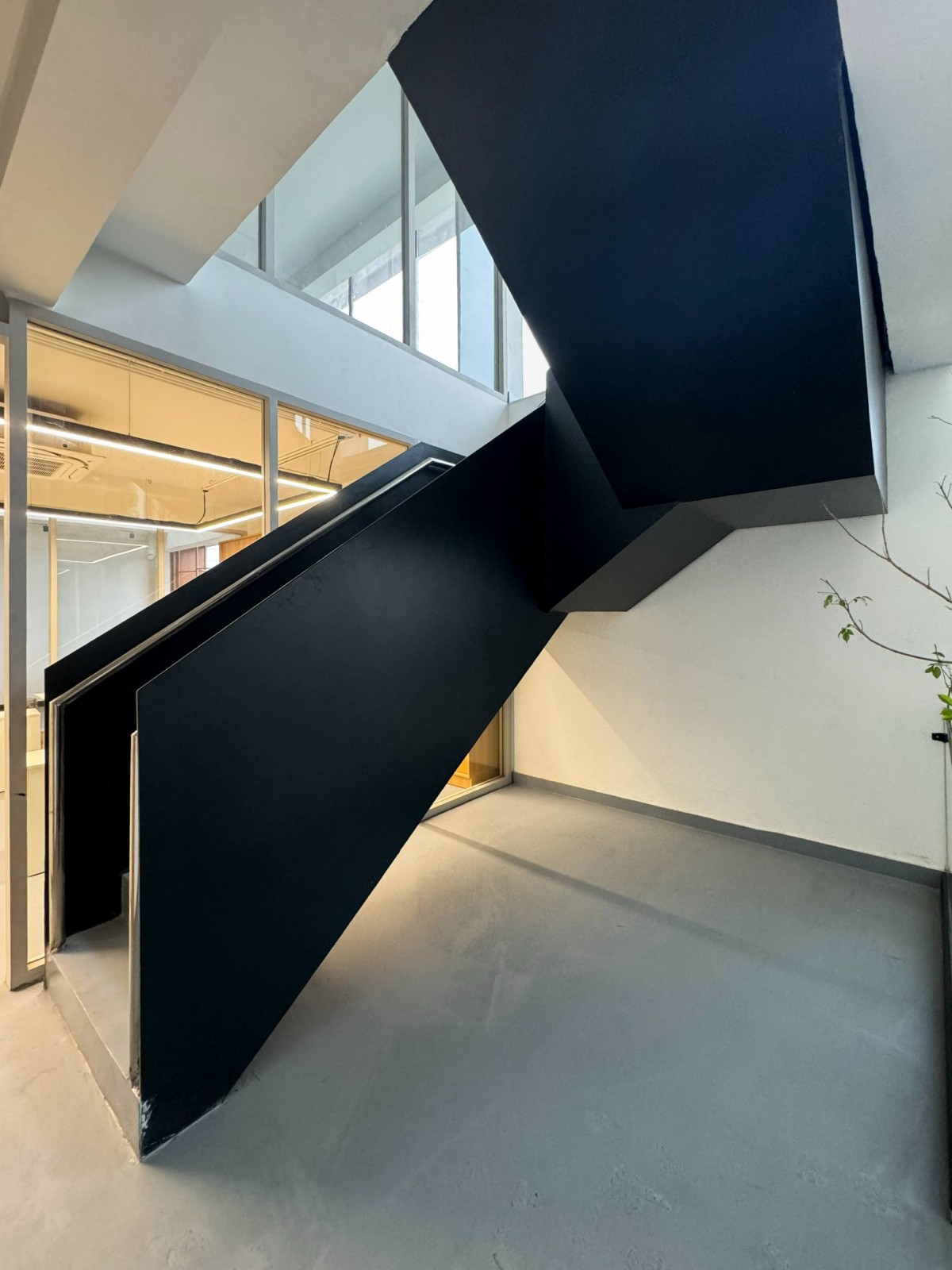
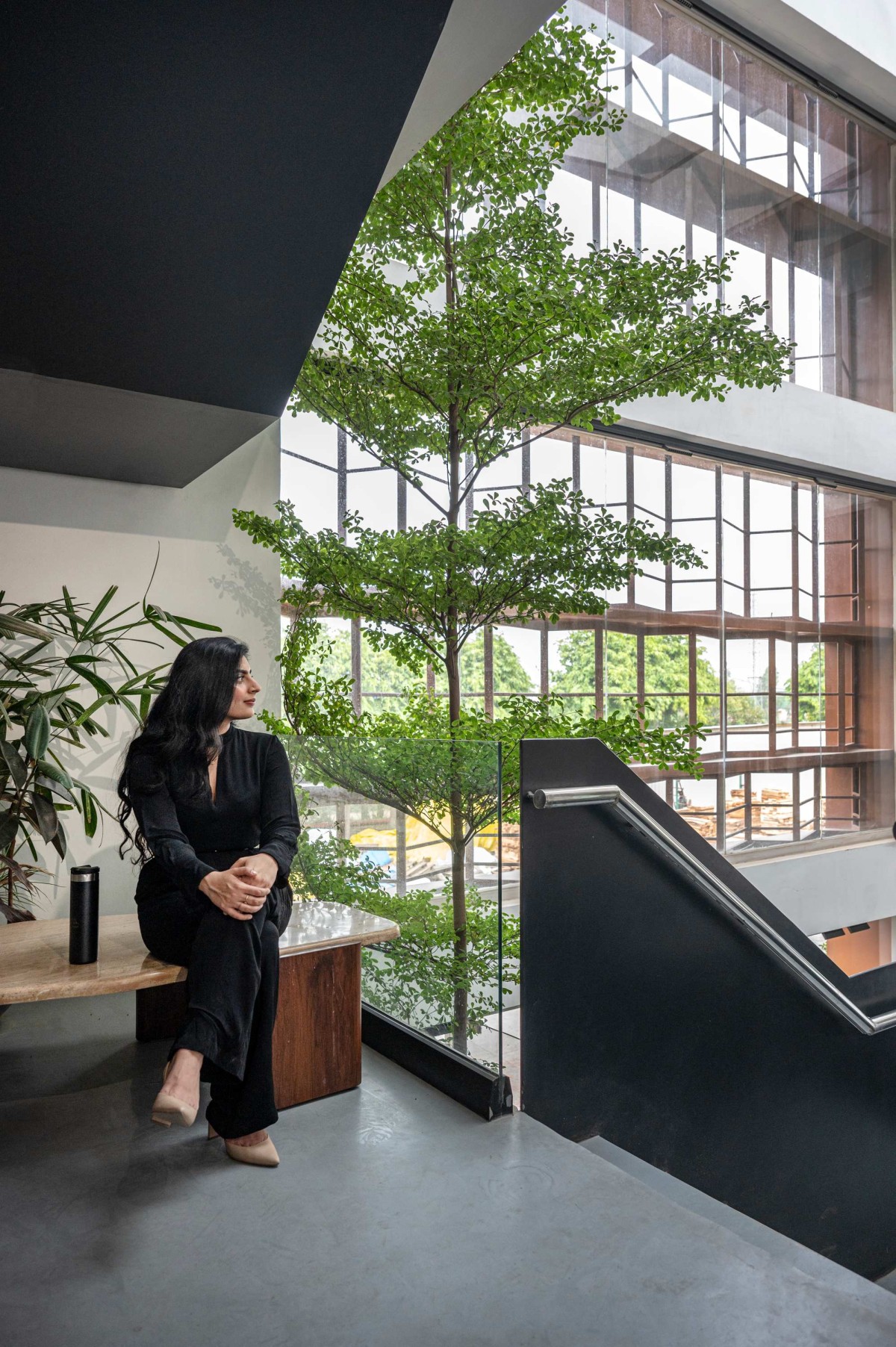
Staircase of Antara by AGXDS Architects
Staircase view of Antara by AGXDS Architects
Staircase deck of Antara by AGXDS Architects
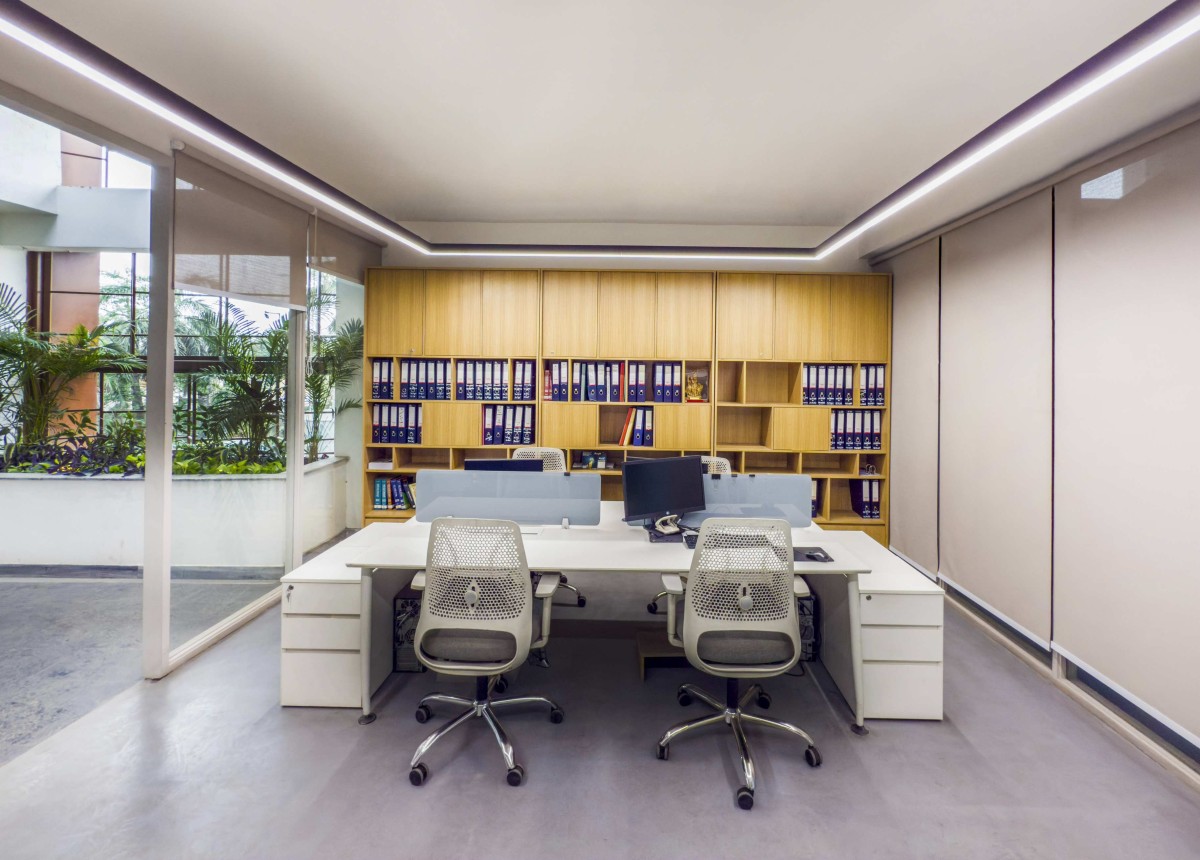
Workspace of Antara by AGXDS Architects
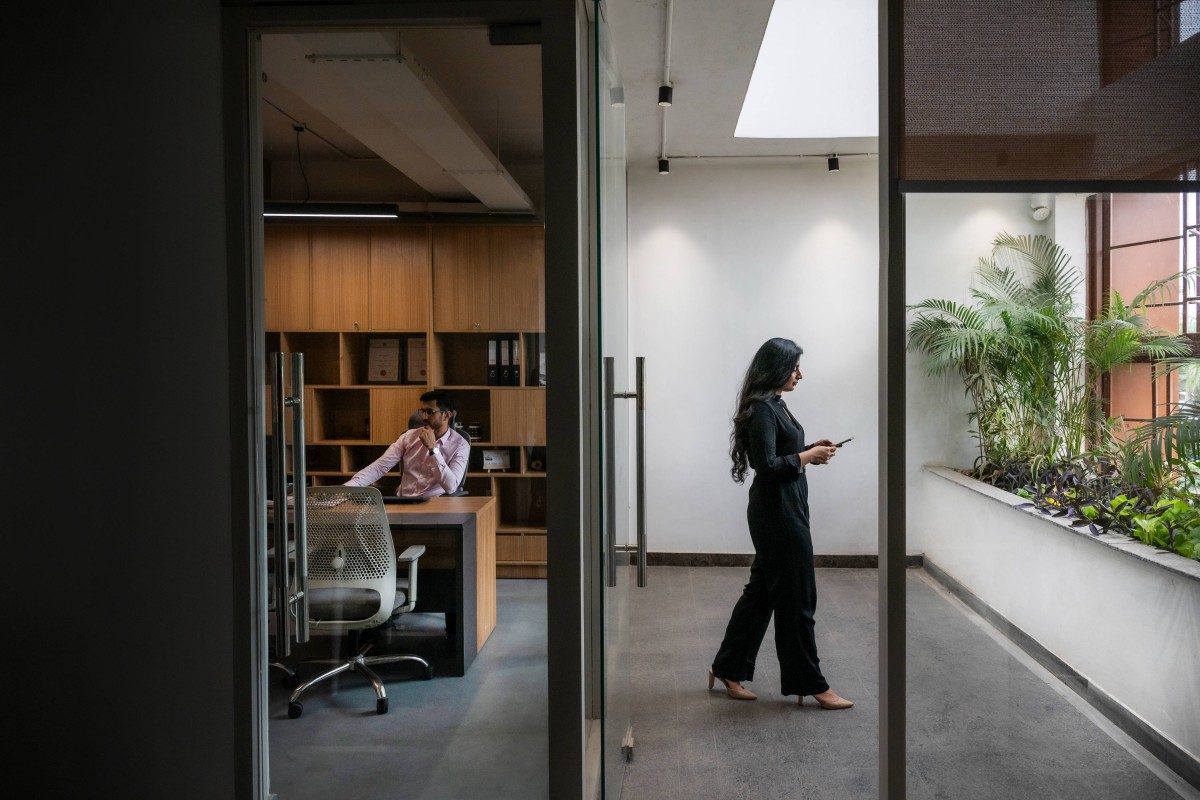
Interior Corridor of Antara by AGXDS Architects
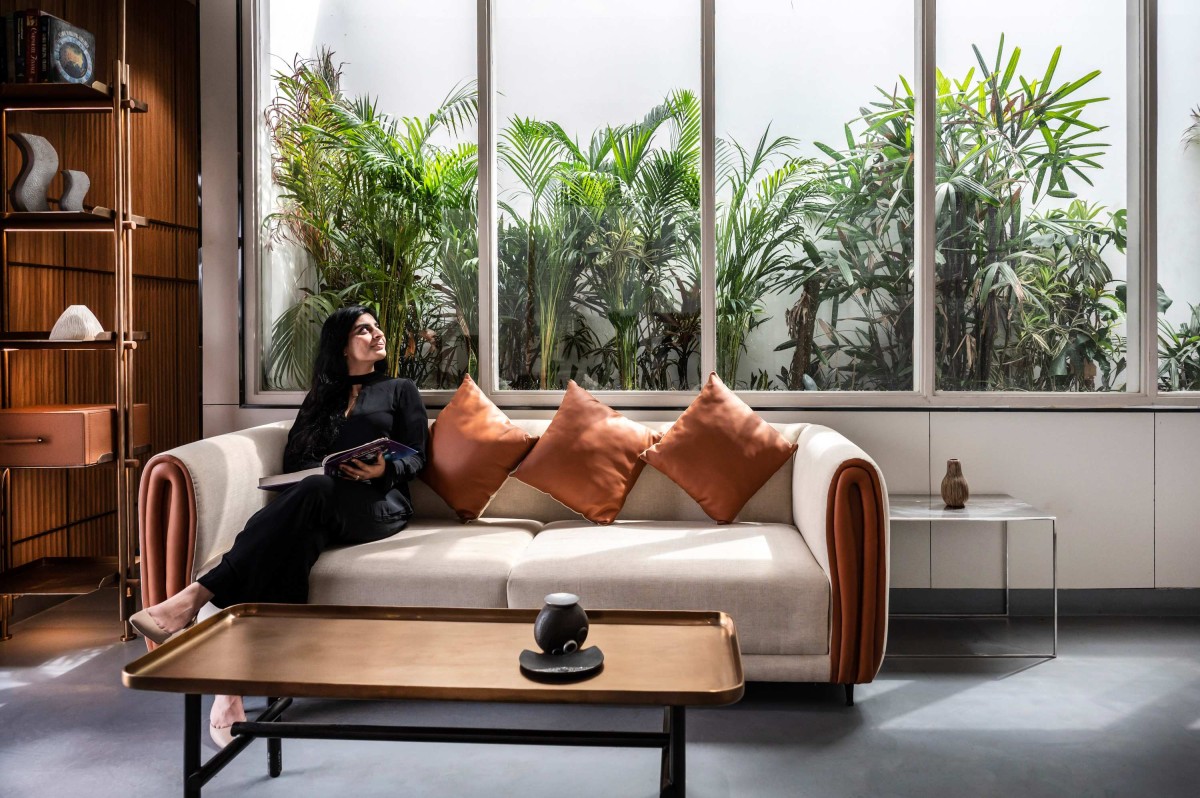
Lounge Area of Antara by AGXDS Architects
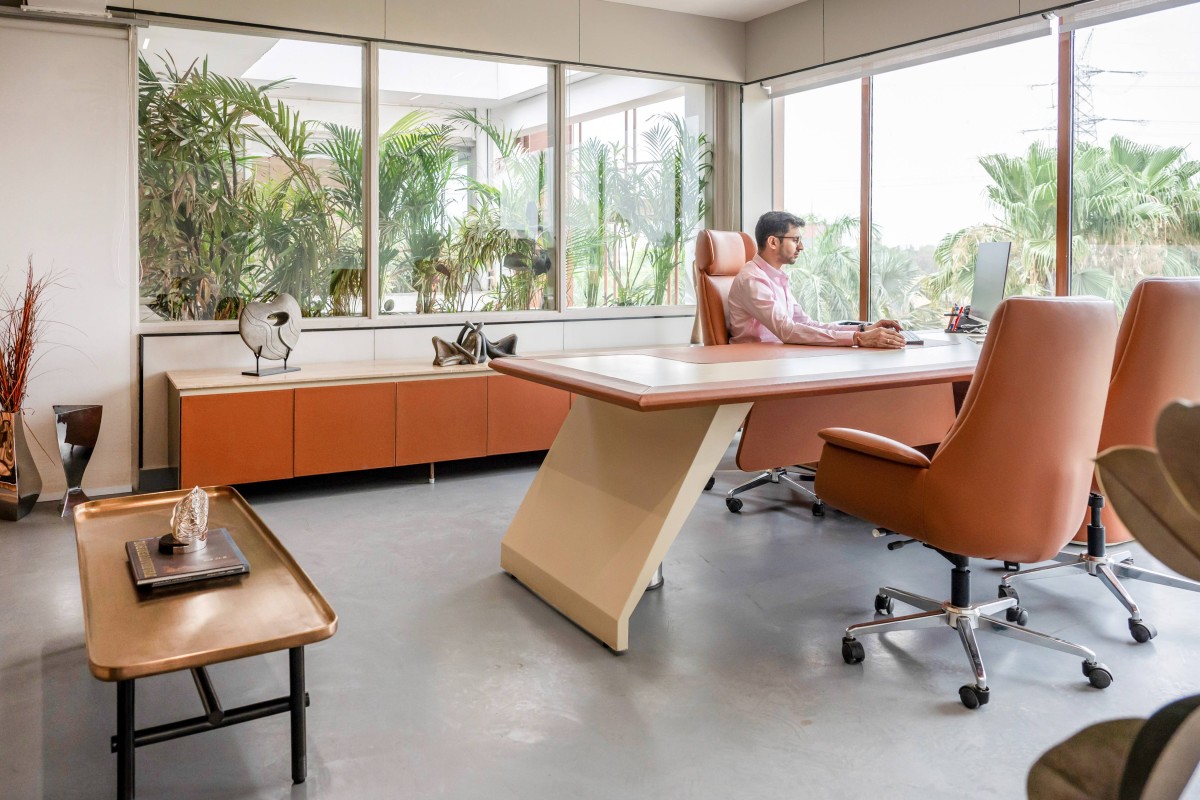
Director's cabin of Antara by AGXDS Architects
Detailed shot of steel screen of Antara by AGXDS Architects
Detailed shot of external facade with stone & metal combination of Antara by AGXDS Architects
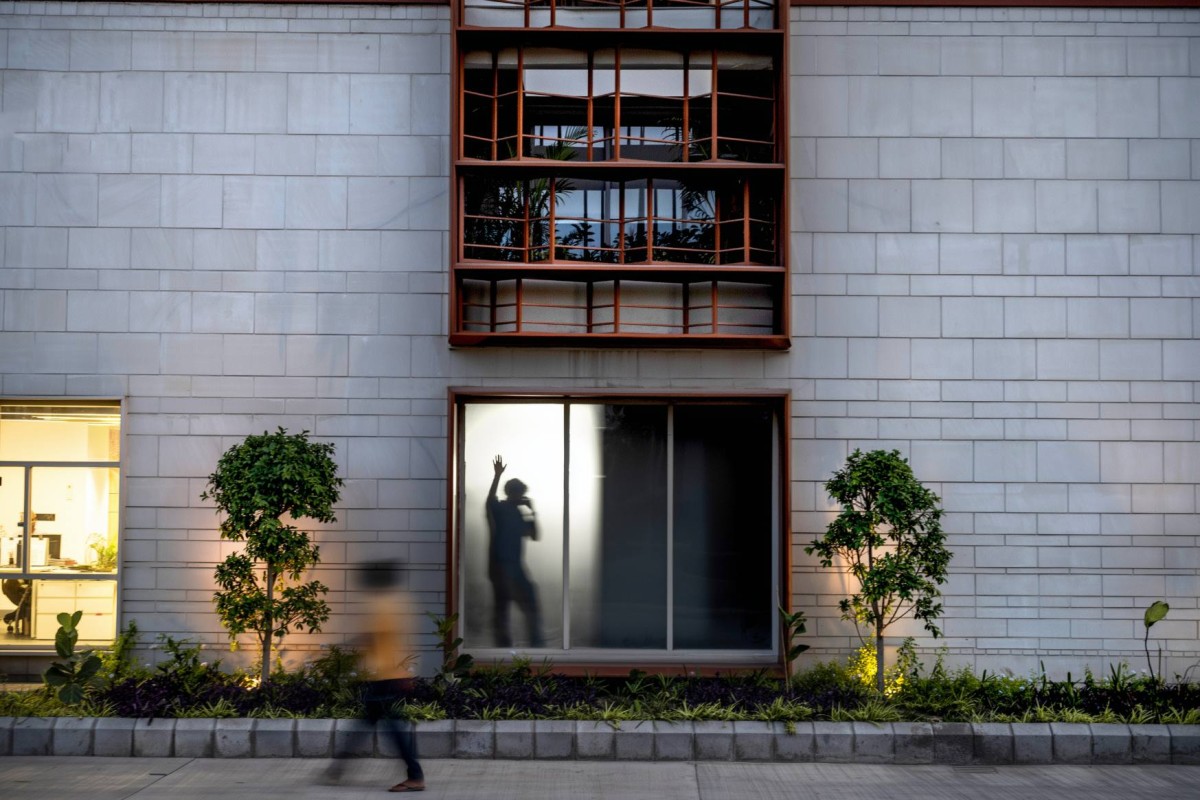
Dusk light exterior stone facade view of Antara by AGXDS Architects
Dusk light exterior view of Antara by AGXDS Architects
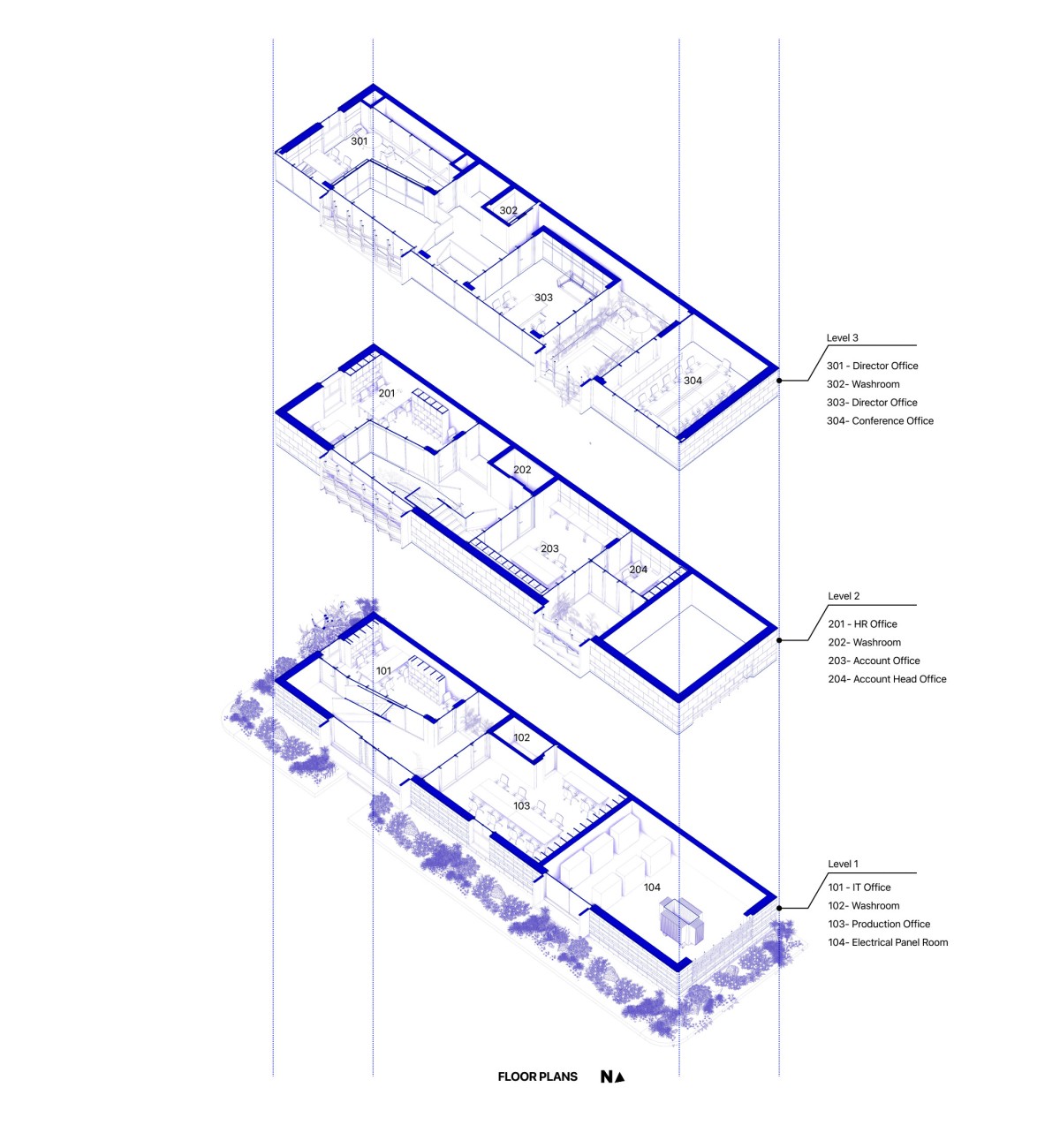
Floor Plans of Antara by AGXDS Architects
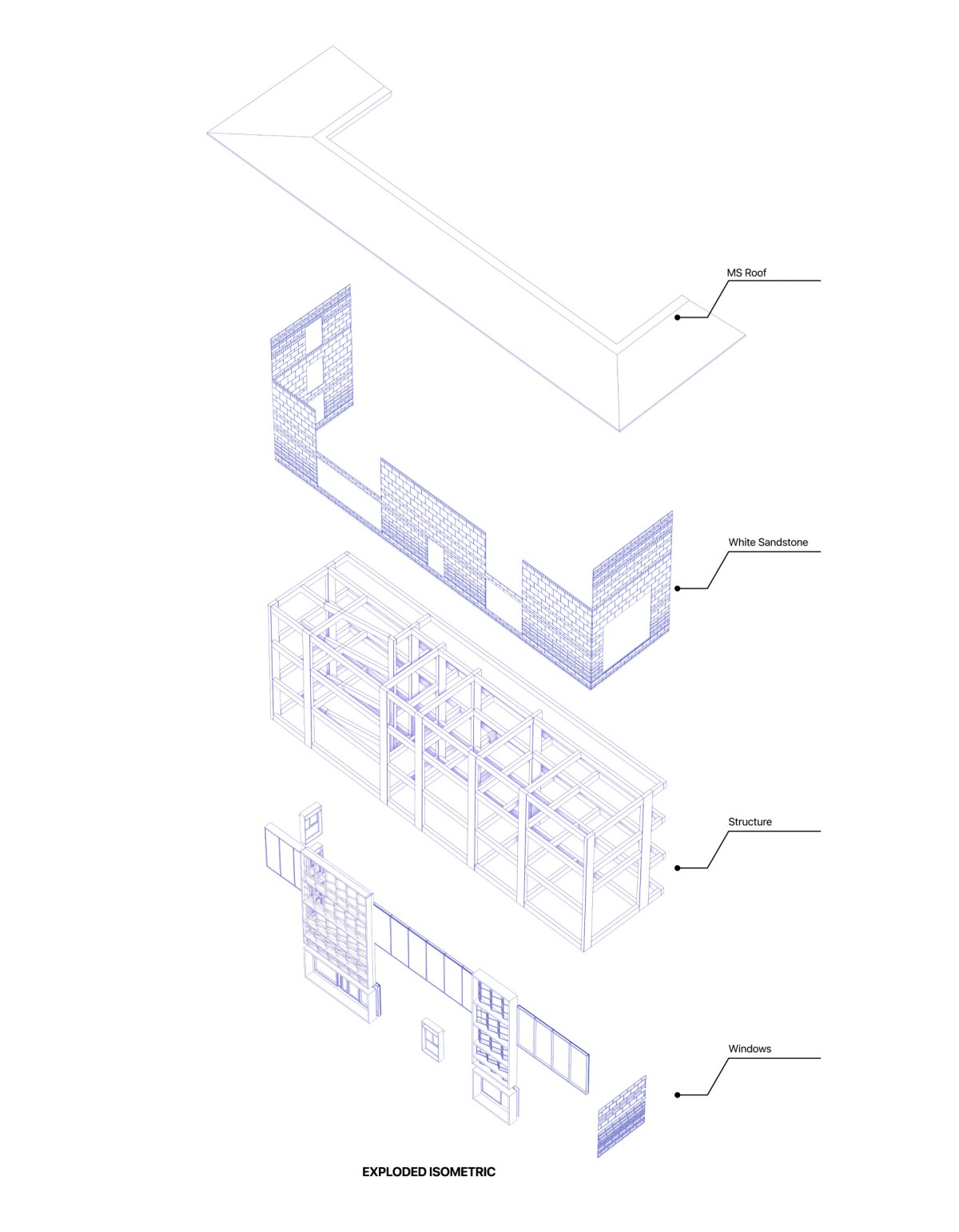
Exploded Isometric View of Antara by AGXDS Architects
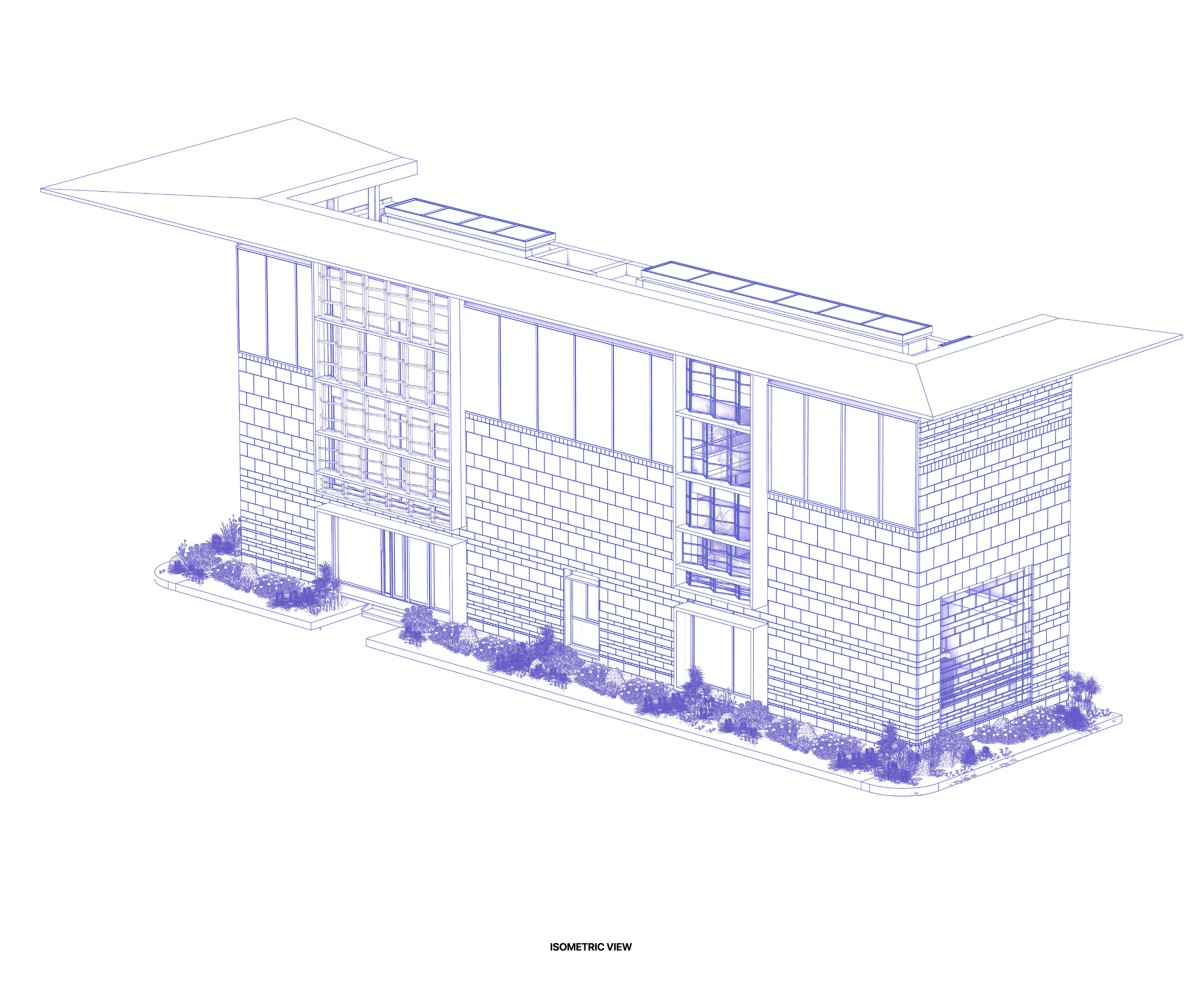
Isometric View of Antara by AGXDS Architects
Longitudinal section of Antara by AGXDS Architects