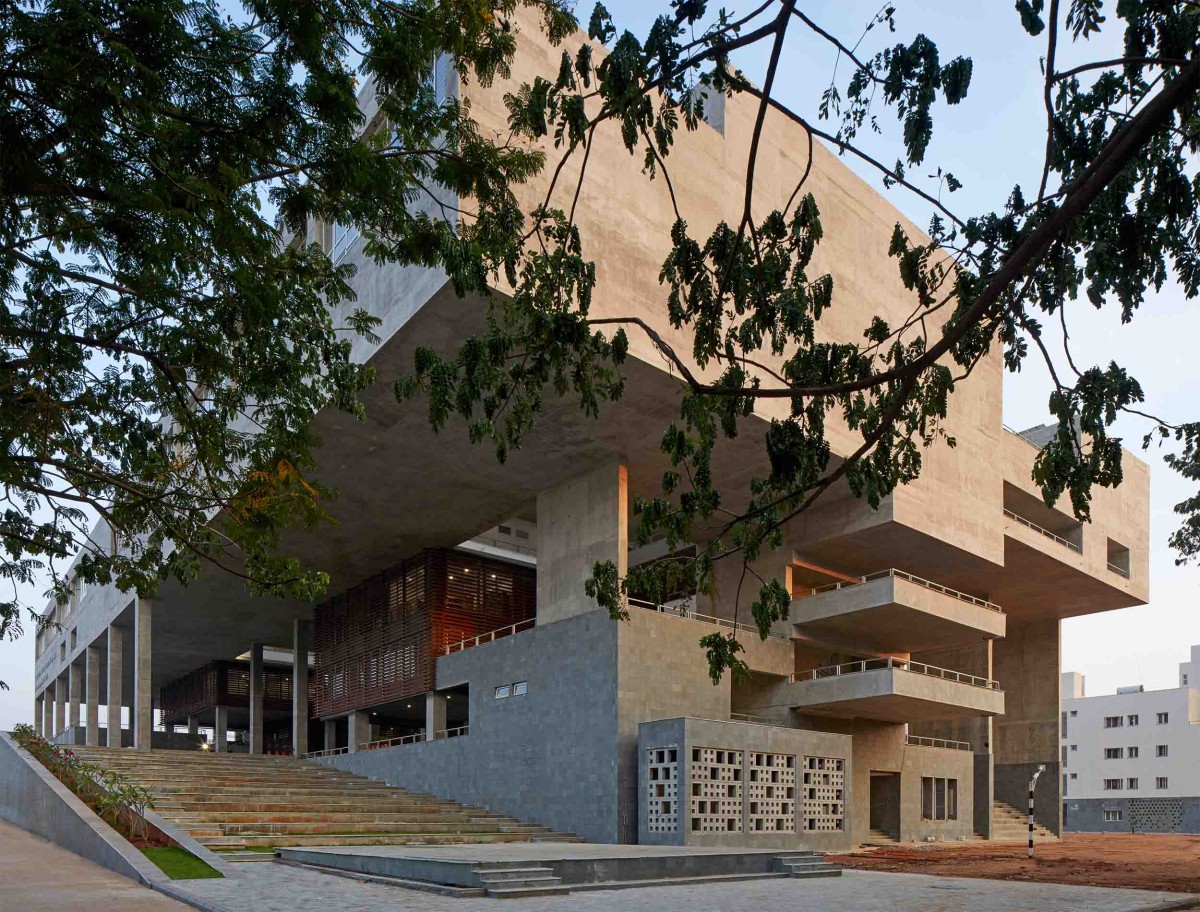
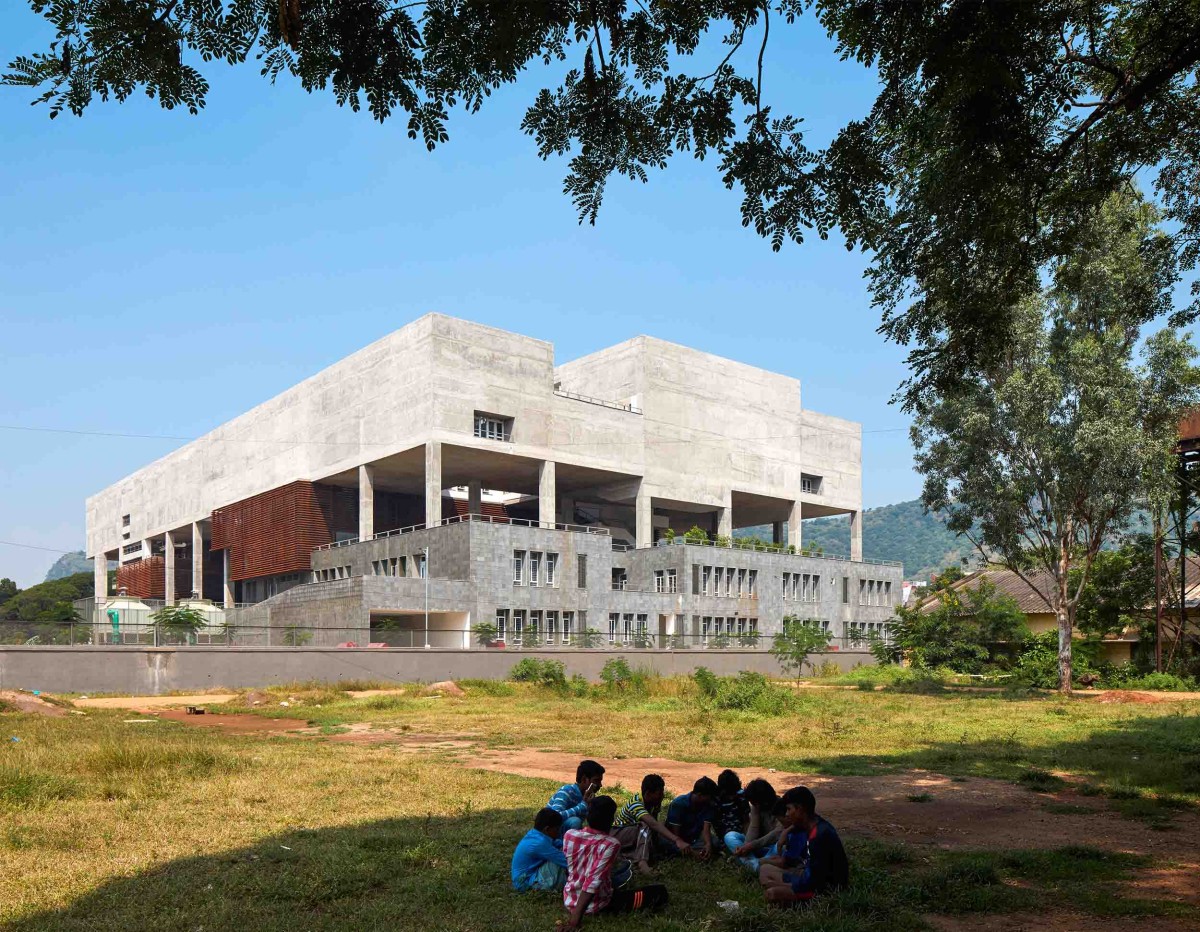
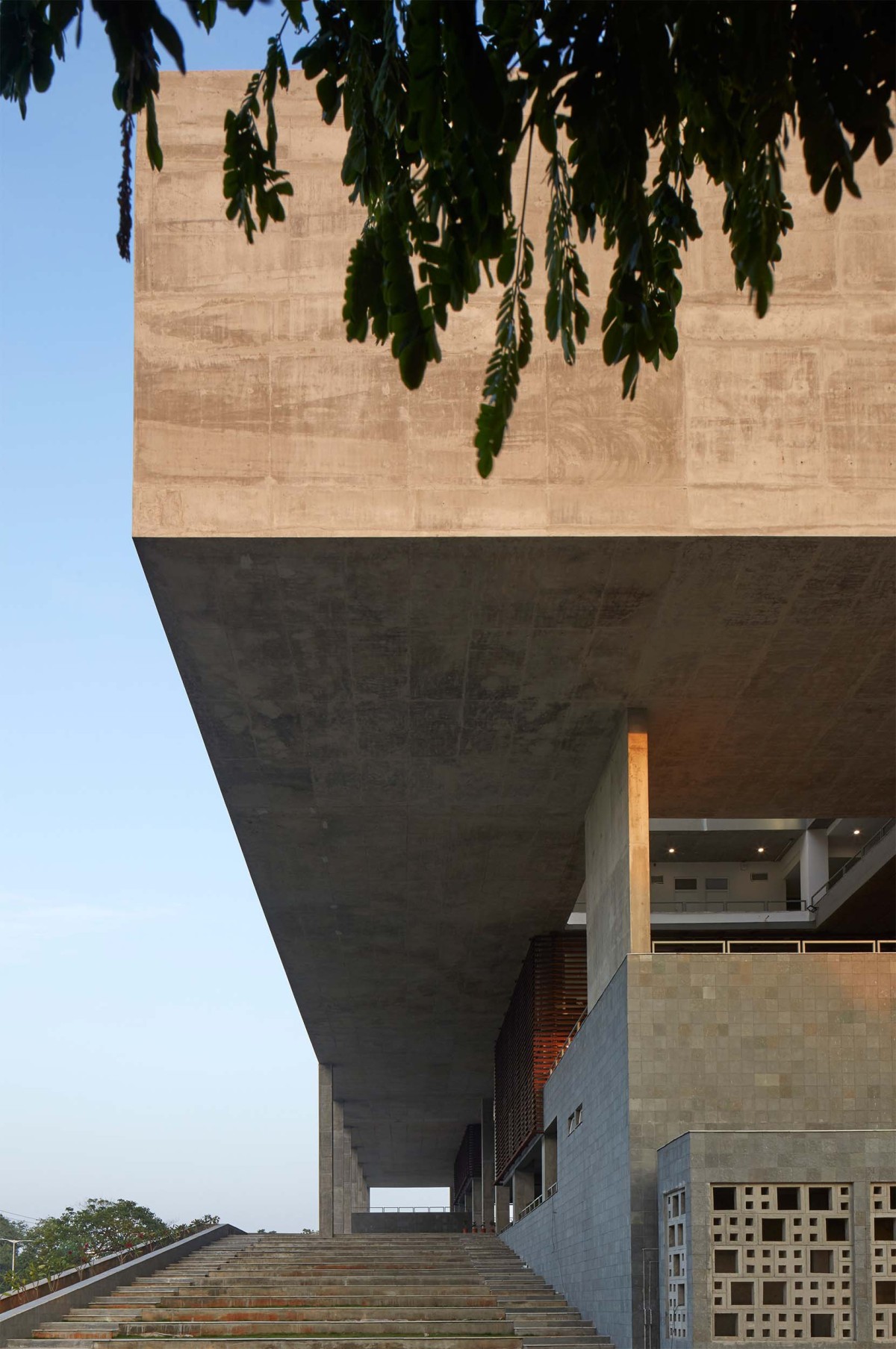
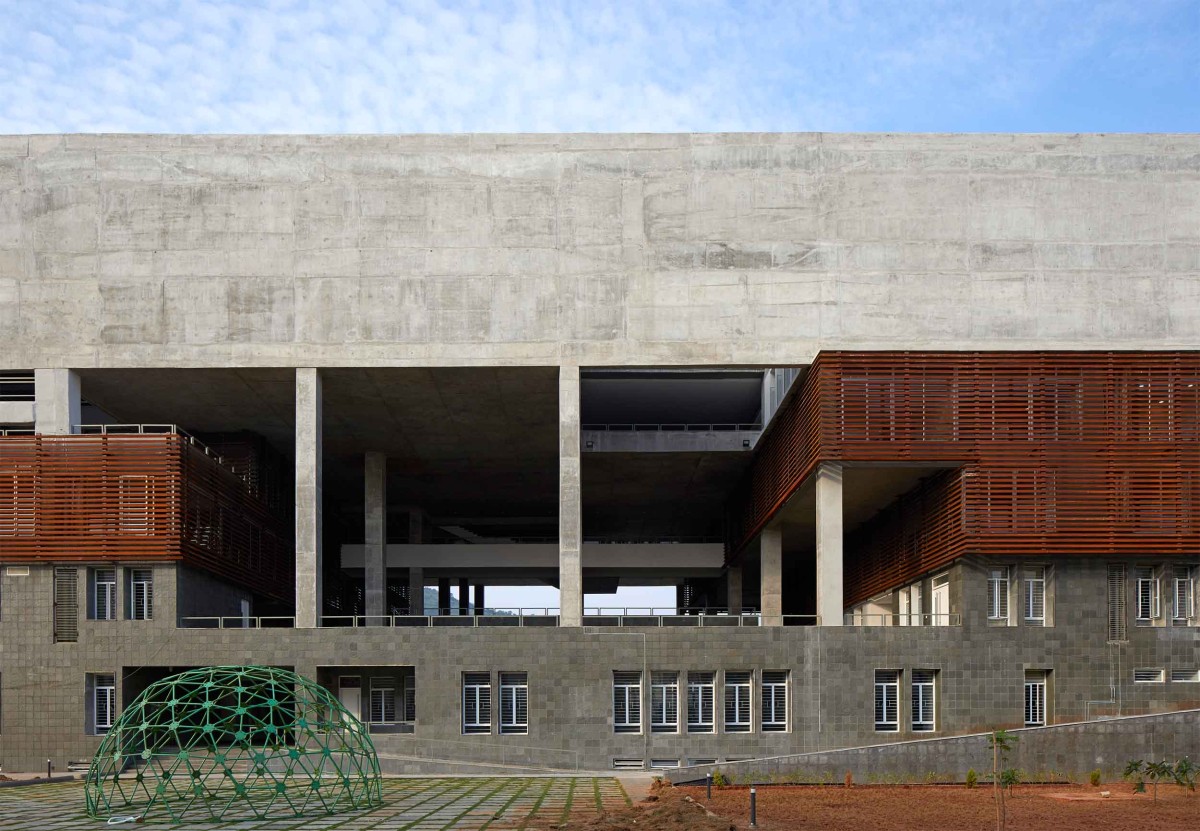
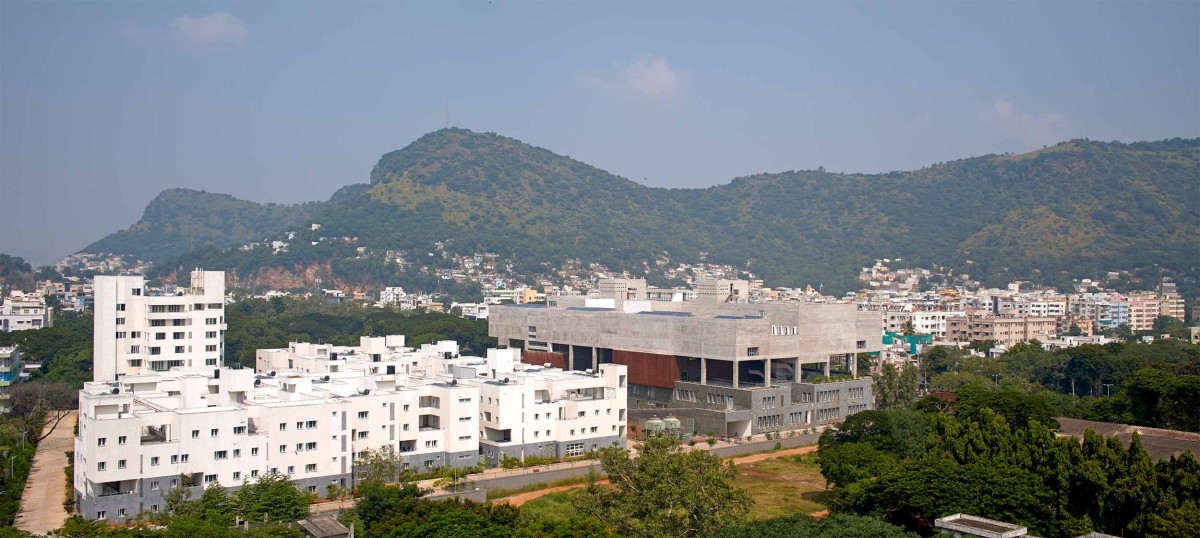
Exterior view of School of Planning and Architecture at Vijayawada by Mobile Offices
South East View of School of Planning and Architecture at Vijayawada by Mobile Offices
Ground rises to meet the concourse of School of Planning and Architecture at Vijayawada by Mobile Offices
Parasol, Concourse & Base of School of Planning and Architecture at Vijayawada by Mobile Offices
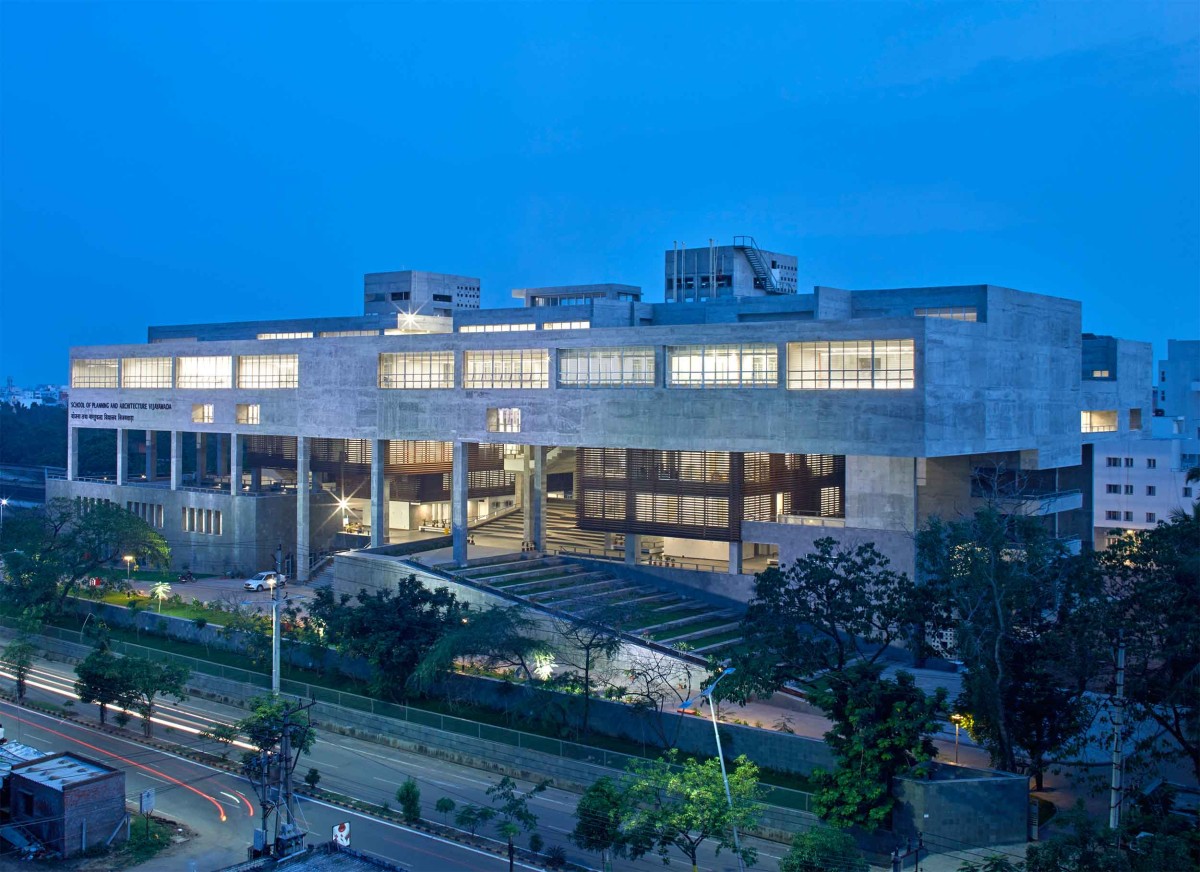
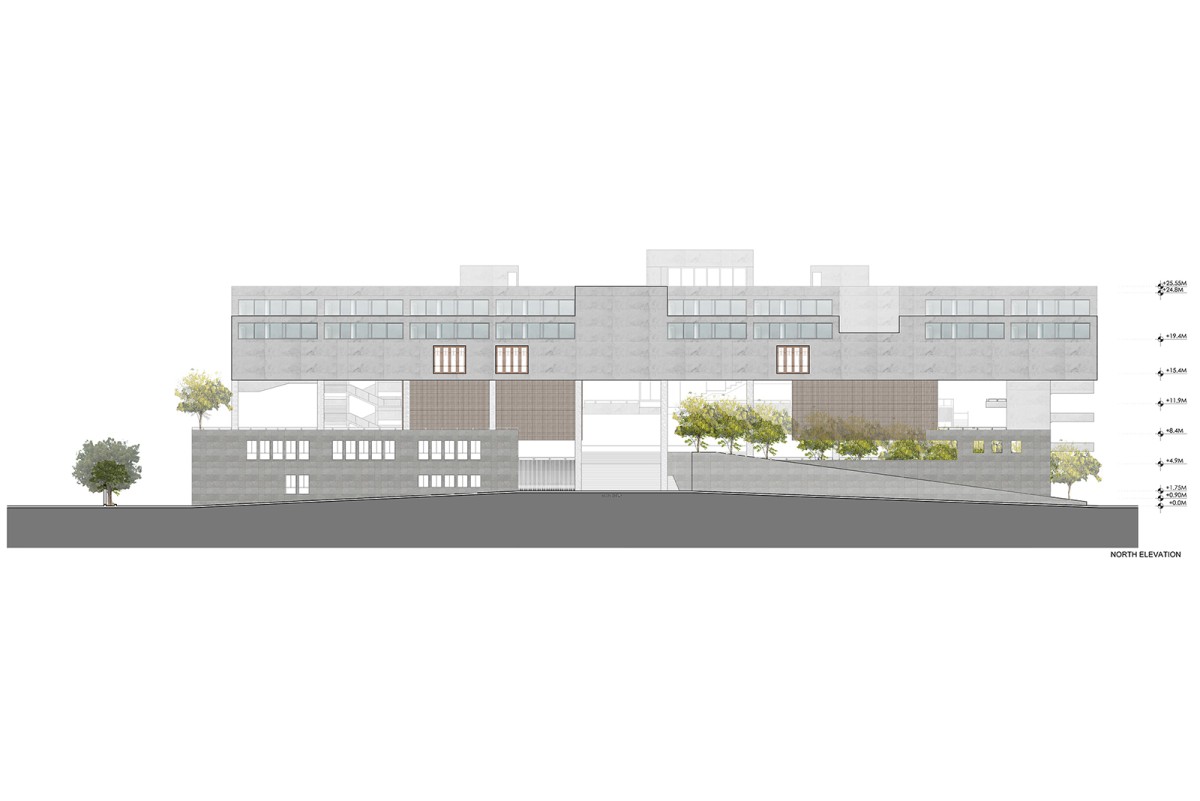
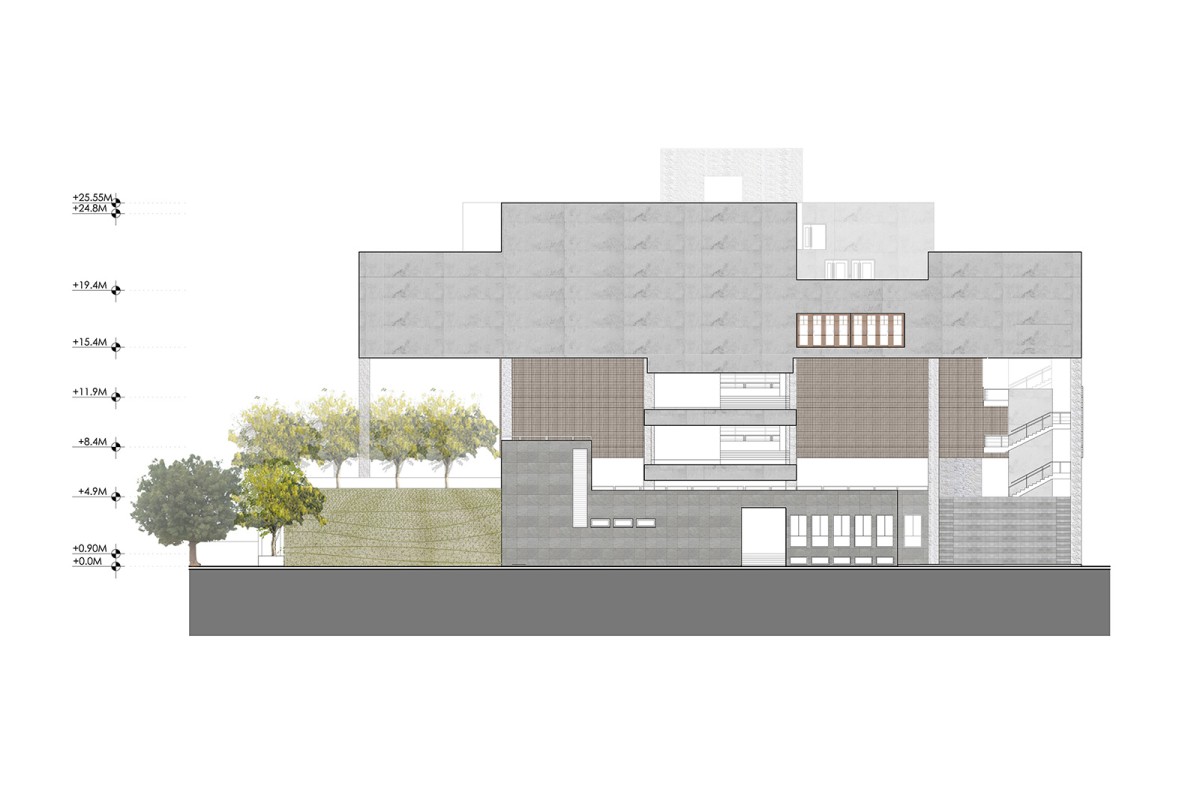
The relationships between three sections -The Parasol, Concourse and the Platform have been structured into a three dimensional constellation that is informed by movement and varying levels of privacy of diverse programs.
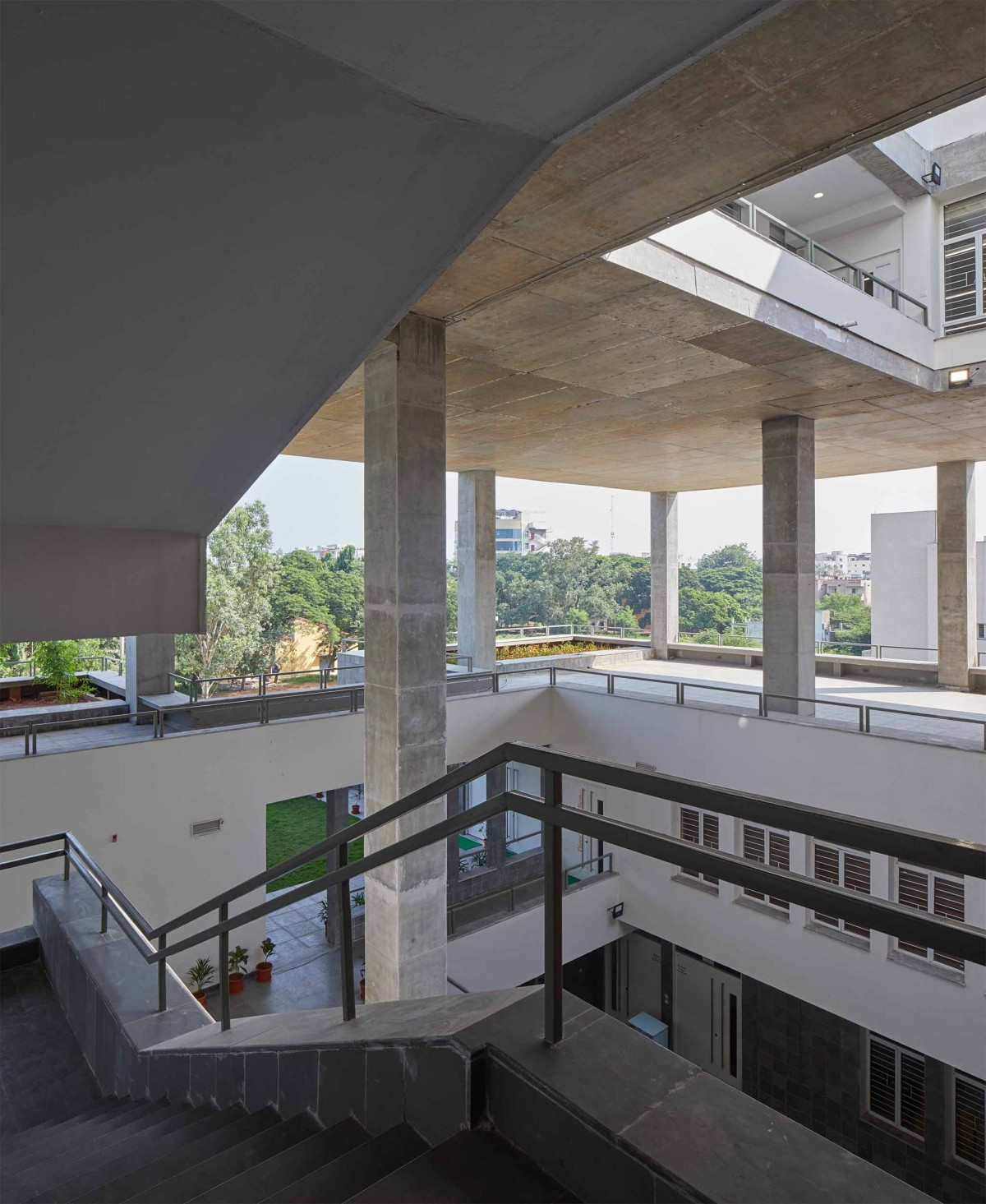
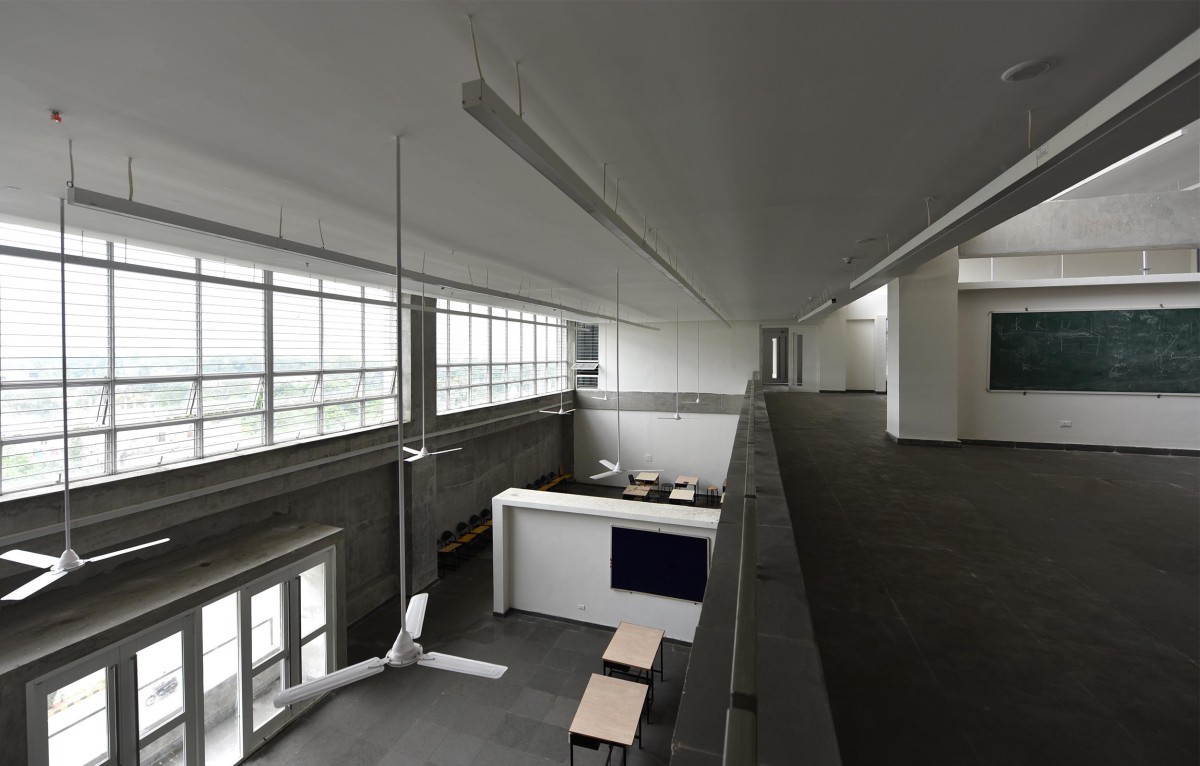
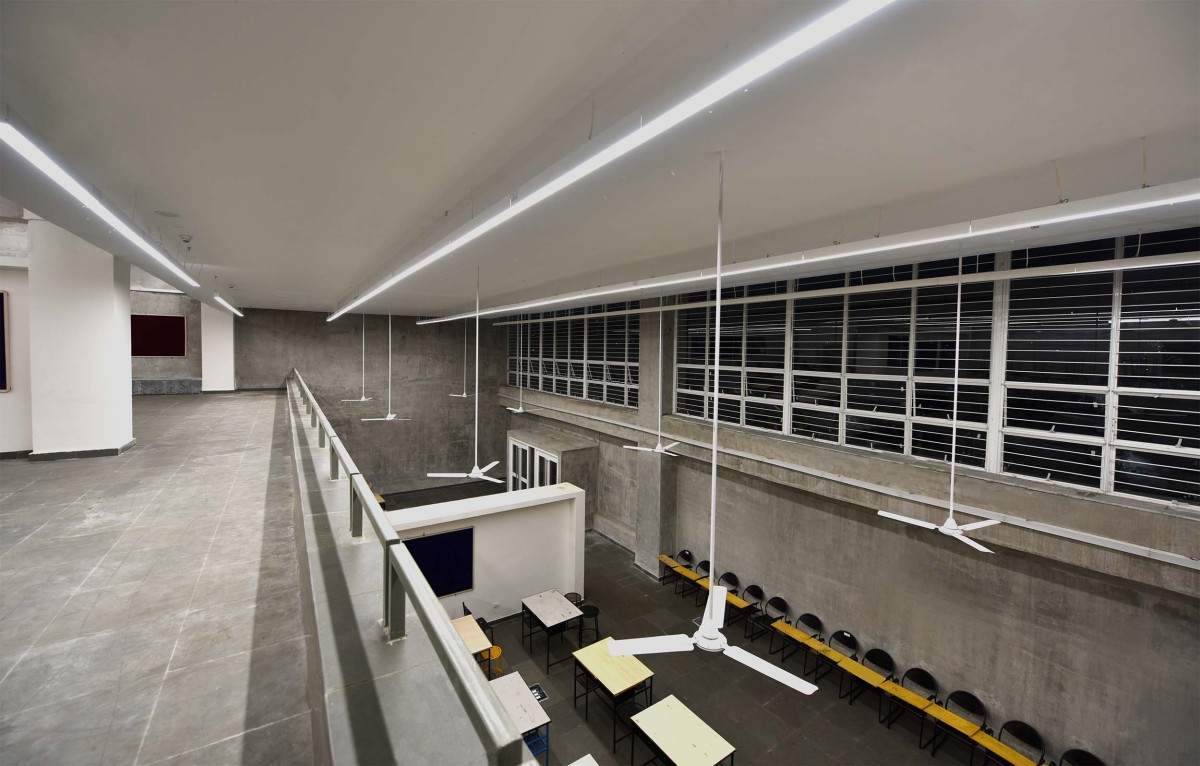
PARASOL – The top most section of the building houses the morning programs of the learning curriculum such as classrooms and studios. It also acts as a volumetric parasol roof for the lower floors creating a shaded environment below.
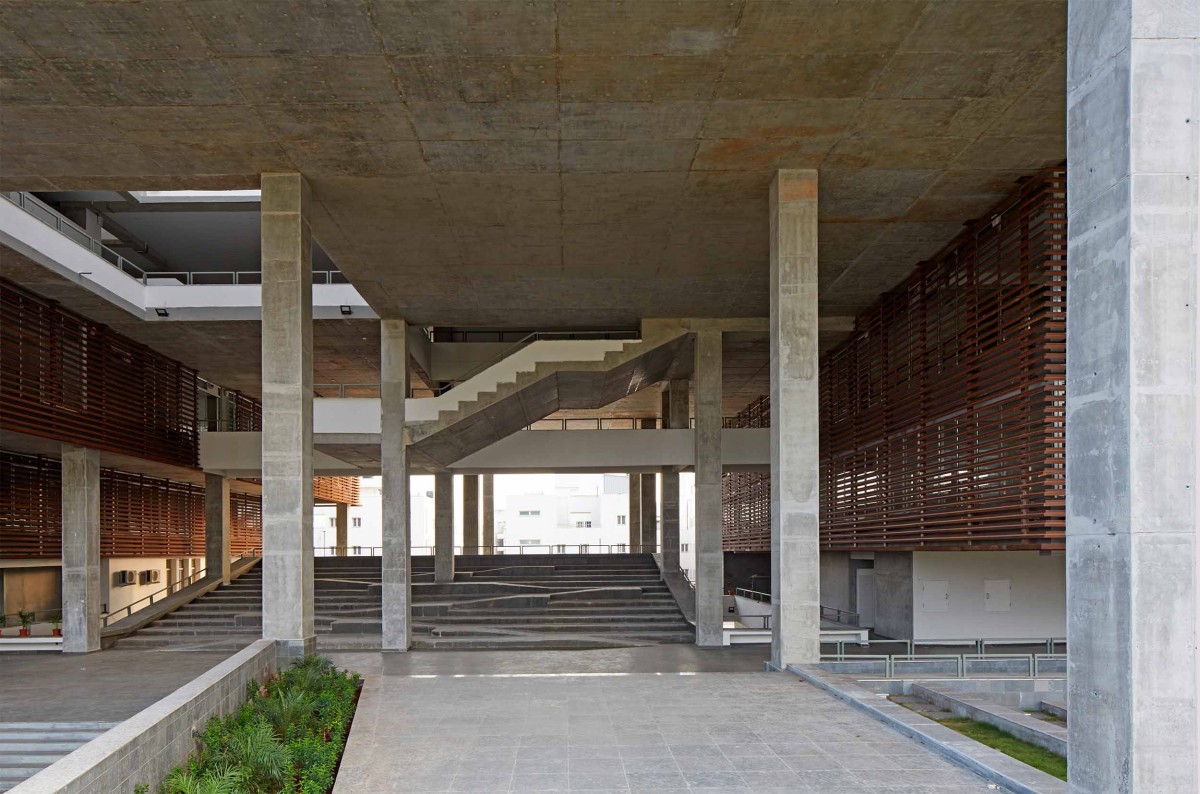
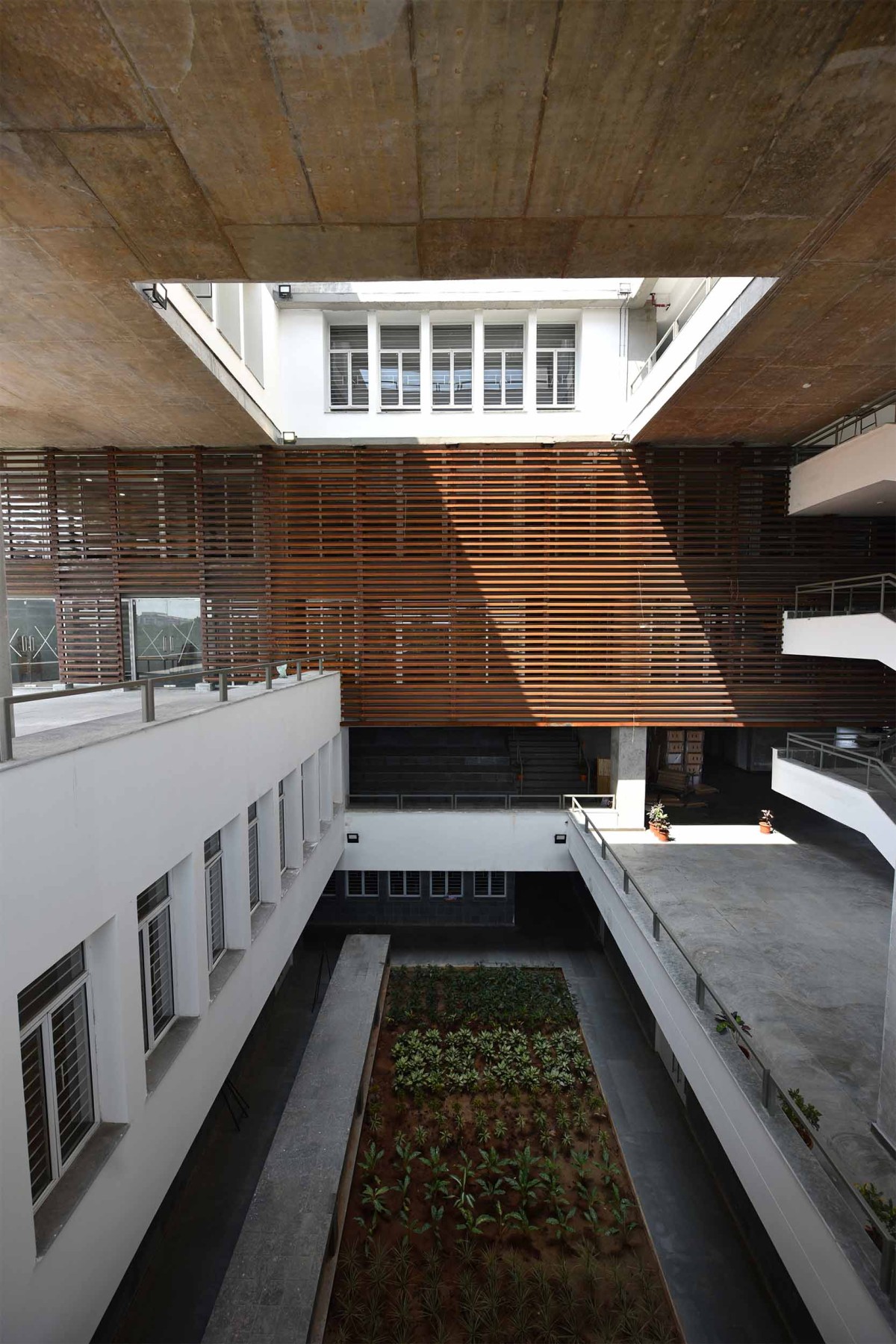
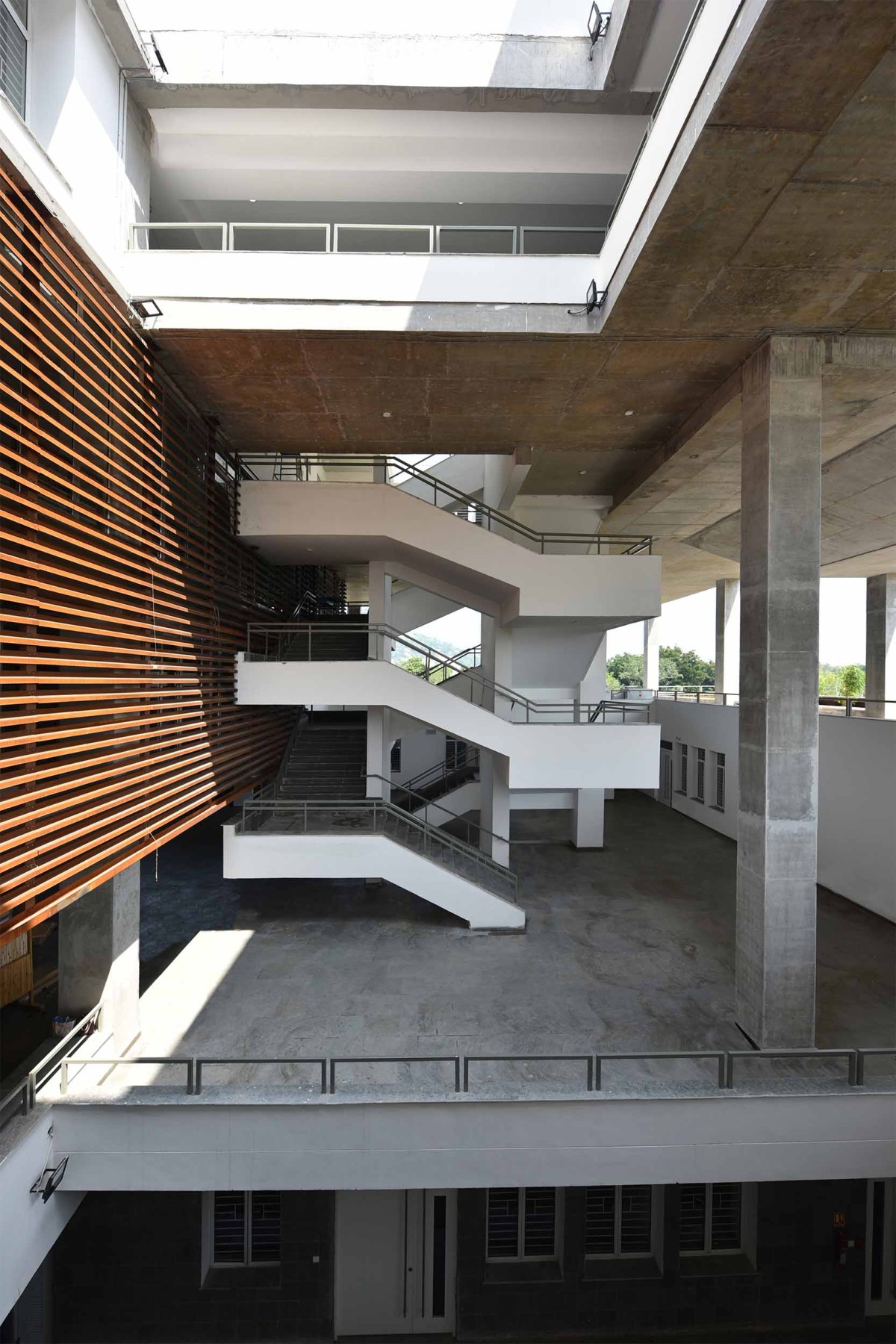
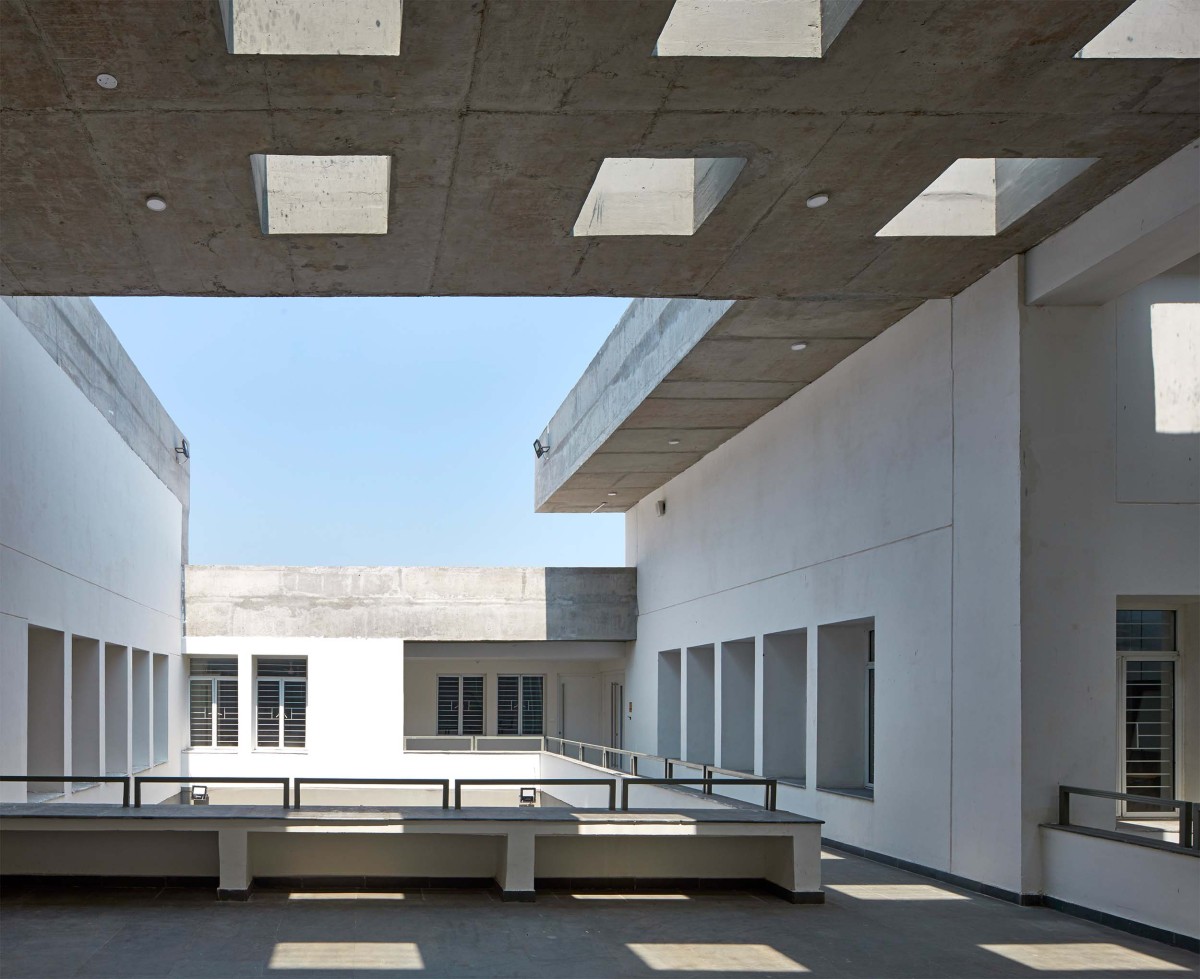
CONCOURSE – The middle section of the building is a ‘Stilted Platform’ that allows for student activity. This zone is a reminder of the traditional courtyard that anchors common public and community programs. It behaves as a concourse to the entire building as it filters and mediates the movement of people. Smaller courtyards work as three dimensional light wells which offer visual connectivity through the layers above and below. This ‘Universal zone’ is occupied by faculty, students, administrators and visitors enabling non-programmed exchange.
THE PLATFORM – The bottom most section becomes a heavy base to a floating canopy. The base houses the afternoon programs of the learning curriculum such as workshops and laboratories and is cladded with local Tandur stone which increases the ‘Time Lag’ for solar- heat gain. This solid platform is punctuated with voids that allow for hot air to dissipate.
Bridging and interconnecting across spaces of School of Planning and Architecture at Vijayawada by Mobile Offices
Corridor of School of Planning and Architecture at Vijayawada by Mobile Offices
The materials are used in their raw form such as the fair-faced concrete walls on the periphery of the higher floors, local tandur stone in riverwash finish for cladding the base of the building and polished river washed tandur stone is used for flooring; corten steel is used as a louvered screen along with precast jail screens in certain areas. AAC Blocks with 70% fly ash content have been used. Energy consumption has been reduced through efficient lighting, HVAC, appropriate glass etc., solar panels have been provided.
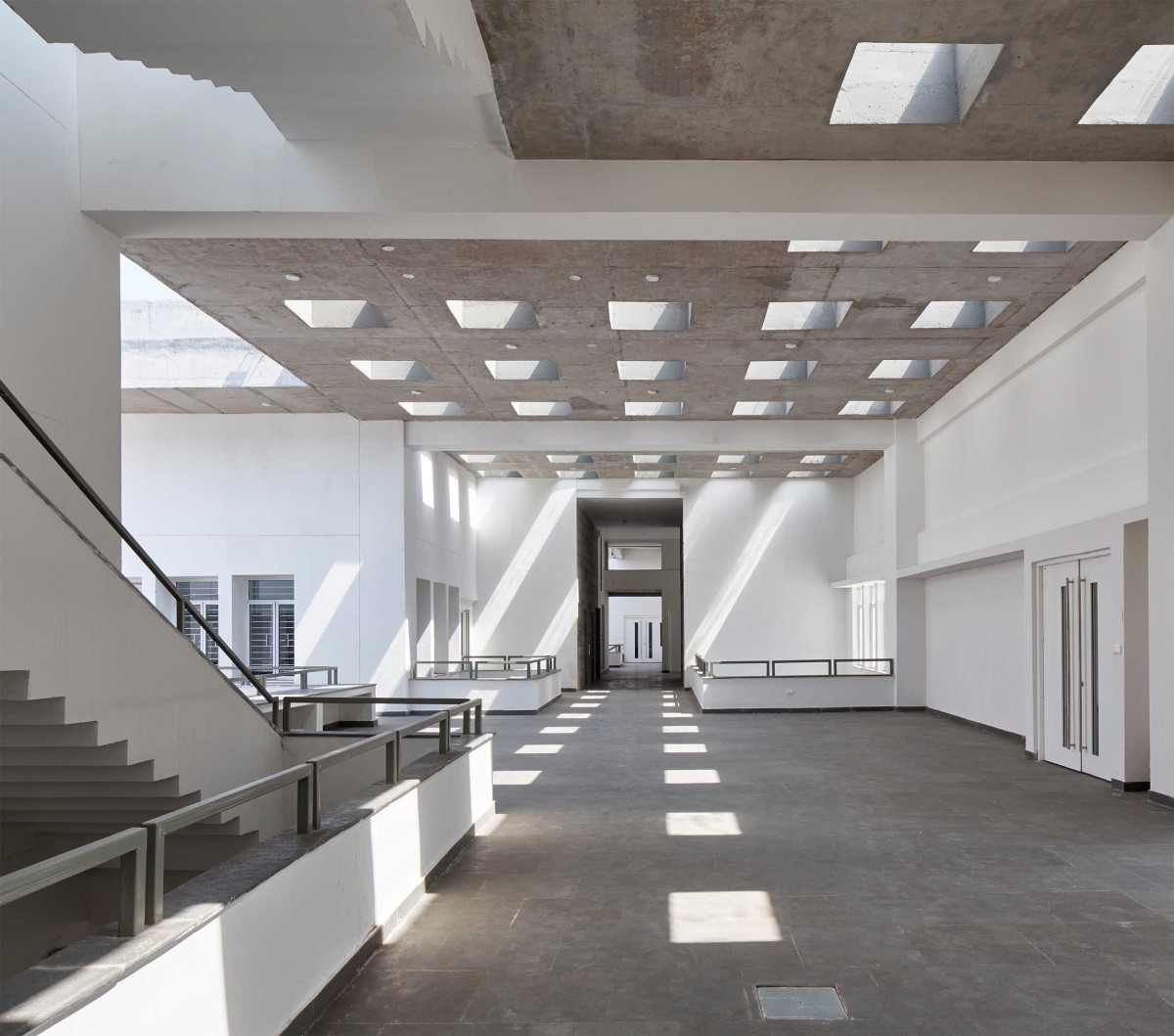
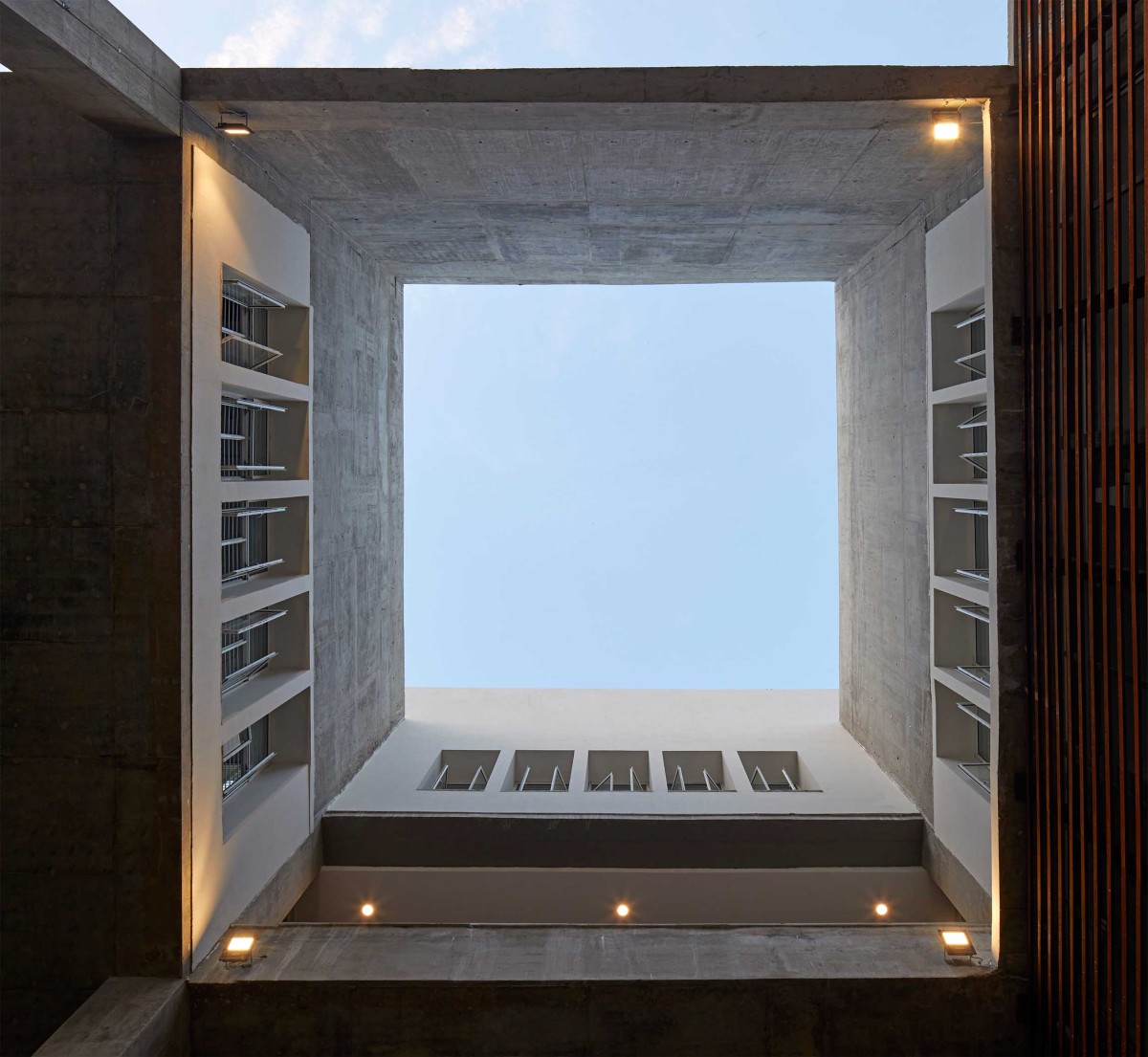
Climatically the building harnesses the prevalent winds of the Krishna river basin to create cross ventilation and provide human comfort by convection in this hot and humid region. The courtyards funnel winds through the building and enable cross-ventilation, thus regulating the diurnal temperatures. The multiple voids render the building block porous, allowing the hot air to get extracted from the building, the northlight windows bring in natural light in the studio spaces, the parasol shades the informal spaces below reduces energy usage for a building thus enabling it to be a model of passive energy design of building in harsh climates. The use of rainwater harvesting on terraces, solar energy for lighting, local materials, and treatment of waste all create a sustainable model of design for an institution of learning.
Courtyard view of School of Planning and Architecture at Vijayawada by Mobile Offices
Open to sky courtyard of School of Planning and Architecture at Vijayawada by Mobile Offices
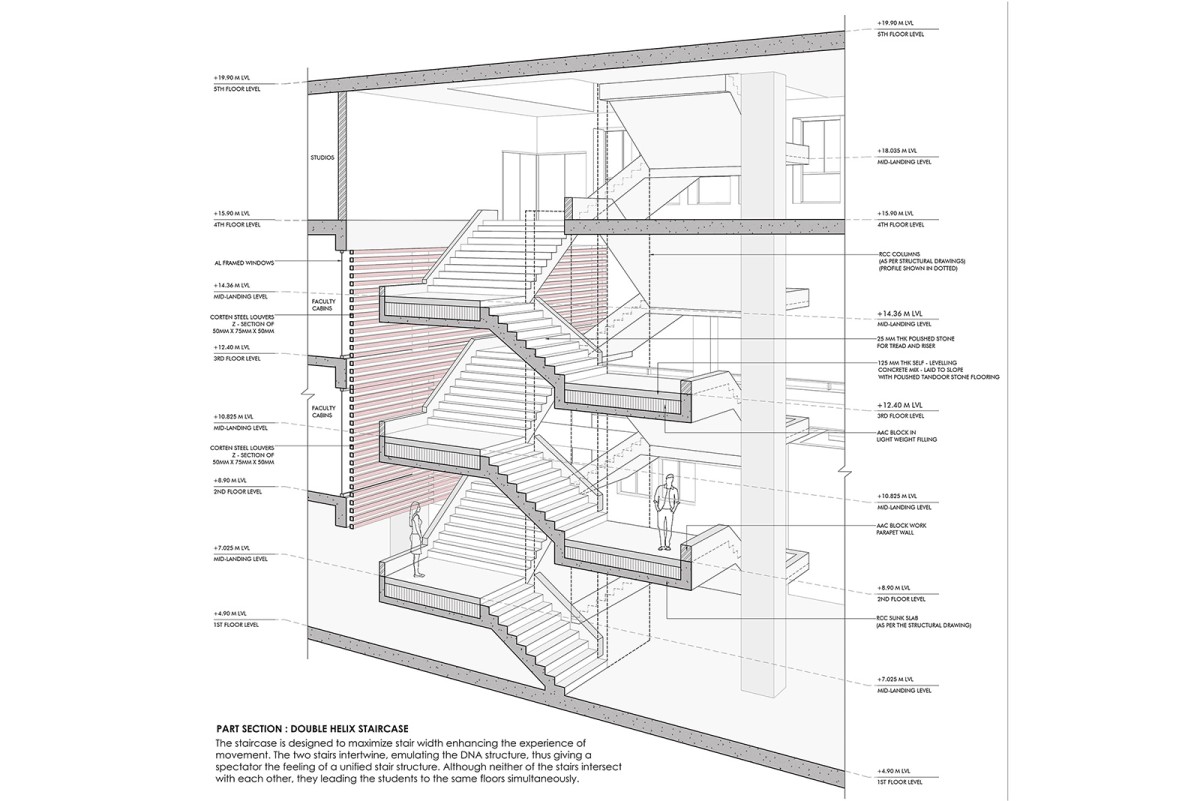
Double Helical Staircase connects alternate planes of School of Planning and Architecture at Vijayawada by Mobile Offices
View from the double helical stairs of School of Planning and Architecture at Vijayawada by Mobile Offices
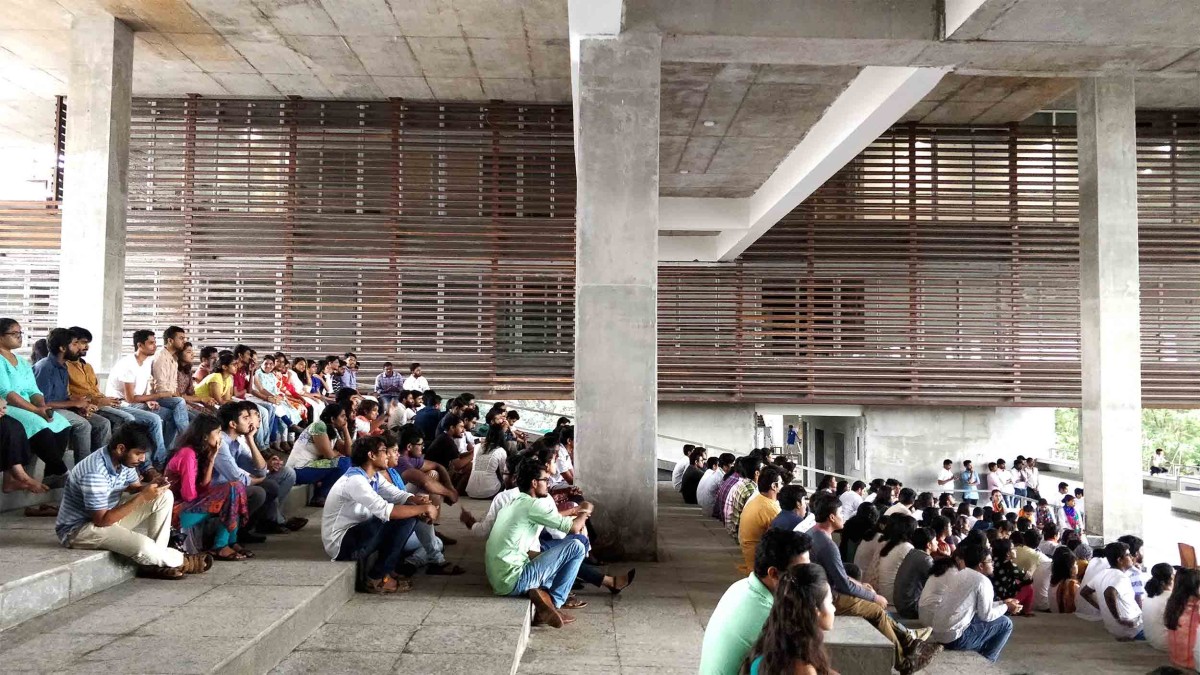
Central Amphitheatre of School of Planning and Architecture at Vijayawada by Mobile Offices
The built environment is choreographed as a campus that is open, accessible and democratic in nature, breaking formal barriers between the street and the building envelope so as to bring education closer to the public realm thereby challenging contemporary hermetic organizational structures of educational campuses across the world.
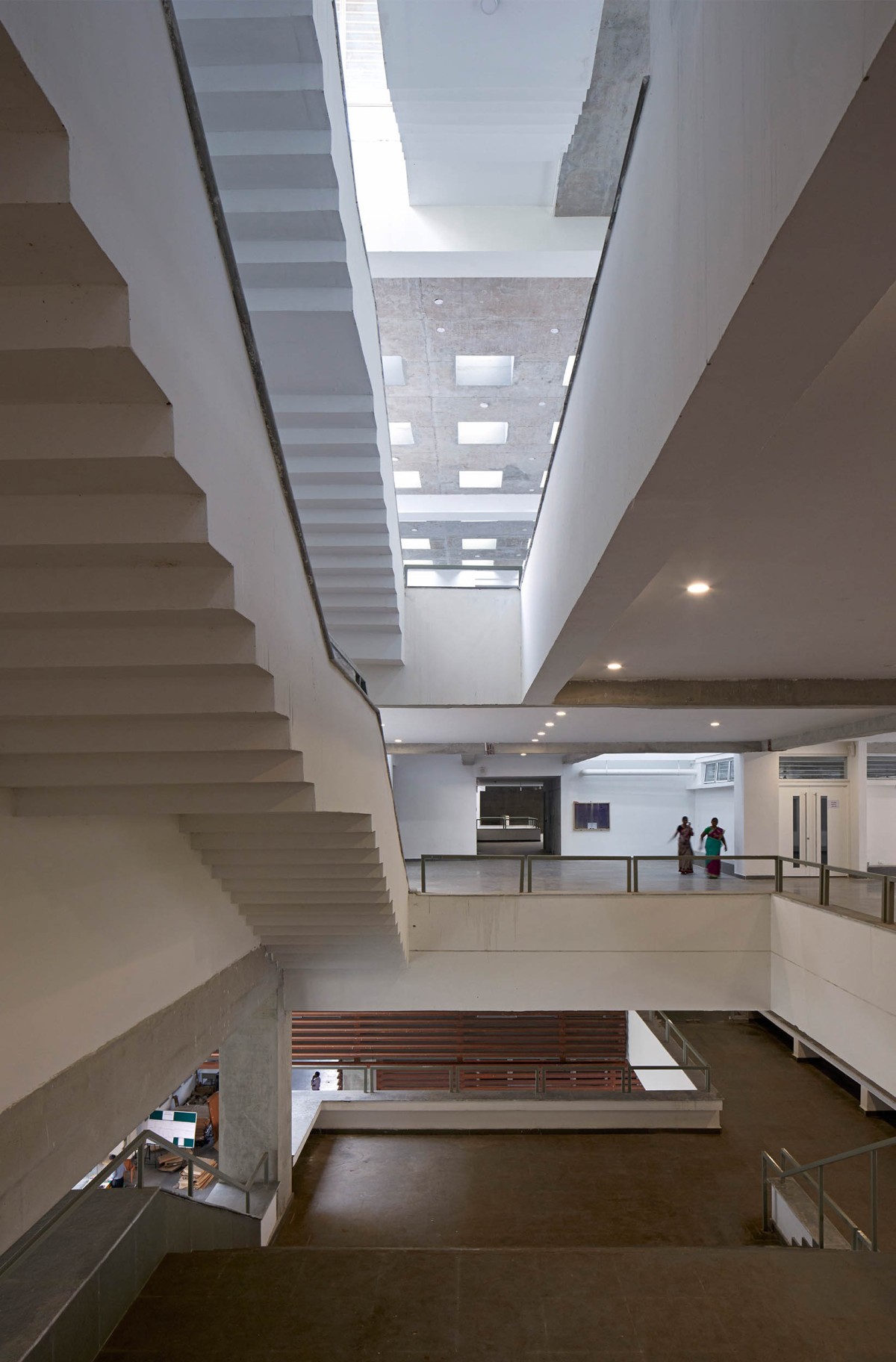
The concourse is connected by multiple amphitheaters and stairs creating a platform for people, thereby making the architecture both interactive, inclusive and socially sustainable. The boundaries of the inner spaces are blurred to initiate conversations across the corridors, double height spaces and through voids. The voids of the building form visual connective networks across departments of architecture and planning schools dissolving the floor wise stratification of the building by spatially connecting programs with stairs in varied configurations across the section of the building.
Connecting across the planes of School of Planning and Architecture at Vijayawada by Mobile Offices
Skylights and skycourts of School of Planning and Architecture at Vijayawada by Mobile Offices
Studio during day of School of Planning and Architecture at Vijayawada by Mobile Offices
Studio at night of School of Planning and Architecture at Vijayawada by Mobile Offices
Night exterior view of School of Planning and Architecture at Vijayawada by Mobile Offices
Aerial view of School of Planning and Architecture at Vijayawada by Mobile Offices
North Elevation of School of Planning and Architecture at Vijayawada by Mobile Offices
West Elevation of School of Planning and Architecture at Vijayawada by Mobile Offices
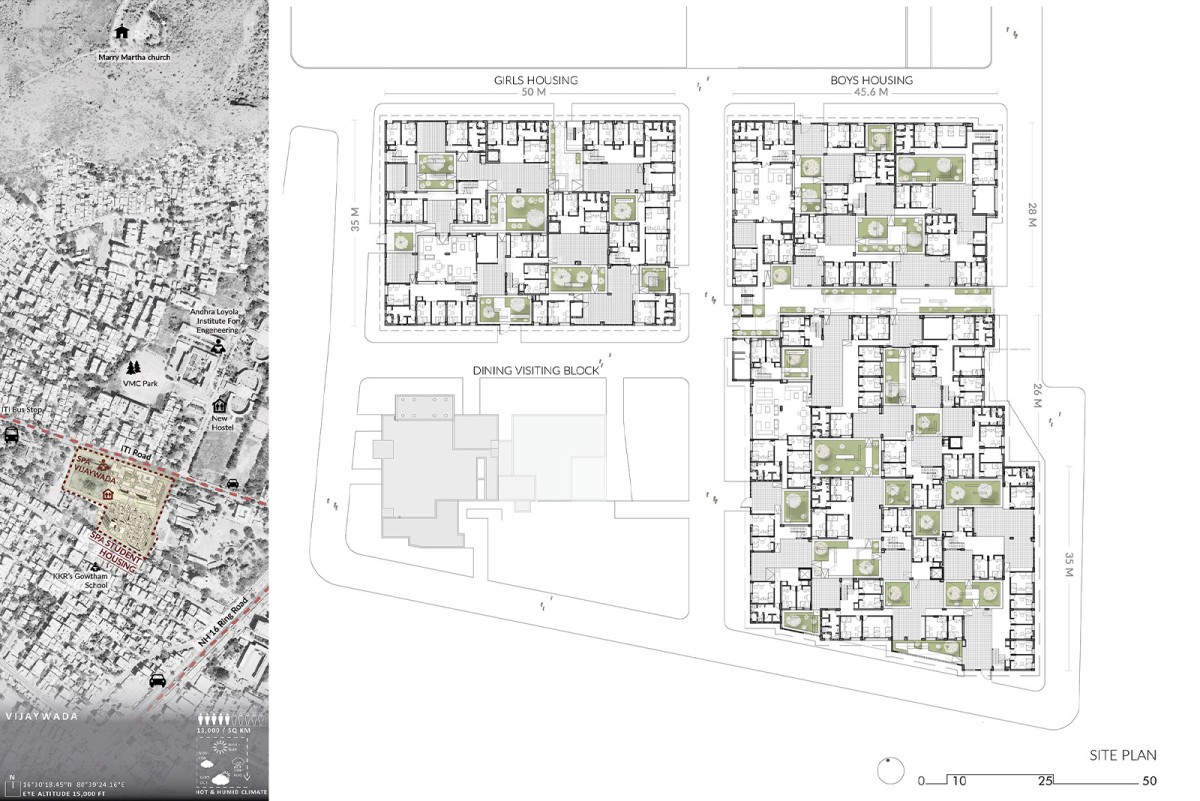
Master Plan of School of Planning and Architecture at Vijayawada by Mobile Offices
Staircase section of School of Planning and Architecture at Vijayawada by Mobile Offices